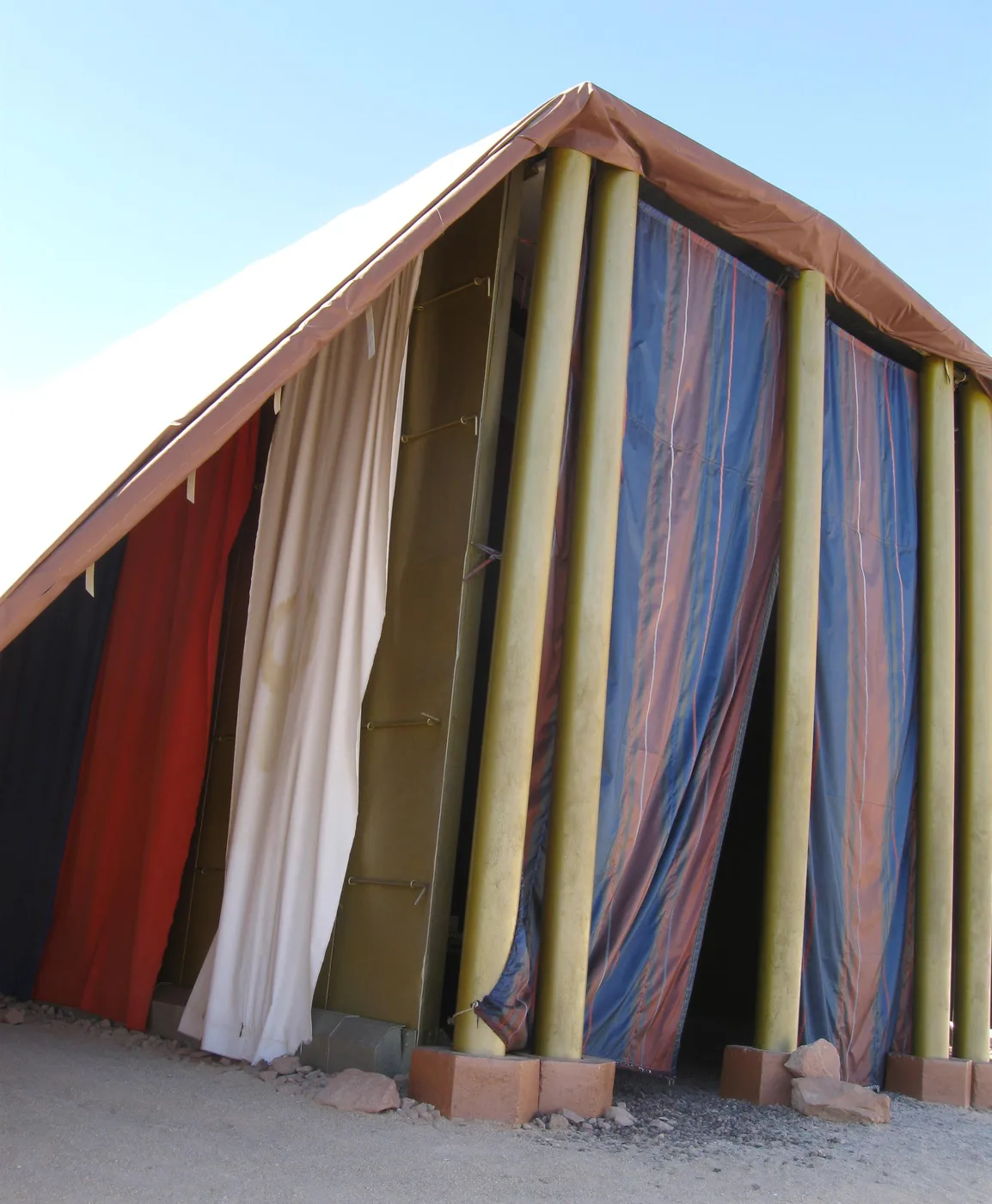
Description and usage
Ten broad cloth strips were joined together to form a large kind of tent-cloth or tarp that was draped over the top, sides, and back of the Tabernacle. The size of the individual cloth strips is given in the Exodus references above. They were made of linen (see Linen) and were decorated with figures of cherubim (see Winged creatures, cherubim). Five such pieces were sewn together, forming one large cloth. The two cloths formed in this way were then joined to each other in the middle by a system of hooks and eyes (or, clasps and loops), making the whole into one large cloth.
The reason for dividing the total cloth into two parts was probably to make it easier to transport.
Translation
The Hebrew word yri‘ah always refers to tent fabric or material used in making tents. Tents were usually made from goats’ hair (see Tent), but according to EXO 26:1, this first layer of the Tabernacle was made of “fine twined linen” (RSV). NRSV has “fine twisted linen,” since the Hebrew word for “twined” refers to twisting the thread in spinning.
The description of how the strips of cloth were decorated in EXO 26:1 leaves open the question of whether the figures of cherubim were woven into the cloth or embroidered on it. The older Jewish commentators understood the figures to have been an integral part of the weaving of the strips (compare NJPSV “with a design of cherubim worked into them” and God’s Word [GW] “and creatively work an angel design into the fabric”). Most translations, however, prefer using the word “embroider” here (GNT, CEV, GECL; see Embroidered cloth, needlework). Some translations find ways to describe the decoration without determining the method by which it was put on the cloth; for example, ITCL has “you will decorate them with figures of cherubim.”