Description and usage
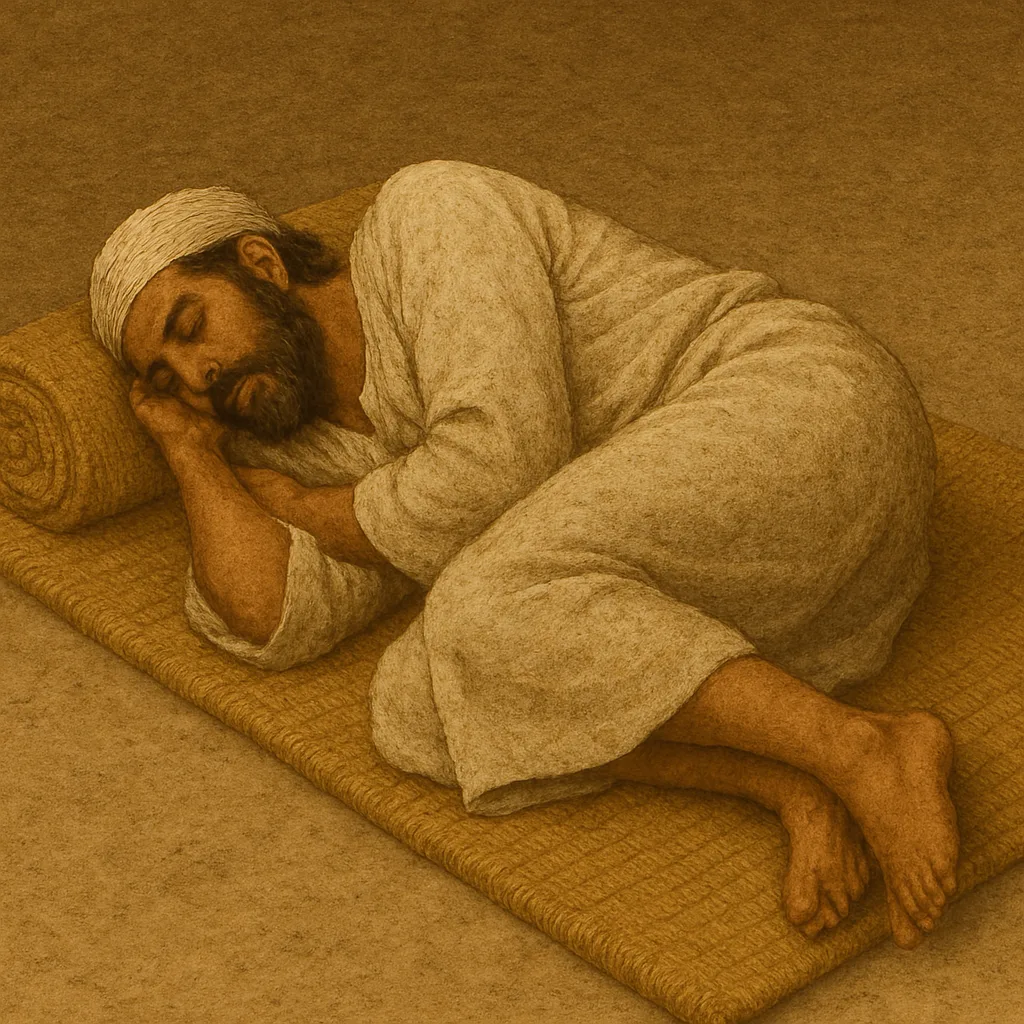
The bed was an object on which a person slept. In some cases it could be a raised piece of furniture. However, the Semites from Canaan did not usually sleep on raised beds, but rather on skins spread on the floor. When the bed was a piece of raised furniture, it took a form similar to beds used in most cultures today: a low platform standing on four legs, a bit longer than the length of a man, and about 70–80 centimeters (27–31 inches) wide.
Translation
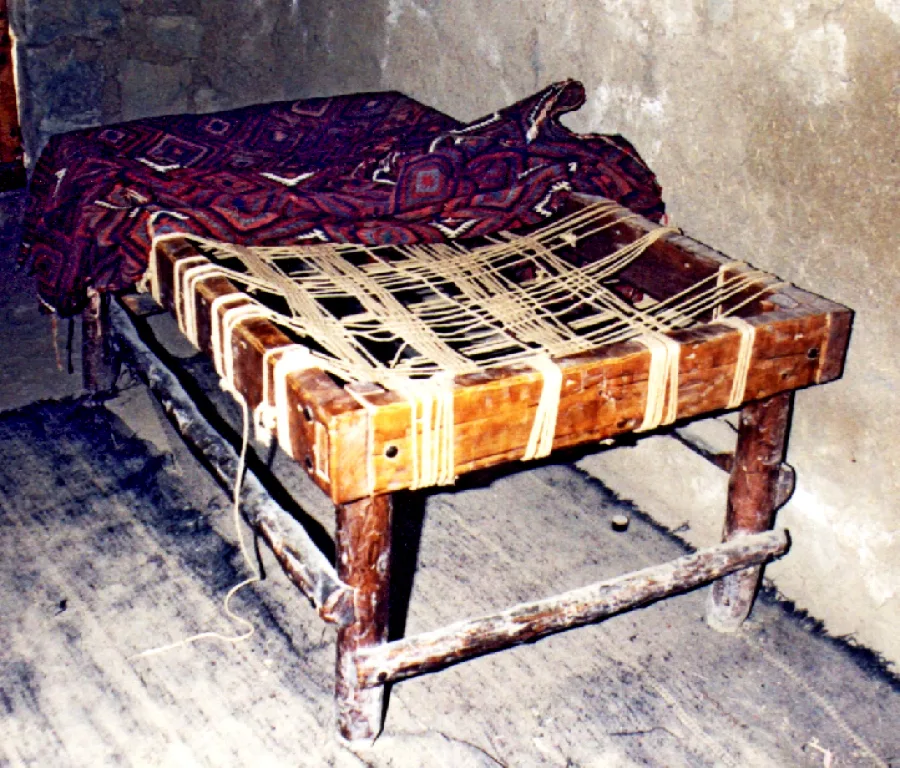
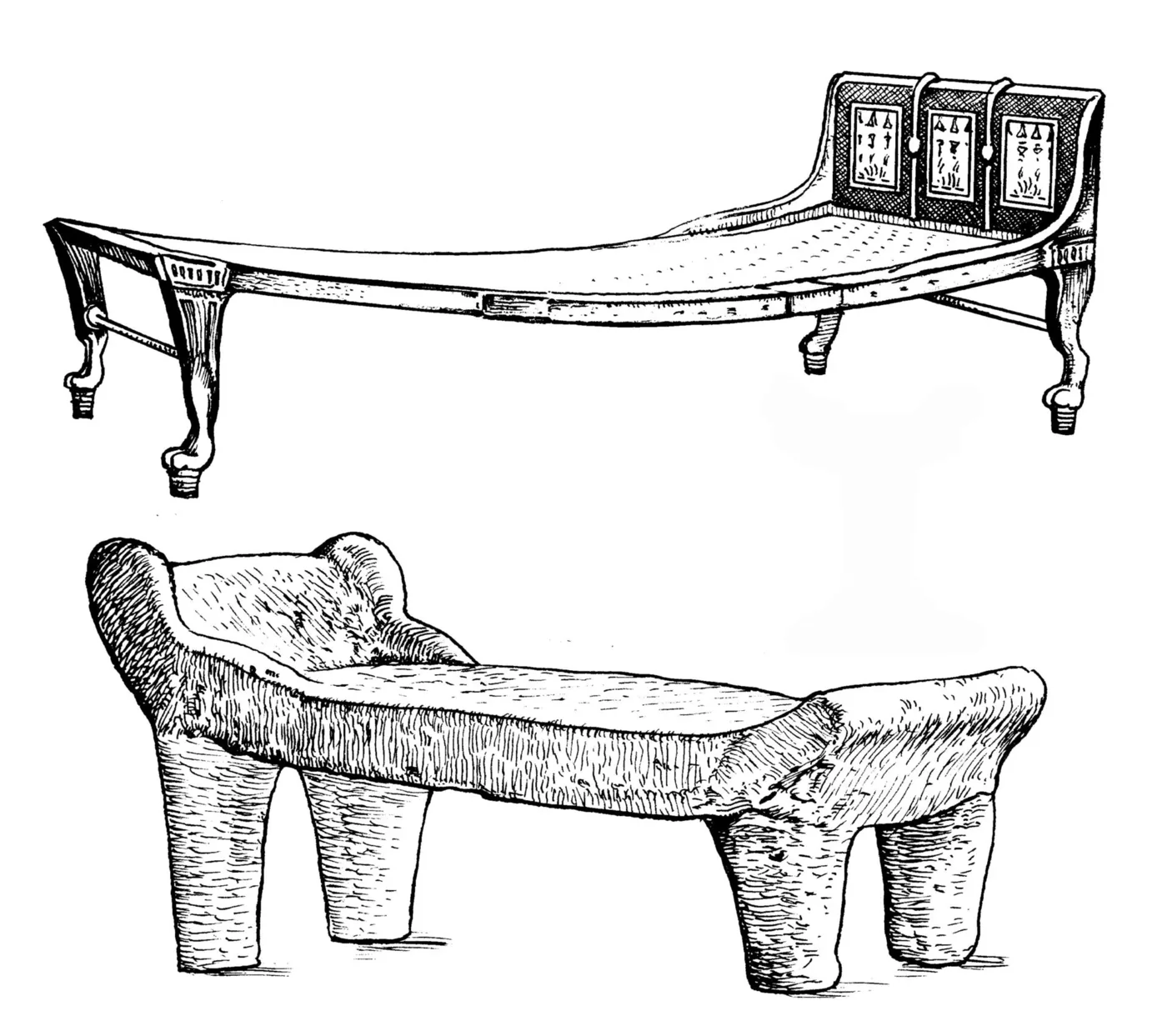
SNG 1:12: The Hebrew word mesav referring to a piece of furniture occurs only here. While most modern translations understand it to be a kind of “couch” (RSV, GNT), some understand it to refer to the low “table” (KJV, NASB, SPCL) at which people reclined for meals. Some translations avoid having to make the choice by rendering the first line of this verse as “As long as my king is near me” (GECL) or “While my king is at his banquet” (FRCL). TOB renders mesav as “enclosure” and adds a footnote explaining that the word, which may designate the bed that surrounded the dining table or the courtiers surrounding the couple, here speaks of a garden whose perfume attracts the king. ITCL has adopted this interpretation by rendering the first line as “Now that my king is here in his garden.”
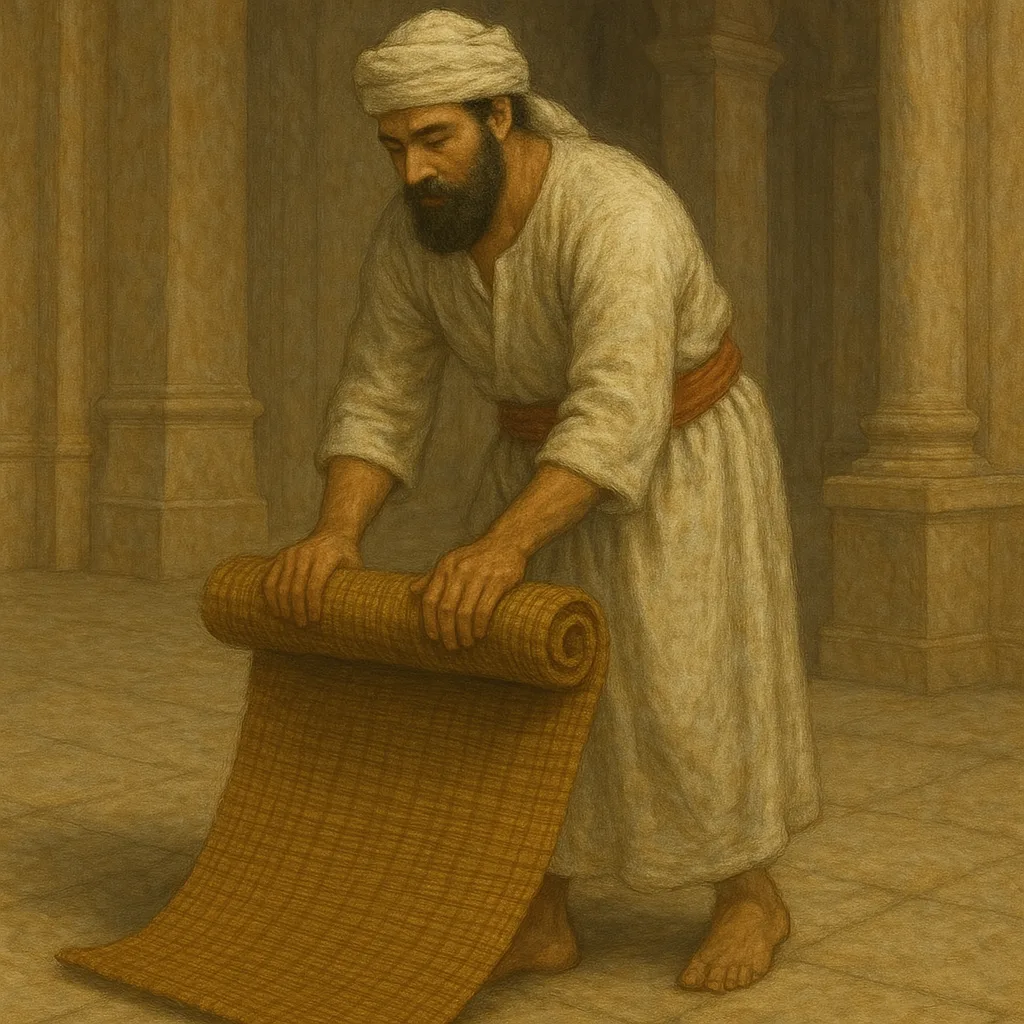
The Greek word klinē refers generally to any piece of furniture employed for reclining or lying on. In MAT 9:2 a rendering such as “stretcher” or “cot” (in American English) is certainly more advisable than the traditional rendering “bed” (RSV), which might imply a large piece of furniture. In each passage translators must employ a term for klinē that is most likely to identify the type of object which fits the context.
LUK 11:7: It is not necessary to understand the statement “my children are with me in bed” (RSV) to mean that the children were in the same bed with the man, but it is, of course, possible that the reference here is to a relatively humble house in which all the members of the family would sleep on the floor in the same corner of the room or on a single raised platform. This passage may be rendered simply as “I have gone to bed and so have my children” or “I am already in bed and so are my children.”
The bed is sometimes used figuratively. In several places it refers to sexual intercourse (ROM 13:13; WIS 3:13; WIS 3:16; SIR 23:18), whether in marriage or in an unlawful union. When the Greek word koitē is used together with the verb echō in ROM 9:10, it means “to be pregnant.” In 1MA 1:5 the text says literally that Alexander “fell into bed,” that is, he got sick or “fell sick” (RSV).