Discussion
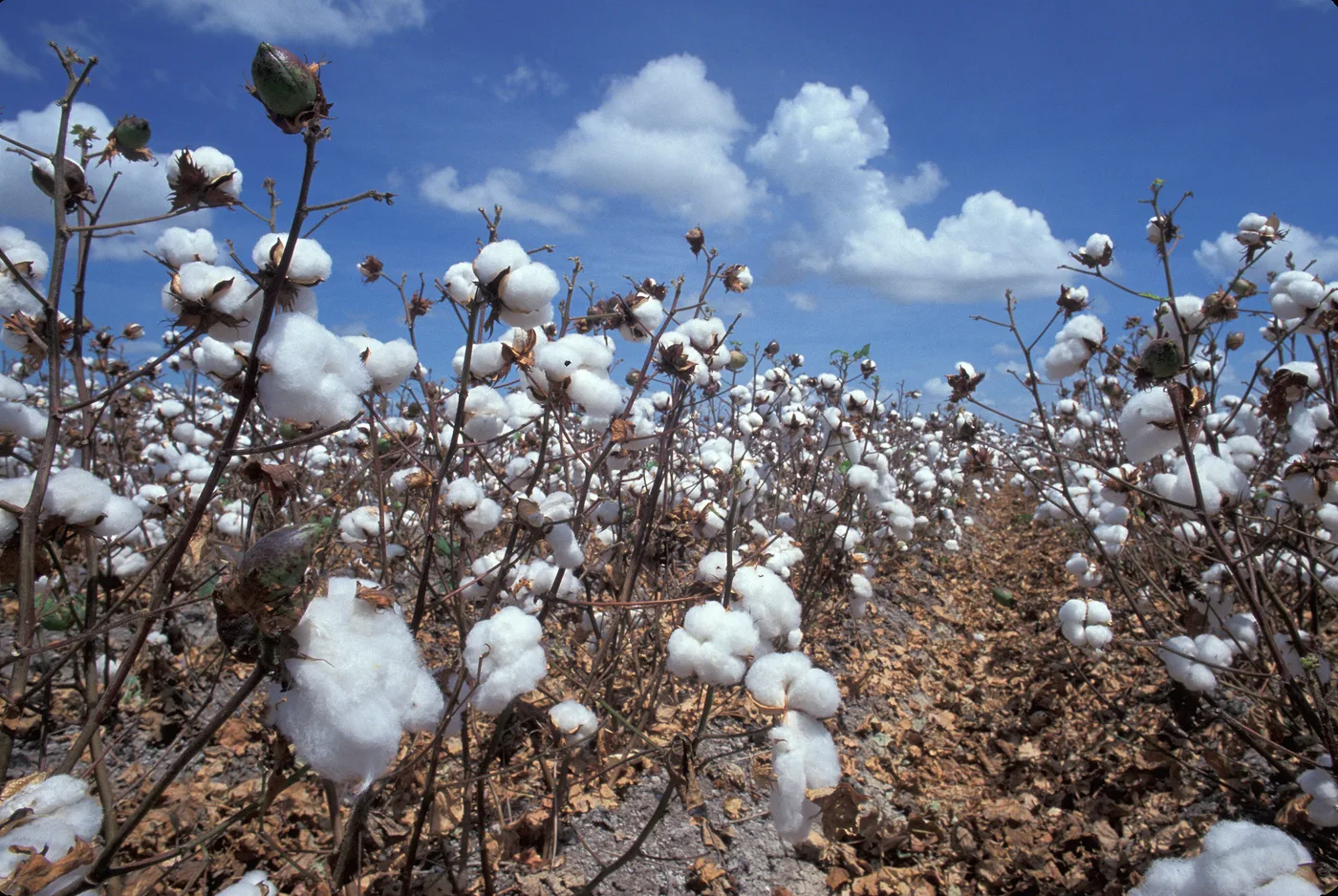
Cotton Gossypium herbaceum has been grown and woven in the Indus Valley (now Pakistan) for at least five thousand years. Pieces of cotton cloth that old have been found there. However, it was not grown in the land of Israel until a few centuries before Christ.
The story of Esther takes place in Babylon in the time of Ahasuerus (= Xerxes) 485–465 B.C. By that time both cotton and flax products were probably traded back and forth throughout the Babylonian Empire, and the cultivation of both was probably expanding, although the area of India, Pakistan, and Babylonia would have been the area of largest production. Herodotus, in the fifth century B.C., mentions “trees that bear wool” from India.
The writer of Esther describes fabric made from karpas, a Hebrew word that comes from Sanskrit, a language spoken long ago in India, where cotton was domesticated. That may be evidence that karpas probably refers to cotton alone, particularly since the Hebrew word buts is probably used for “linen” in the same verse.
Some botanists have stated that some of the “linen” mentioned in the Scriptures may actually be cotton, especially in the later books of the Old Testament, written when cotton would have been well known. Also, the forty-nine references to the Hebrew word tekeleth, usually translated “blue” or “purple” and often in conjunction with argamon, may have been cotton yarn, though some scholars hold that this material must have been wool.
Description
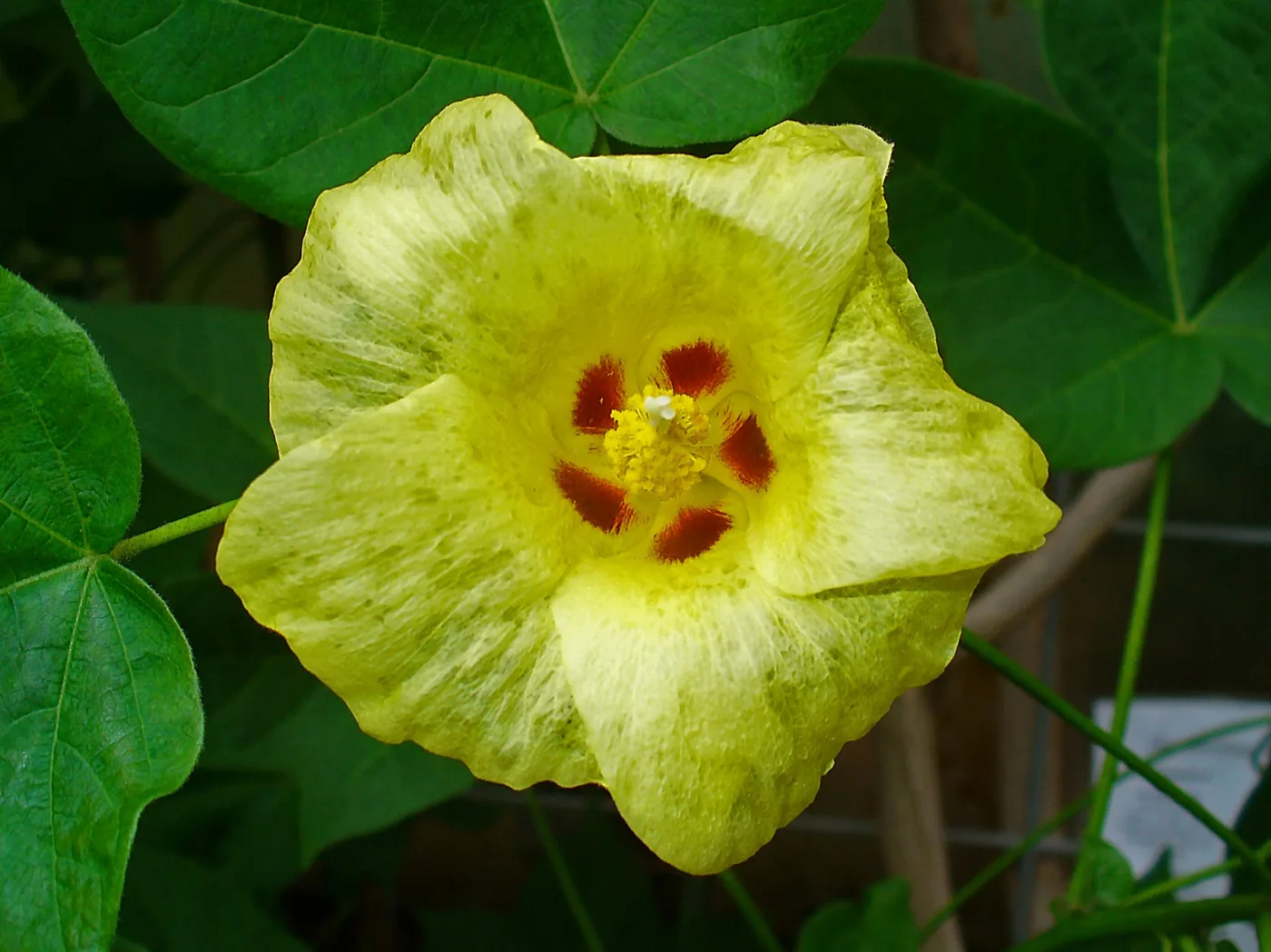
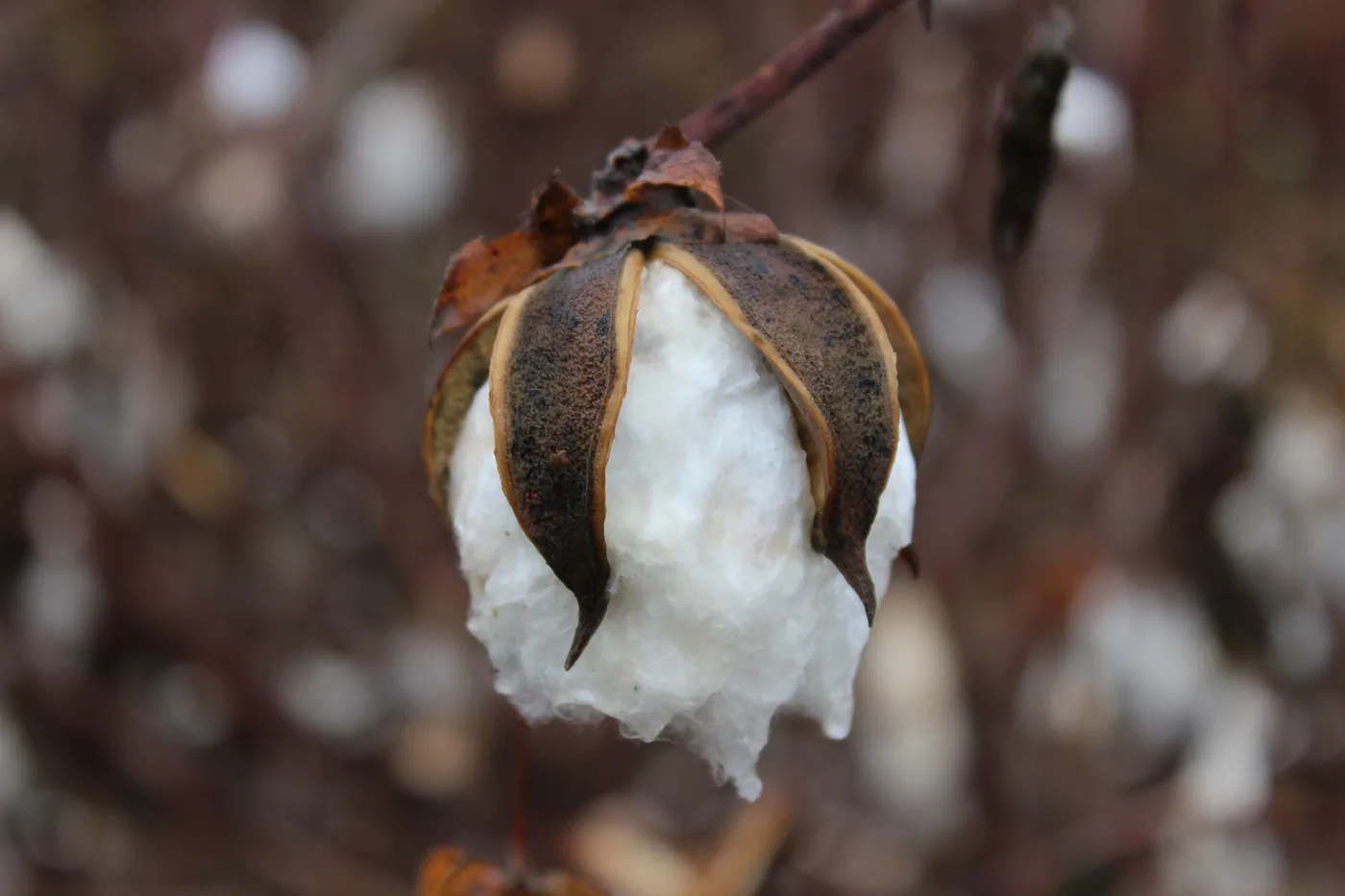
The original Indian and Arabian type of cotton (“Levant cotton”) grows to 2 meters (7 feet) in height, with soft, lobed leaves (like its relatives the hibiscus and the hollyhock). The mallow-like flowers are yellow with a purple center. When the flower matures, the boll underneath puffs out and eventually splits, revealing a mass of fine white filaments that we know as “cotton wool.”
Special significance
Translation
Cotton is now grown extensively throughout the world, especially in warm, dry areas. The Tree Cotton Gossypium arboreum is native to North Africa and is now grown in Upper Egypt. Another species, Upland Cotton Gossypium barbadense, grows in the West Indies. Egypt, India, China, and Nigeria all raise cotton in great quantities since it is their most important textile. If a transliteration of cotton from a major language is needed, adaptations of the following are advised: French cotonnier; Portuguese algodão, algodeiro; Spanish algodonero; Arabic kutun; and English cotton.
EST 1:6 a: “There were white cotton curtains and blue hangings” renders the Hebrew phrase chur choray utekeleth.Versions of Esther that have just one object mentioned here (NIV, NLT, GW, NJB) apparently take utekeleth (“and blue”) as ascribing a second color for the object karpas. The versions that have two objects (RSV, NRSV, REB, NAB) take chur karpas as white curtains or hangings and tekeleth as blue curtains or hangings.
Even if the translator’s people do not actually grow cotton, they know it from the cloth sellers and will have a name for it. Failing that, a transliteration from a major language is recommended.
In terms of the material in EST 1:6 a, my order of preference in English models is:
1. “blue and white cotton curtains” (GNB, CEV);
2. “[hangings of] white cotton and blue wool ” (NJPSV);
3. “white and violet hangings” (NJB, which does not mention any materials);
4. “hangings of white and blue linen ” (NIV; similarly NLT);
5. “white and violet hangings of linen and cotton ” (Bush).