Discussion
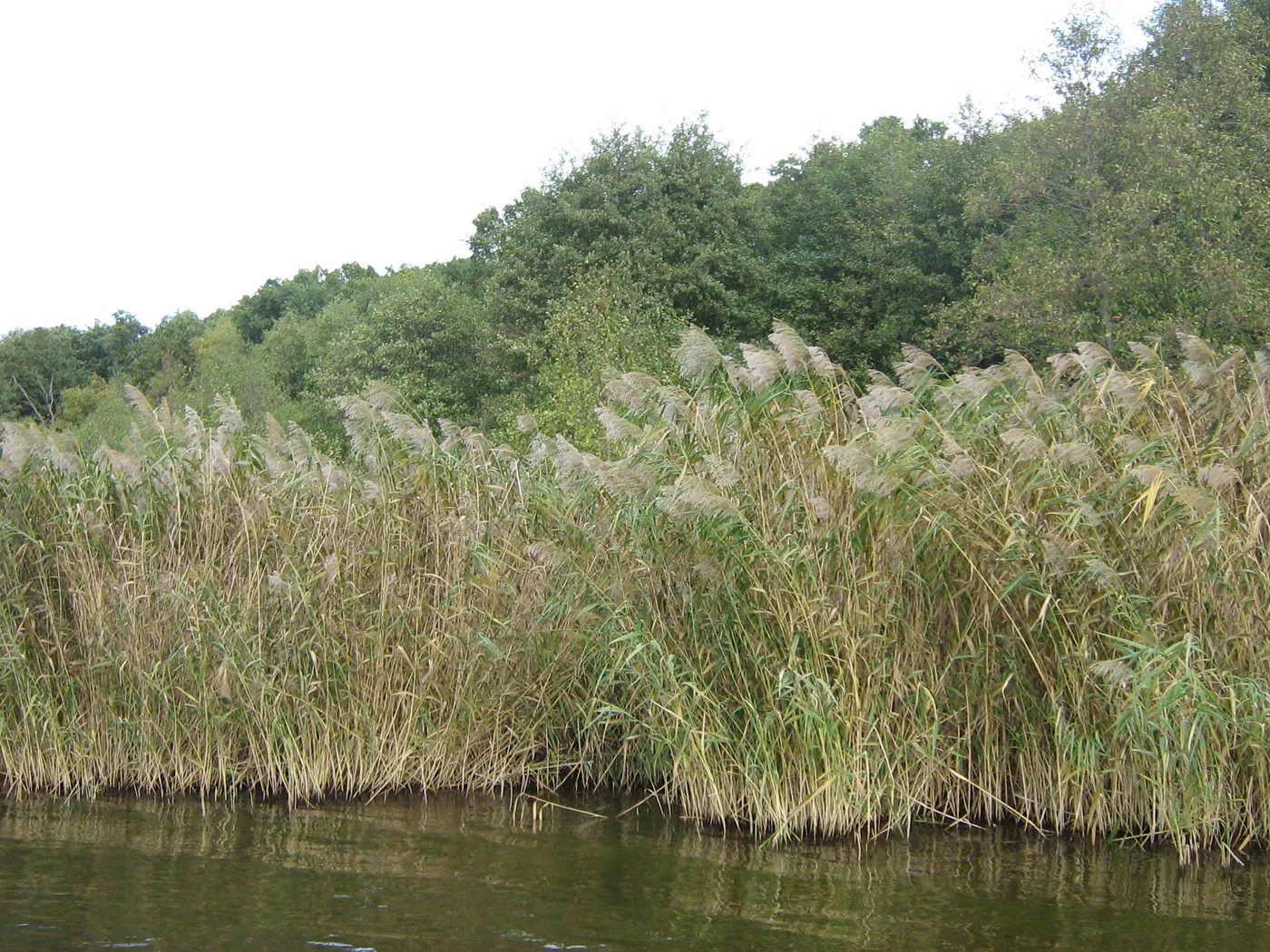
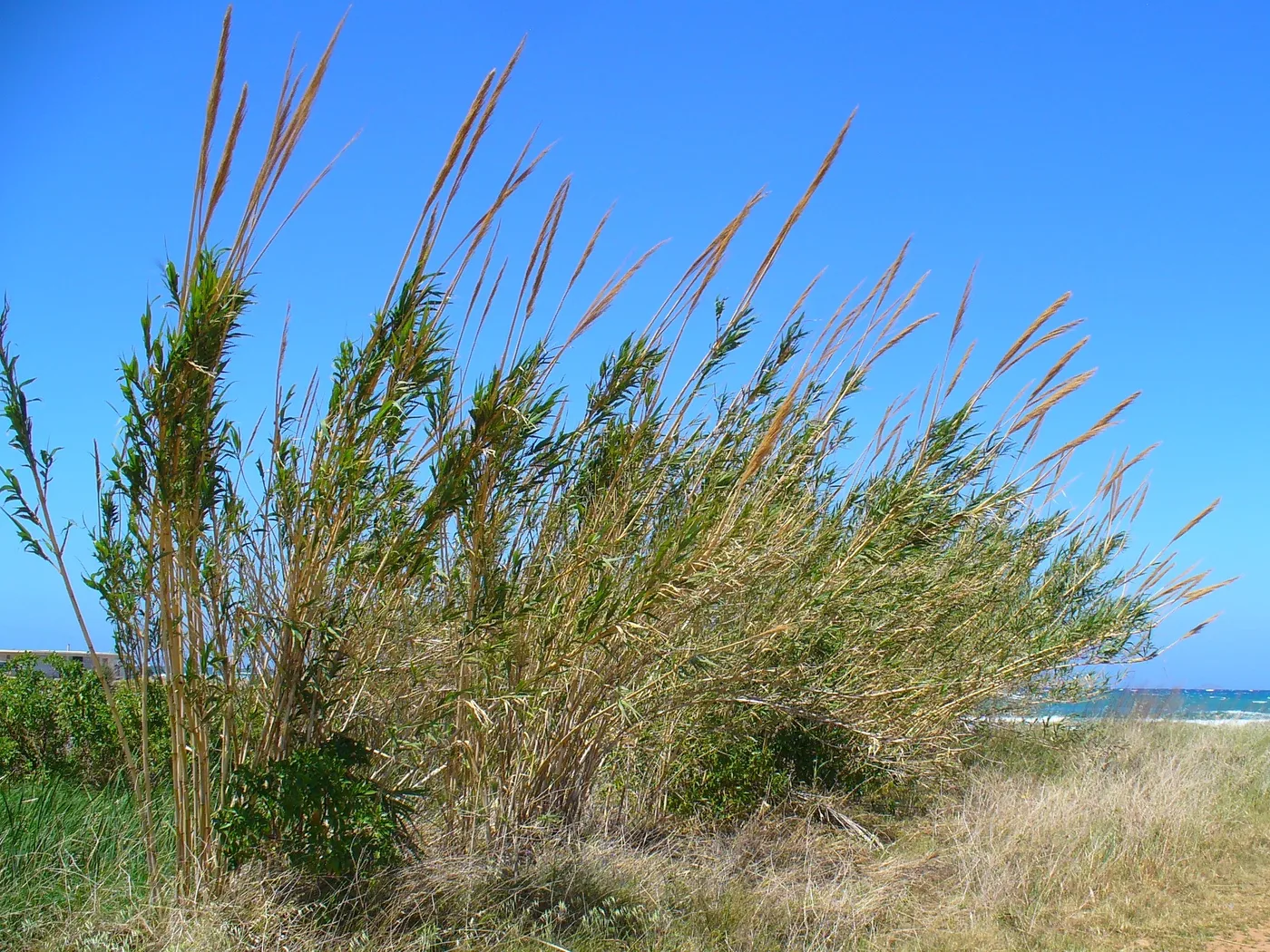
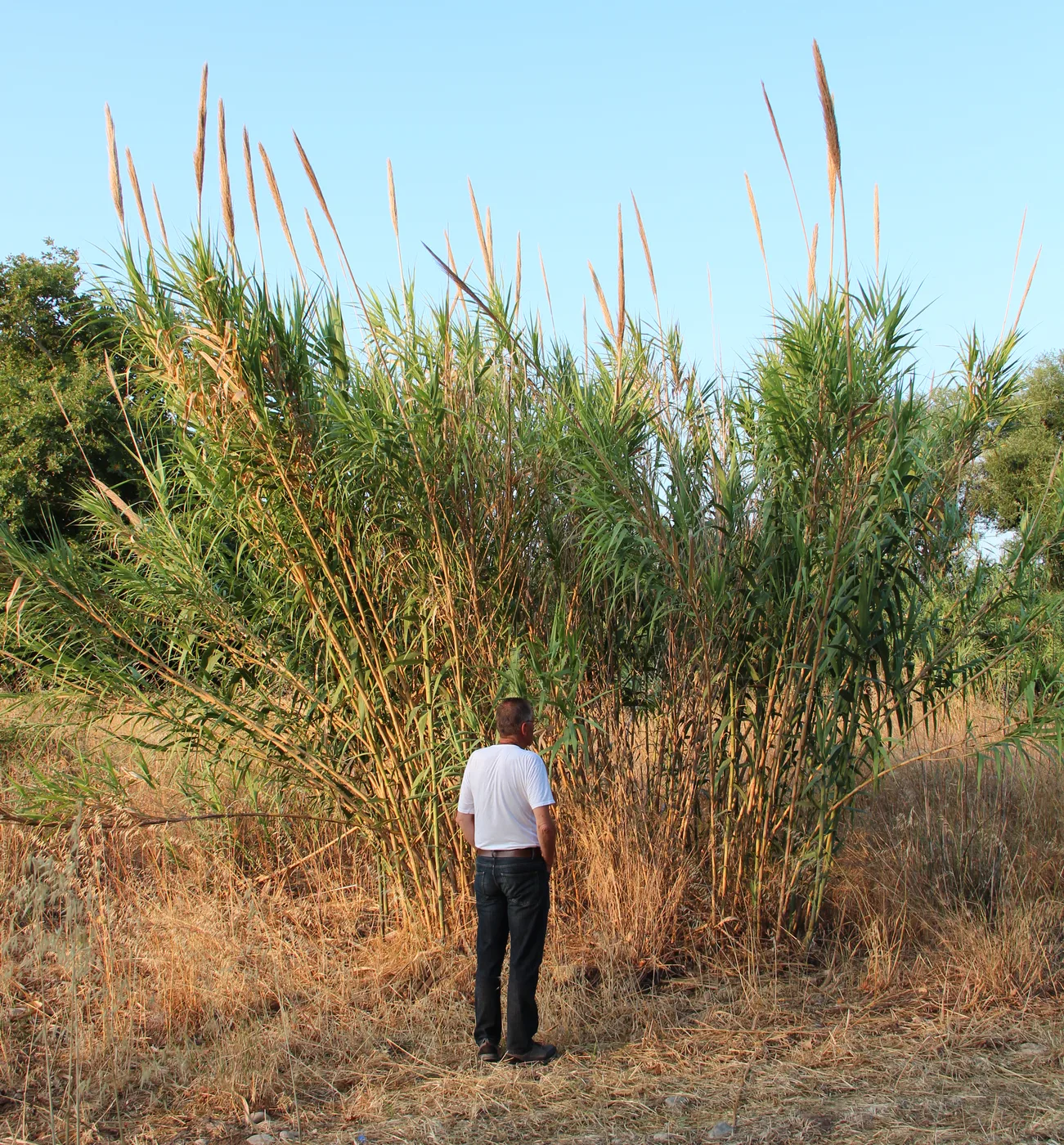
There are two general types of reed in Israel, the Common Reed Phragmites australis and the Giant Reed Arundo donax, and it is impossible to say which one is intended in a given biblical context.
The English word “cane” comes from the Hebrew word qaneh.Qaneh is the most general Hebrew word of the many referring to reeds and rushes. Like the English word “reed,” it may refer to a specific type of reed or be a general name for several kinds of water plant. This word is also used to refer to the stalk of grain in Pharaoh’s dream (GEN 41:5, GEN 41:22), to the shaft and branches of the golden lampstand in the Tabernacle (EXO 25:31; EXO 25:32; EXO 25:33, EXO 25:35; EXO 25:36; EXO 37:17; EXO 37:18; EXO 37:19, EXO 37:21; EXO 37:22), to the beam of a scale (ISA 46:6), to the upper arm of a person (JOB 31:22), to a measuring stick (EZK 40:3, EZK 40:5; EZK 40:6; EZK 40:7; EZK 40:8; EZK 40:5; EZK 42:16; EZK 42:17; EZK 42:18; EZK 42:19), and to aromatic cane (EXO 30:23; SNG 4:14; ISA 43:24; JER 6:20; EZK 27:19; see Calamus (sweet flag, aromatic cane, sweet cane, ginger grass)).
The Greek word kalamos is also used to refer to a measuring stick (REV 11:1; REV 21:15; REV 21:16) and to a pen (3JN 1:13; 3MA 4:20). For a good discussion on pens made out of reeds, see WTH, Pen.
Description
The common reed is a tall grass with stiff, sharply-pointed leaves and a plume-like flower head that reaches to more than 2 meters (7 feet). It grows in lakes and streams, the roots creeping across the bottom of the lake to produce new leaves and stalks.
Special significance
Translation
The common reed of the Mediterranean area has relatives in Europe, India, Japan, and North America. It is thought to be the only species of the genus Phragmites (although some botanists divide it into three species). It is very important for conservationists, because it provides habitat for many kinds of animals and birds. In North America the weaker native type is being overtaken by more robust types from Europe, which are now threatening other kinds of marsh plants. In Japan people eat the young shoots of reeds. Native Americans used to eat the seeds.
Arundo species are found throughout the Mediterranean area and also in Taiwan and are still used for making the reeds for clarinets, pipes for pipe organs (“Spanish cane”), fishing rods, and walking sticks.
In the form of cellulose, reeds are also used in the rayon industry.
Translators living near lakes and rivers will be able to find an equivalent, if not a relative, of the reed. Others can be generic and use “grass” or a phrase such as “tall grass growing in the water.”