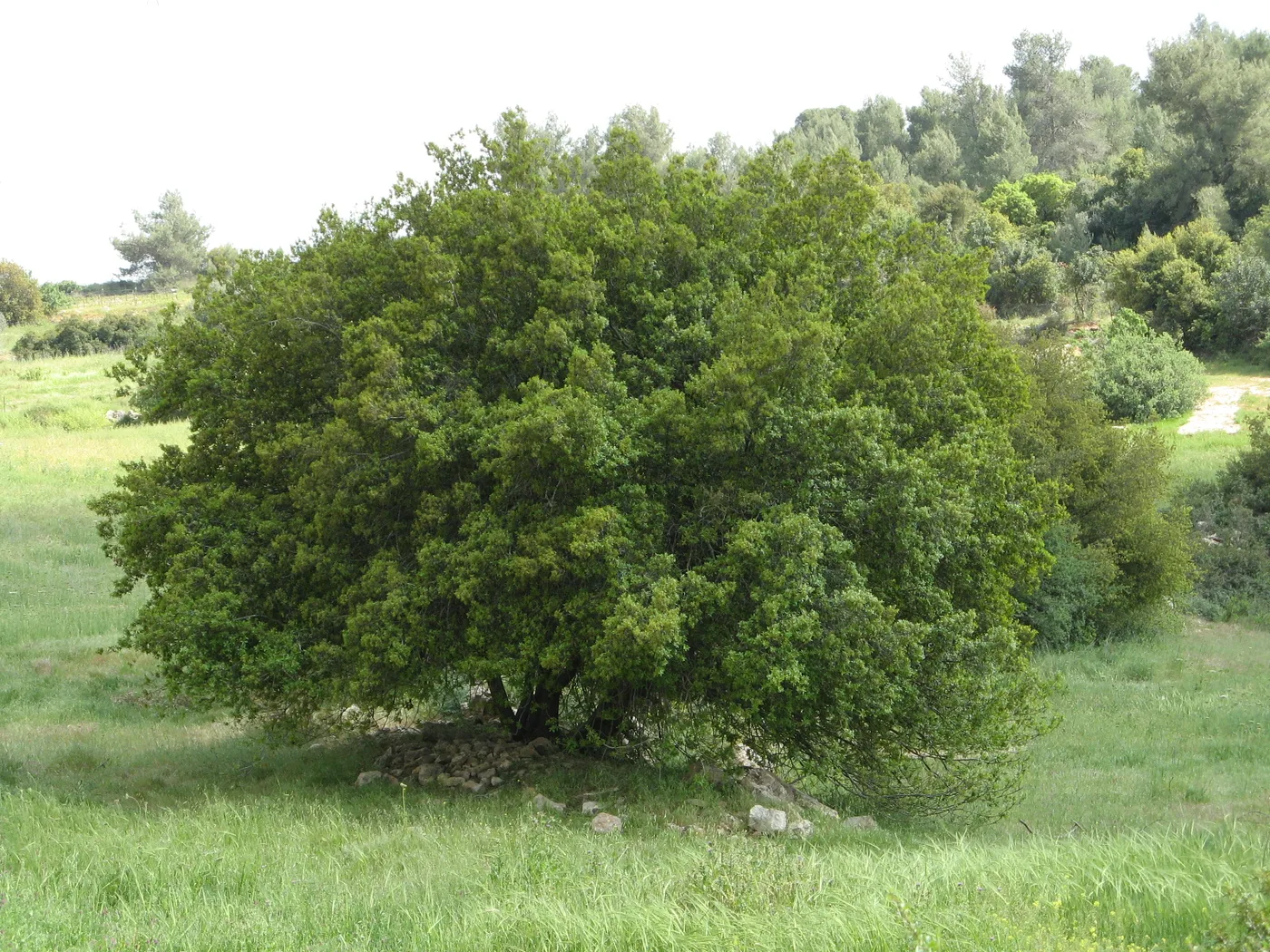
Discussion
Three species of oak are found in Israel, the main ones being the Tabor oak and the Kermes (or common) oak. Both go by the name ’elon or ’allon in Hebrew. The similarity to the Hebrew word ’el (“god”) is significant, since these trees have long been associated with worship and with burial. Since the Tabor oak is the biggest, it is likely that ’elon and ’allon most often refer to that one. English versions have sometimes mistakenly translated the Hebrew word ’elah (“terebinth”) as “oak.”
According to Hepper, forests of Kermes oak (Quercus calliprinos or Quercus coccifera) covered the hill country of Israel from Carmel to Samaria in biblical times. The Kermes oak forest is the most familiar and important type of vegetation in Israel.
The Tabor Oak Quercus macrolepsis (= Quercus aegilops = Quercus ithaburensis = Valonea oak in Israel) apparently replaced the original common oak during the Arab period (800–1400 A.D.), but has itself been nearly destroyed in more recent times by the efforts of charcoal makers, limestone burners, and the Turkish railway. Tabor oaks are deciduous and are found mostly in Carmel.
Description
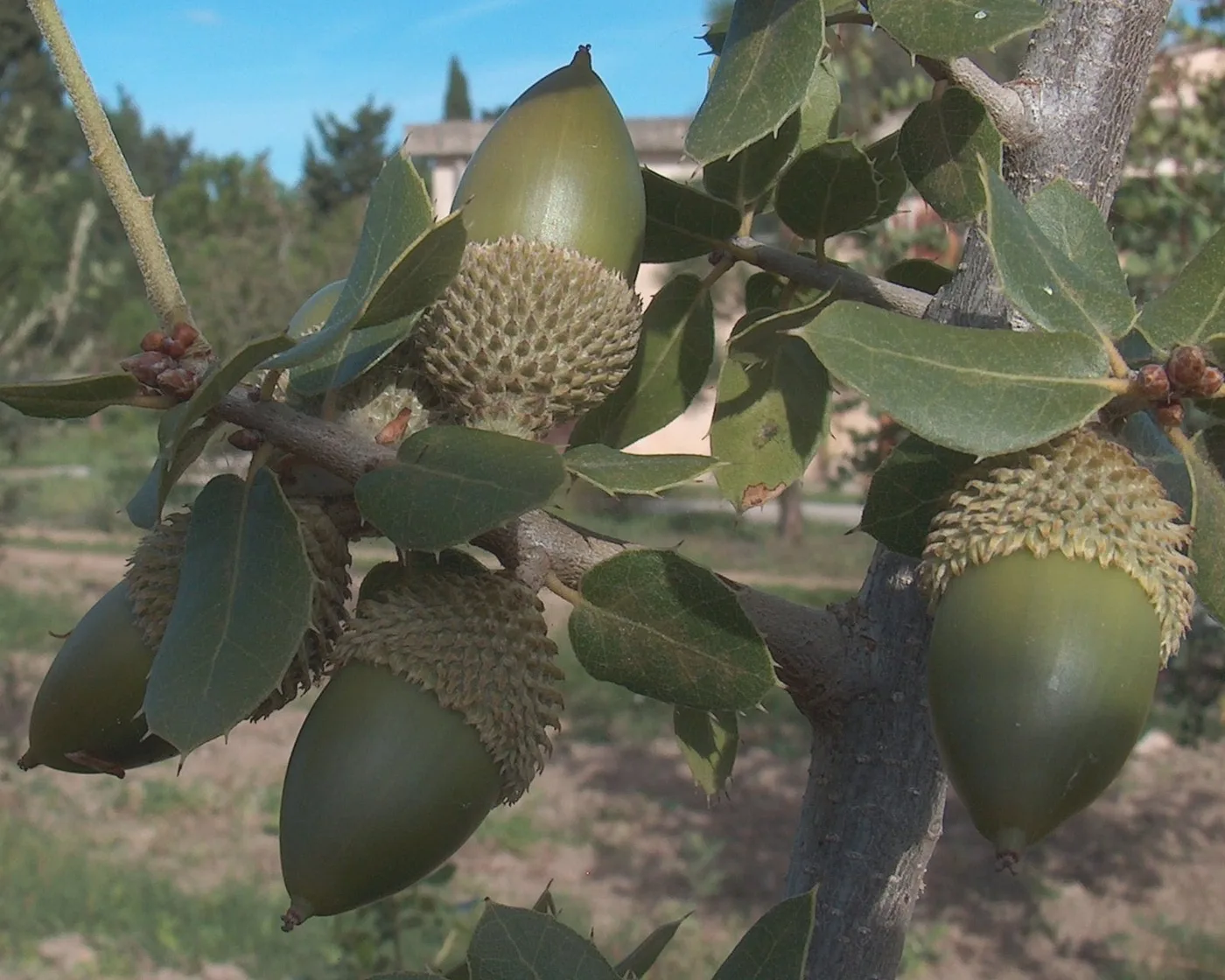
Special significance
Oaks were used to mark grave sites (see GEN 35:8), and it is possible that the references to “oak of Moreh” or “oaks of Mamre” may hint at burial sites of famous people. They were probably also important in divination, if the reference in JDG 9:37 to a “Diviners’ Oak” can be taken as typical. References to people named Allon (1CH 4:37) or Elon (GEN 46:14; NUM 26:26; JDG 12:12) may suggest that the oak was a symbol of strength or beauty, or both.
Translation
Oaks grow mainly in temperate areas (Europe, North America, North Asia, and Japan) and the Mediterranean area, including North Africa. Translators in tropical areas will not have a local variety as an option. In historical contexts, therefore, it will be necessary to transliterate from a major language. In poetic contexts such as Psalms, Proverbs, and the prophets, the oak typically represents a large and very strong tree, and a local species with those characteristics can be considered.