Discussion
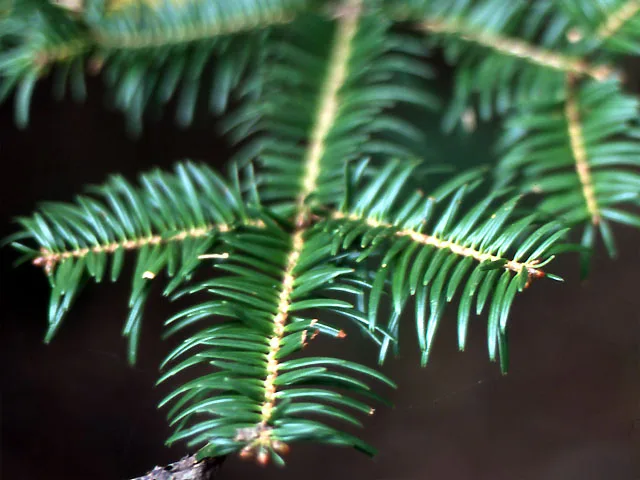
The Cilician Fir Abies cilicica grew abundantly in the forests of Lebanon along with cedars, evergreen cypresses, and Grecian junipers. The Hebrew word berosh probably included fir, cypress, and juniper. According to 1KI 5:22 (8) and elsewhere, berosh was used in King Solomon’s building projects. The reference in EZK 27:5 to the use of berosh for the timbers/planks of ships could well be talking about fir trees since they are very straight, but the association of berosh there with Mount Senir rather favors the Grecian juniper, which was abundant there (see Grecian juniper (eastern savin)). Hepper (page 163) notes that in Bible times firs were shipped to Egypt for the masts in front of temple pylons, and there is strong evidence that fir trees were used for masts in ancient Greece. One bit of linguistic evidence that berosh could refer to this fir is that the Akkadian word burasu, cognate with berosh, probably refers to the Cilician Fir Abies cephalonica.
Description
The Cilician fir is a tall and almost perfectly straight evergreen tree, in the same family with pines, cedars, and cypresses. It can reach a height of 25 meters (82 feet). Its flat seeds are contained in cones that fall from the tree when mature. Firs are the major source for turpentine, used by painters to dilute paint and clean brushes.
Special significance
Translation
The Abies genus is represented throughout the world in temperate climates at high altitudes (for example, in Kenya, Japan, and North America). Since there are no firs or anything quite like them in tropical Africa, translators can use a transliteration, for example, firi or pir. In EZK 27:5 we recommend following Zohary by rendering berosh as “fir” (so RSV, GNB, NCV). The majority of English translations are divided among “fir,” “cypress,” and “pine.” In 1–2 Kings and 2 Chronicles we recommend rendering berosh as “fir” or “juniper.” Elsewhere berosh may be considered a generic word referring to cypress, fir, pine, or all of them together. In those places a general word for this type of cone-bearing tree should be used (see also the discussion under Cypress).