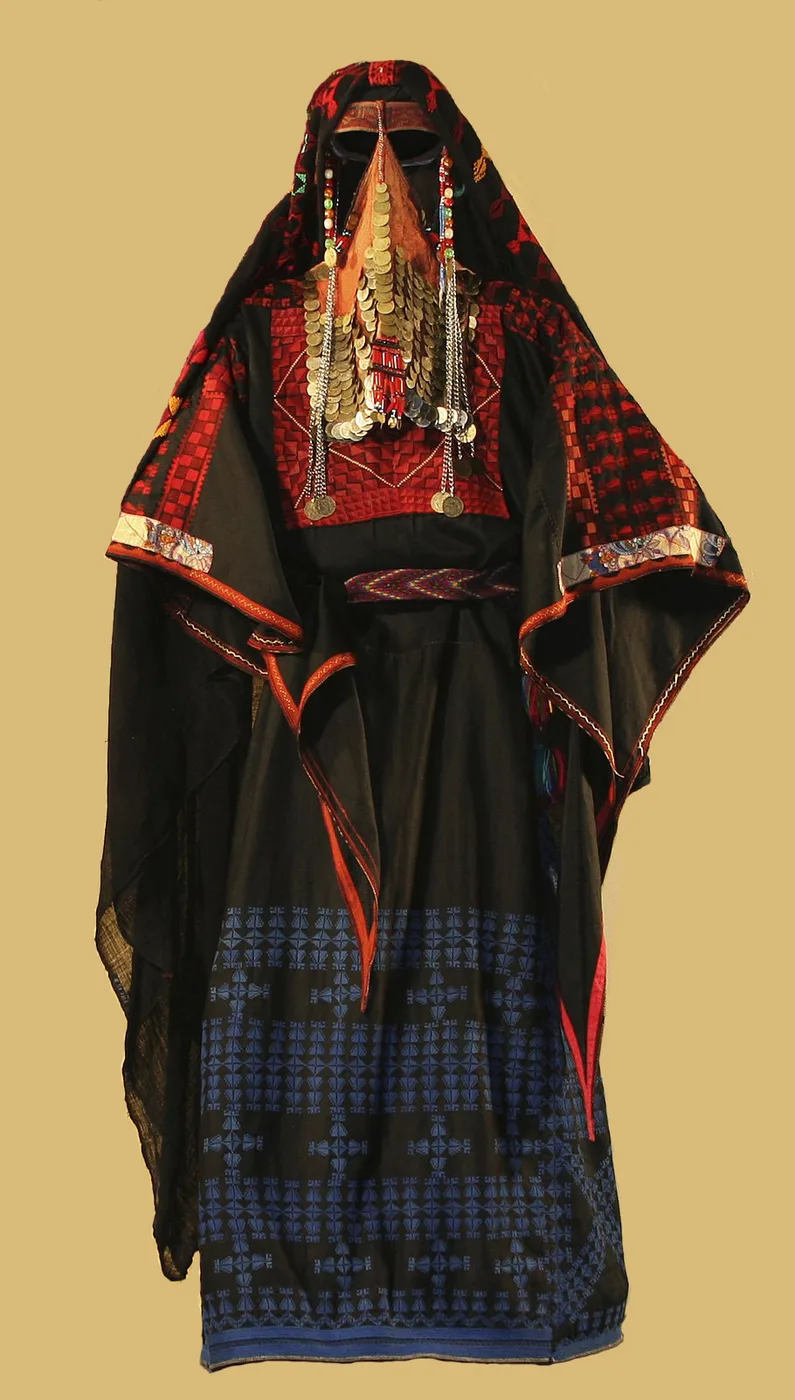
Description and usage
The veil was a thin piece of cloth worn over the face. The material would be sufficiently thin that the wearer would be able to see through it if it covered the eyes (unlike the illustration here), but others would find it difficult to recognize the facial features through the veil.
Translation
Where a word is lacking in a language for “veil,” a descriptive phrase may be used, such as “thin cloth to hide the face.” It may be necessary to expand the translation a little to convey the meaning; compare NCV at GEN 38:14, where it renders the second clause as “covered her face with a veil to hide who she was.”
Translators should be aware that it is only by historical accident that, in older English translations, the word “veil” was used also for the curtain that divided the Holy Place from the Most Holy Place (see Curtain, veil, drape). No attempt should be made to render them identically in the receptor language.
EZK 13:18; EZK 13:21: The Hebrew word mispachah refers to a long veil, almost a sheath, reaching from the head to the feet.
The Hebrew word rdid in SNG 5:7 and ISA 3:23 probably refers to a long veil, covering more than just the face. Both the mispachah and the rdid were similar to the niqab or burqah worn by some Muslim women.