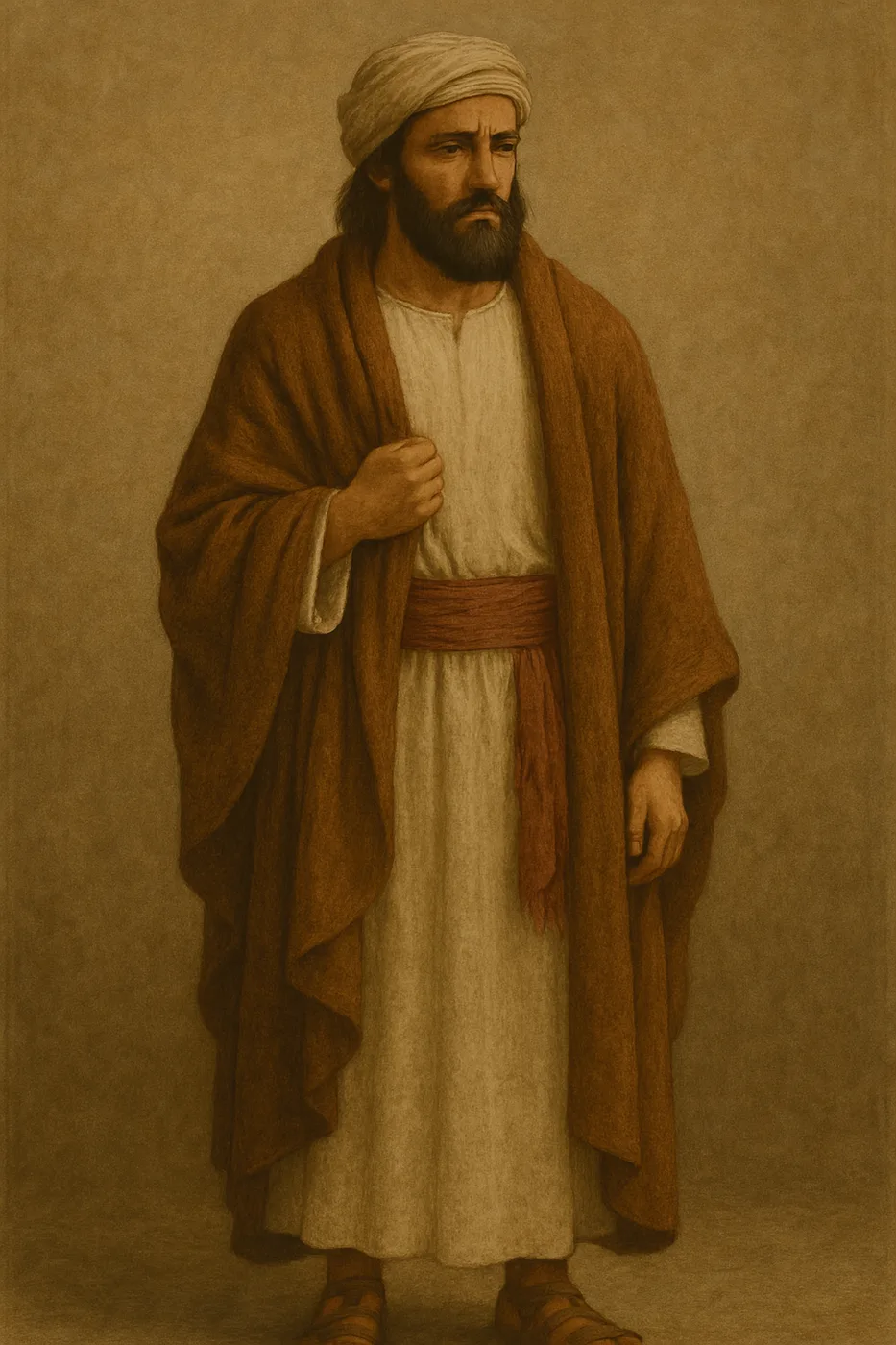
Description and usage
The waistband held a robe (see Outer garment, cloak, mantle, robe) at the waist. It was usually made of linen (see Linen), but leather ones are also mentioned. The waistband was not exactly a belt, such as worn with modern Western clothing, but it was a wide sash in which money and other things could also be kept (see Bag, sack, money bag, purse). It was wound around the waist and tied to hold it in place.
Translation
The Hebrew word ’avnet always refers to an item in the clothing of the High Priest (see Sash, cloth belt), except for ISA 22:21, where it is connected to a high official.
Opinions are divided concerning the exact form of the clothing referred to by the Hebrew word ’ezor. Some scholars have suggested that it was a kind of short undergarment that was wrapped around the waist (see Shirt, tunic, and compare GNT and CEV at JER 13:1–JER 13:11, where they render it “shorts”). Others have seen it as an apron that was tied around the waist over the outer clothing to protect it when working (see Apron). Most likely, however, the word ’ezor in most passages refers to a wide belt or sash that was tied around the waist to keep the outer garment from flowing loose (“belt” in NIV, NCV, NLT; “sash” in NKJV). It was sometimes decorated and could indicate the social standing of the person wearing it. The outer garment could be tucked up into it for work or rapid walking. It could also be used as a holder for tools, money, or other small objects.
2KI 3:21: In this verse the literal expression “all those who put on a belt” indicates men of military age. A literal translation will lack meaning. Translators should follow such models as GNT “all the men who could bear arms,” CEV “all of their fighting men,” NCV “everyone old enough to put on armor,” and SPCL “all young and old men of military age.”
DAN 10:5 refers to “a belt of the finest gold” (NIV). This does not mean a solid object made only of gold. It rather refers to a cloth sash but with fine gold threads woven into the fabric, enough gold thread, in fact, to give the entire sash a golden appearance.
In MAT 3:4 and MRK 1:6 translators may render the Greek expression zōnē dermatinos as “leather belt” (GNT). Possible renderings for the literal phrase “leather belt around his waist” are “belt of dried animal skin” and “strip of dried animal skin around his waist to hold his clothing.”