Reference:”
Discussion
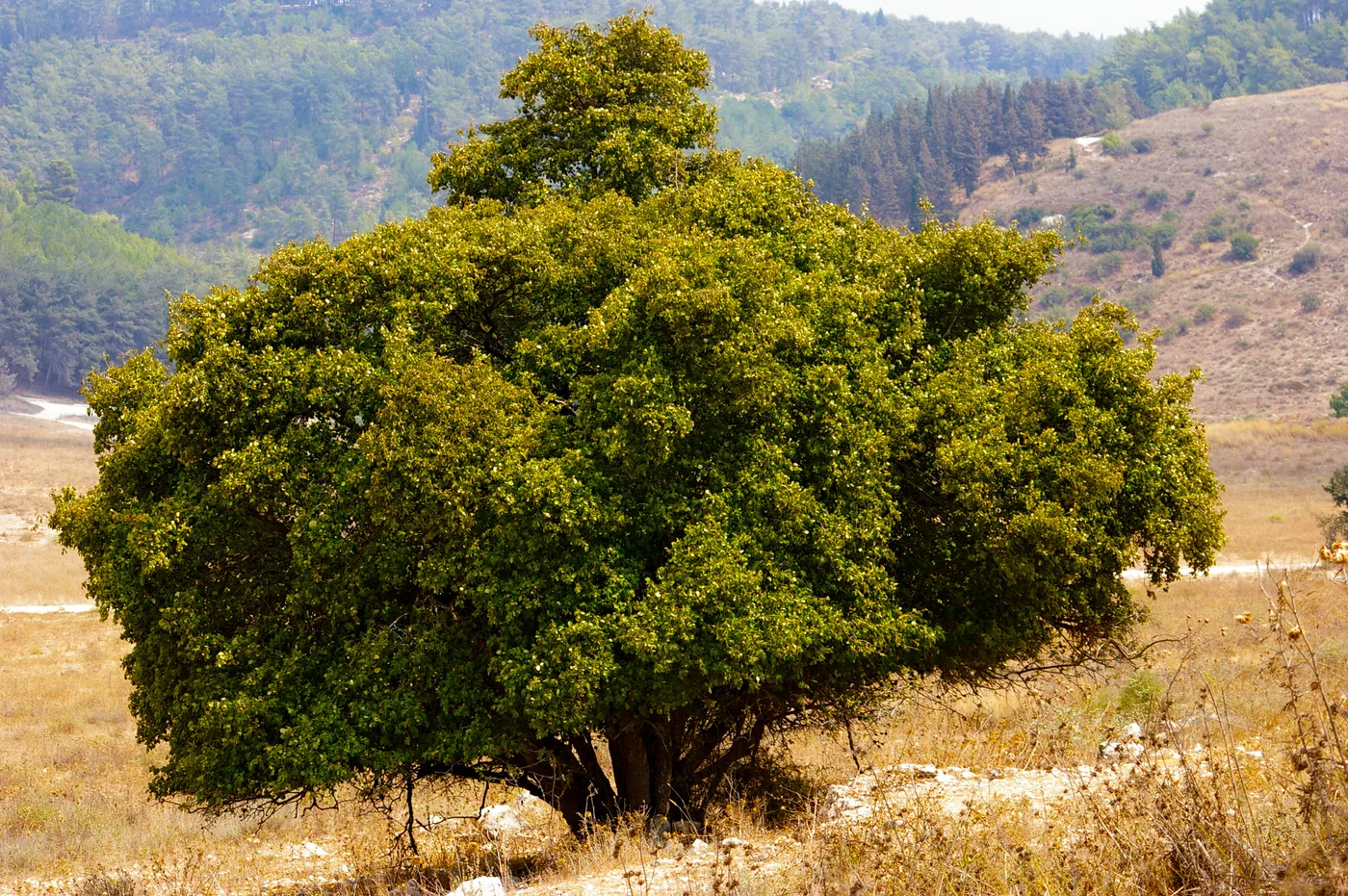
The livneh tree mentioned along with the oak (’allon) and the terebinth (’elah) in Hosea’s account of Israel’s idolatry has traditionally been identified as the poplar, on the basis of its occurrence in GEN 30:37. However, as Zohary observes, it is likely that the Hebrew word livneh actually refers to two different white trees and should be translated according to the context. In Hosea the geographical context is the oak and terebinth forests of the Judean hills. Here livneh most likely refers to the Styrax Styrax officinalis, whereas the same word livneh in GEN 30:37 (Jacob’s goat-breeding scheme) probably refers to the White Poplar Populus alba (see Poplar).
Description
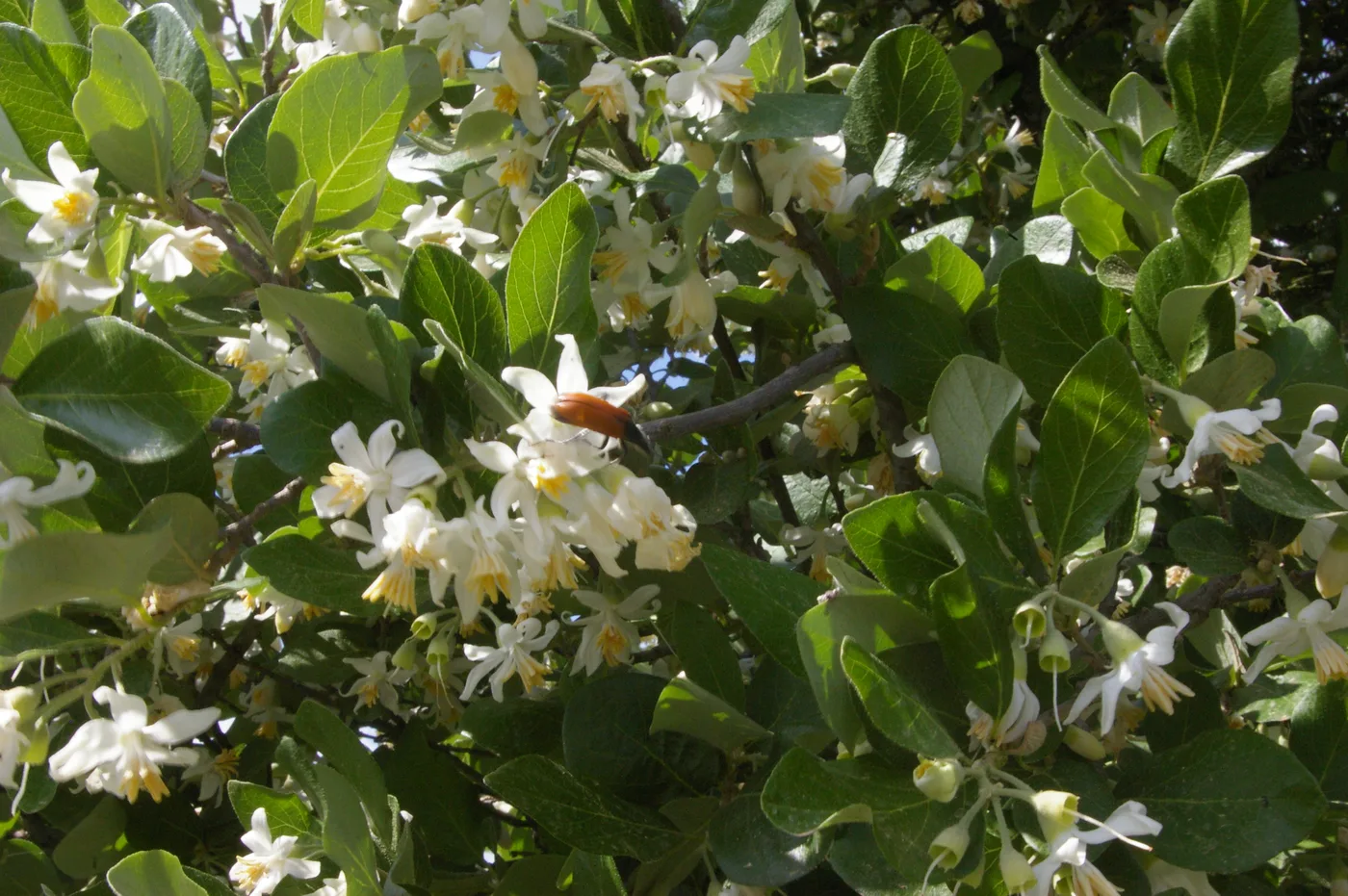
There has been considerable debate and confusion over the names “styrax” and “storax.” Following Zohary, we are suggesting that “storax” be reserved for the resin of the gumbearing shrub liquidambar of the Arabian Peninsula (see Opobalsamum (balsam, balm)), and “styrax” be used only when referring to the shrub Styrax officinalis of the Palestinian hills. Although some kinds of styrax produce aromatic resin, this one does not, according to Zohary.
Special significance
The styrax is mentioned with oaks and terebinths as a tree with a lot of good shade where the Israelites practiced idolatry.
Translation
There are 120 kinds of styrax found in the Mediterranean area, Southeast Asia, and tropical America. Many of them are known for their aromatic resin used in medicine (benzoin) and incense.
The treatment of styrax in HOS 4:13 will depend on what the translators have done with oak and terebinth. If the others have been transliterated, it is likely that the same would be done with styrax, yielding sitirak, suturak, or libine /labani (following Arabic). However, one could also argue for a functional equivalent, namely a local tree associated with the worship of spirits. A footnote could be used to give the probable botanical identification.