Discussion
The Hebrew word qaneh /qeneh means “cane” or “stalk”; tov means “good”; bosem means “spicy.” There are three general options for the identity of qaneh. Many botanists have held that this word refers to any of three or four sweet-smelling grasses of the genus Cymbopogon, one of which grows wild in Israel. That would be one option. Another is that it was imported from India, where other fragrant types of Cymbopogon were and are cultivated, such as Ginger Grass Cymbopogon martinii, Camel Grass Cymbopogon schoenanthrus, and Lemon Grass Cymbopogon citratus. Of these, Zohary and Moldenke both favor “ginger grass,” which is also called “sweet calamus.” However, the real Calamus Acorus calamus is a third possibility. It is a reed-like plant, more popularly known as the “sweet flag.” The origin of this plant is hotly debated, but it may have started from India and spread in marshy ground across Europe, picking up names like flagroot, myrtle flag, myrtle sedge, sweet root, and sweet sedge. The Egyptologist Joret believes it was used by the Pharaohs. The botanist Burkill holds that the Greeks used the ginger-like roots of the sweet flag, but confused them with the roots of the true ginger grass, leaving a legacy of confusion behind them (Hepper, page 144).
Description
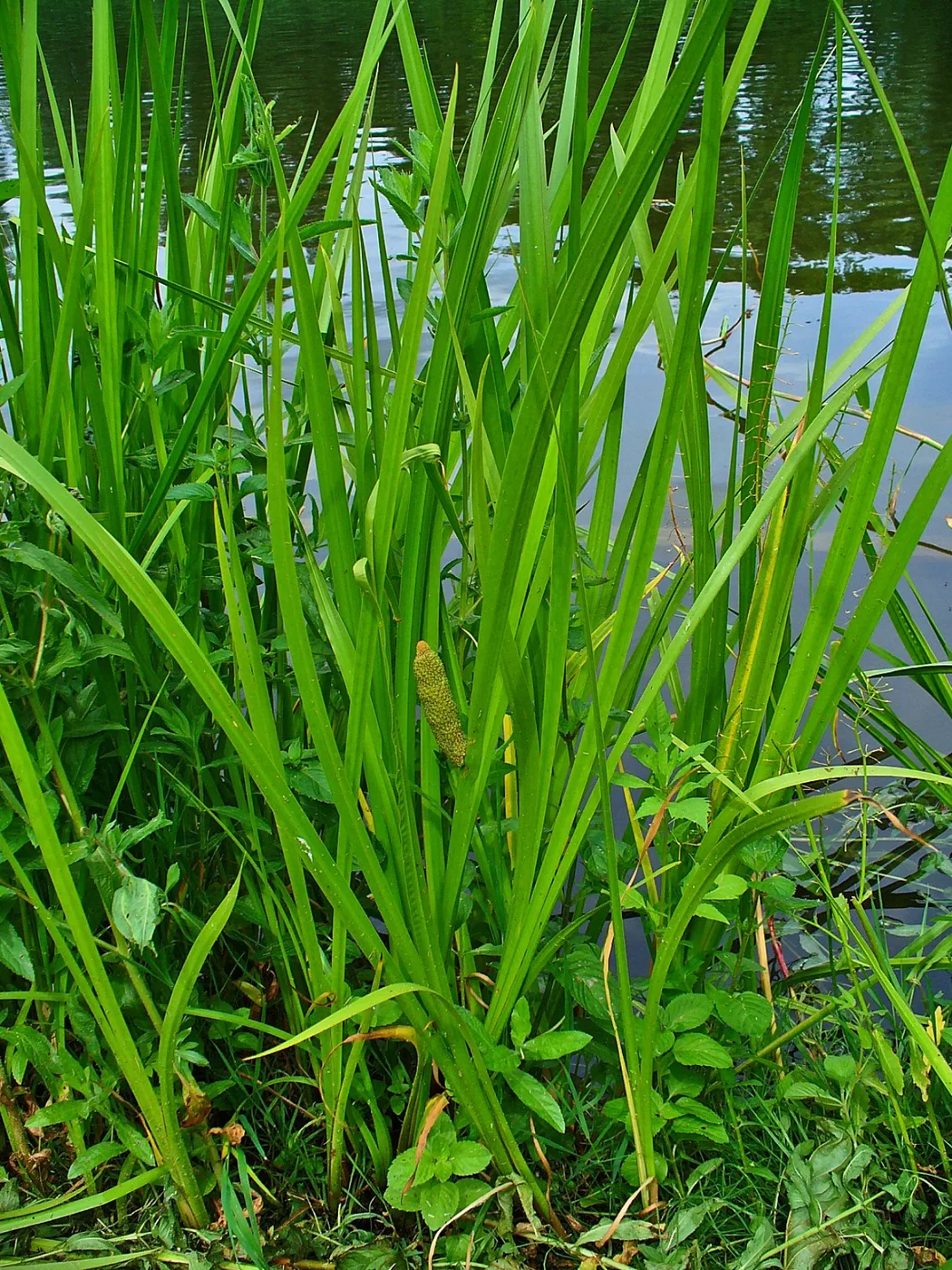
Ginger grass (option 2) grows in clumps to more than a meter (3 feet) high and has stiff leaves like sword grass. The oil is extracted by boiling and distilling the leaves.
Calamus (option 3) is a type of reed. It has stiff leaves but is distinguished by its green flower head that grows on a stalk to about 50 centimeters (20 inches) high.
Special significance
Qeneh bosem is mentioned in EXO 30:23 as one ingredient of the sacred oil used to anoint the priests.
Translation
The references to qaneh in ISA 43:24 and JER 6:20 are arguably rhetorical. Local cultural equivalents could be sought in those passages, keeping in mind that in both places qaneh is paired with frankincense. Translators may feel it best to deal with both of them the same way. If so, a generic word for grass or reed may be used together with a word meaning “fragrant” to render qaneh. Translators from Asia will probably find local names for ginger grass or lemon grass. Alternatively, the translator could transliterate from Greek (kalamos) with or without the word for “sweet.” Since the extract of calamus/ginger grass is an oil, one could translate “sweet-smelling kalamos oil.” Translators can also consider transliterating from a major language (for example, French verveine, citronelle; Portuguese erva -cideira; Spanish limonaria, pajadeMeca, Pasto cetron, Zacate lemon, palmarosa; Chinese shihch'ang pu).