Reference:”
Discussion
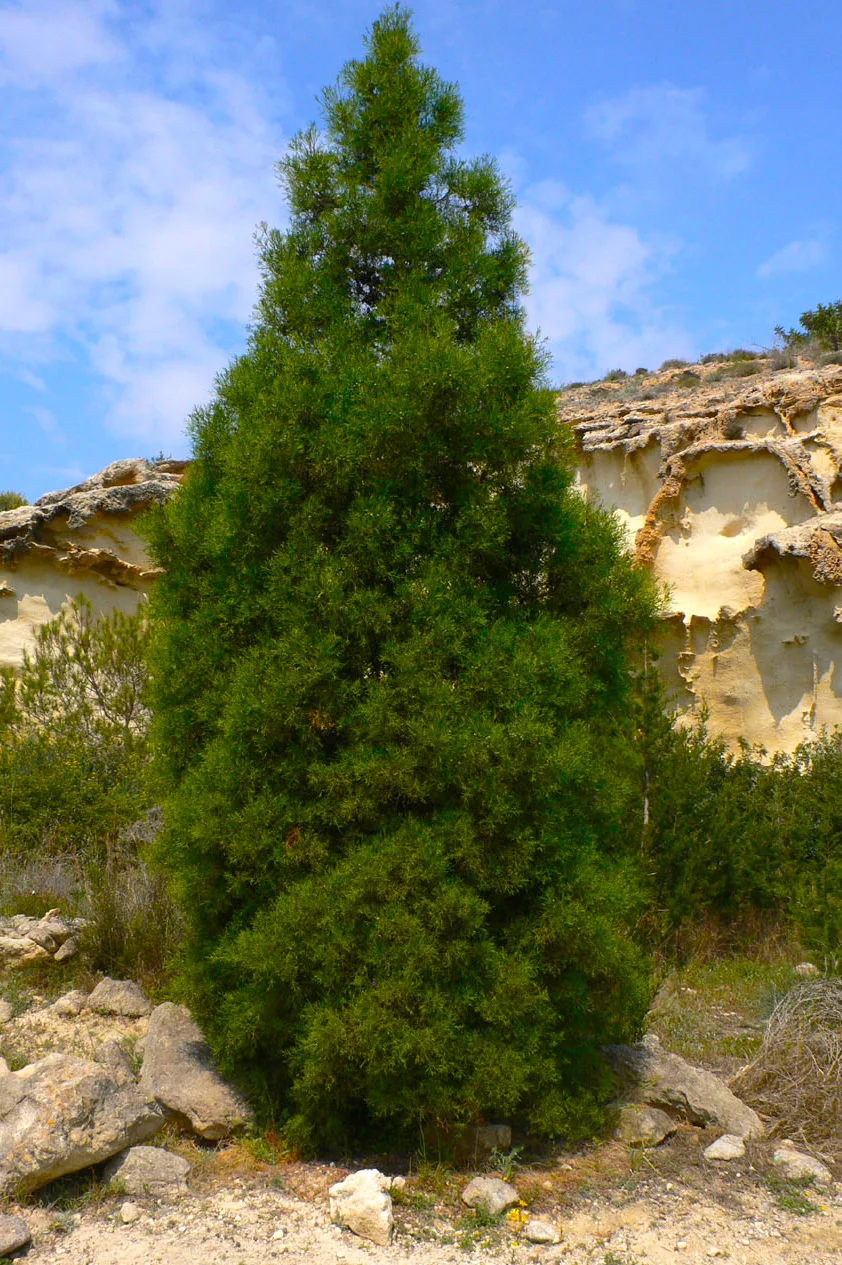
The Thyine tree Tetraclinis articulata is also called “thuja” or “thuya,” and, confusingly, “citron” or “citrus” in different parts of the world. Similar to the well-known arborvitae, the thyine is found mainly in the Mediterranean area and across North Africa (Morocco, Algeria). It is a coniferous tree related to cypresses, pines, and cedars. Its identification in the book of Revelation is based on the Greek spelling, thuinos. In some places it is called the sandarac tree on the basis of the clear varnish (sandarac) that is made from the resin. The Romans, who used the wood for cabinet work, called it “citrus” for some strange reason, though apart from the yellow fruit, it bears no resemblance to true citrus trees.
Description
The thyine can reach a height of 9 meters (30 feet). It has scaly leaves like cedars and cypresses, reddish brown bark, and sweet-smelling wood that is resistant to insects.
Translation
The context of the Greek word thuinos in REV 18:12 is a list of trade goods flowing into “Babylon” (Rome), including “thyine wood.” GNB uses a descriptive phrase, saying “rare woods.” RSV and NEB say “scented wood[s].” Translators are advised to follow either or both of these renderings, or to transliterate by using something like tuyin or sandaraki. JB ’s “sandalwood” is a possibility, but this has not been followed by other versions. With many others, we identify sandalwood with the Hebrew word ’almug (see Sandalwood (red saunders)).