Discussion
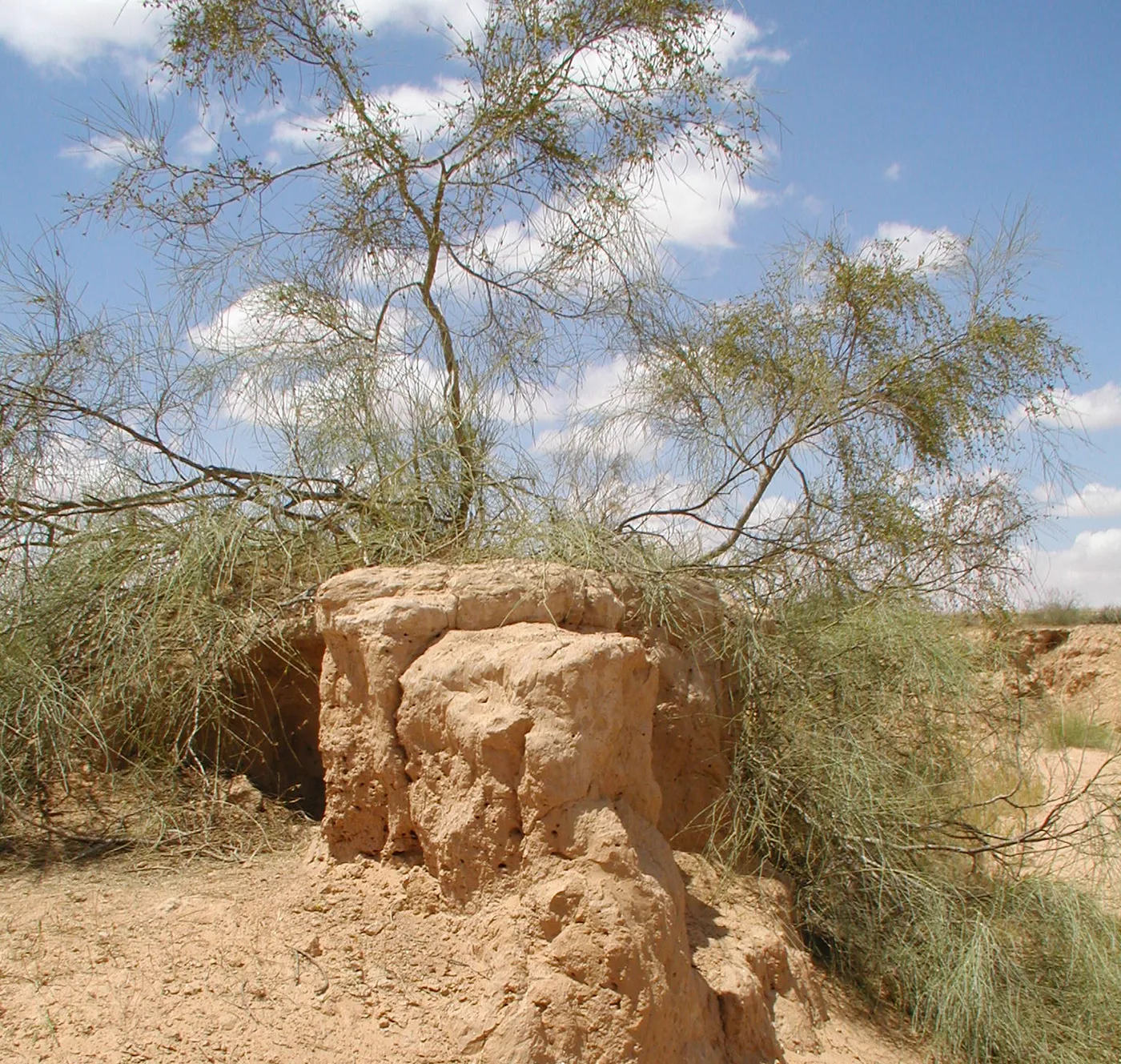
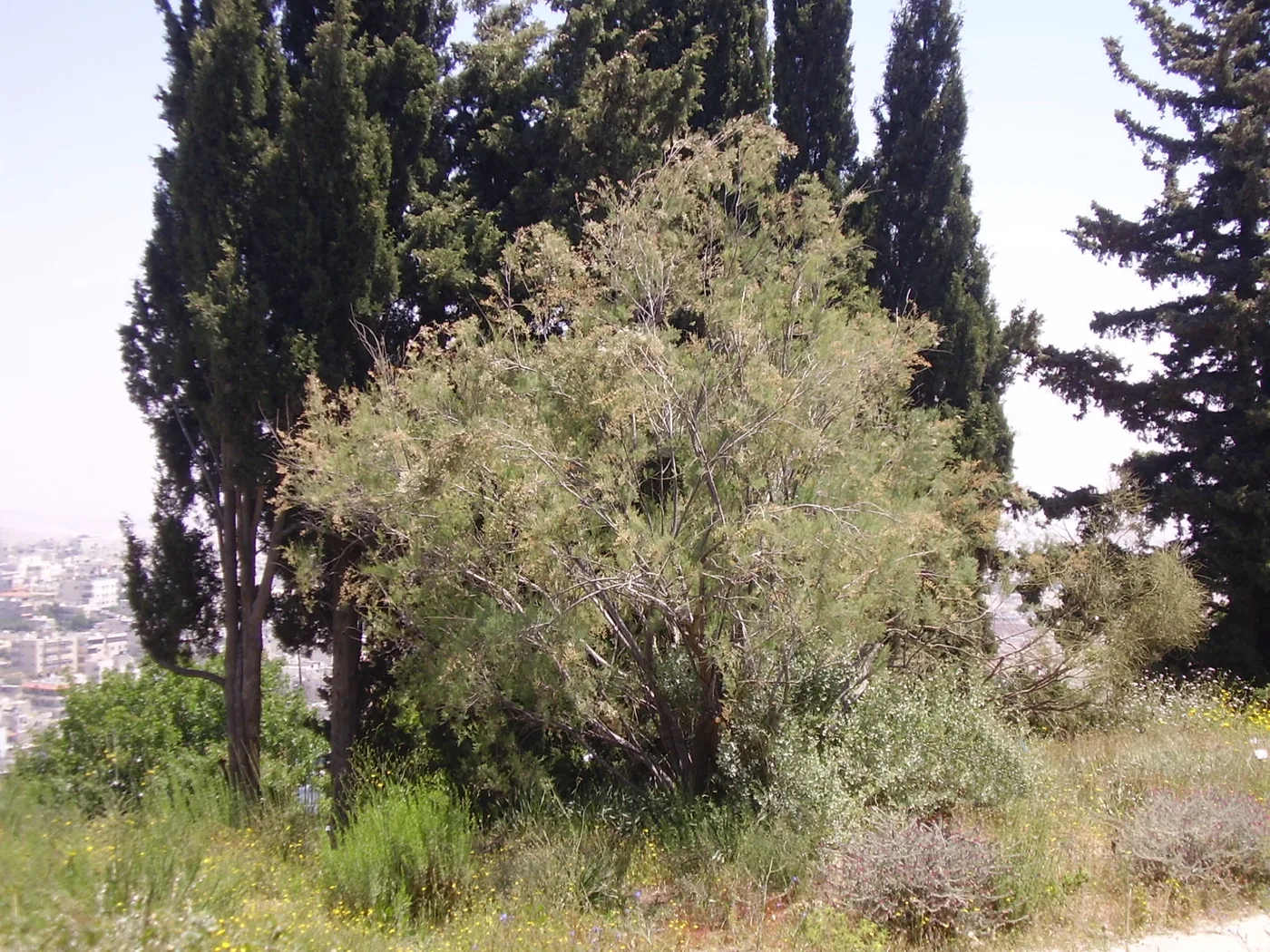
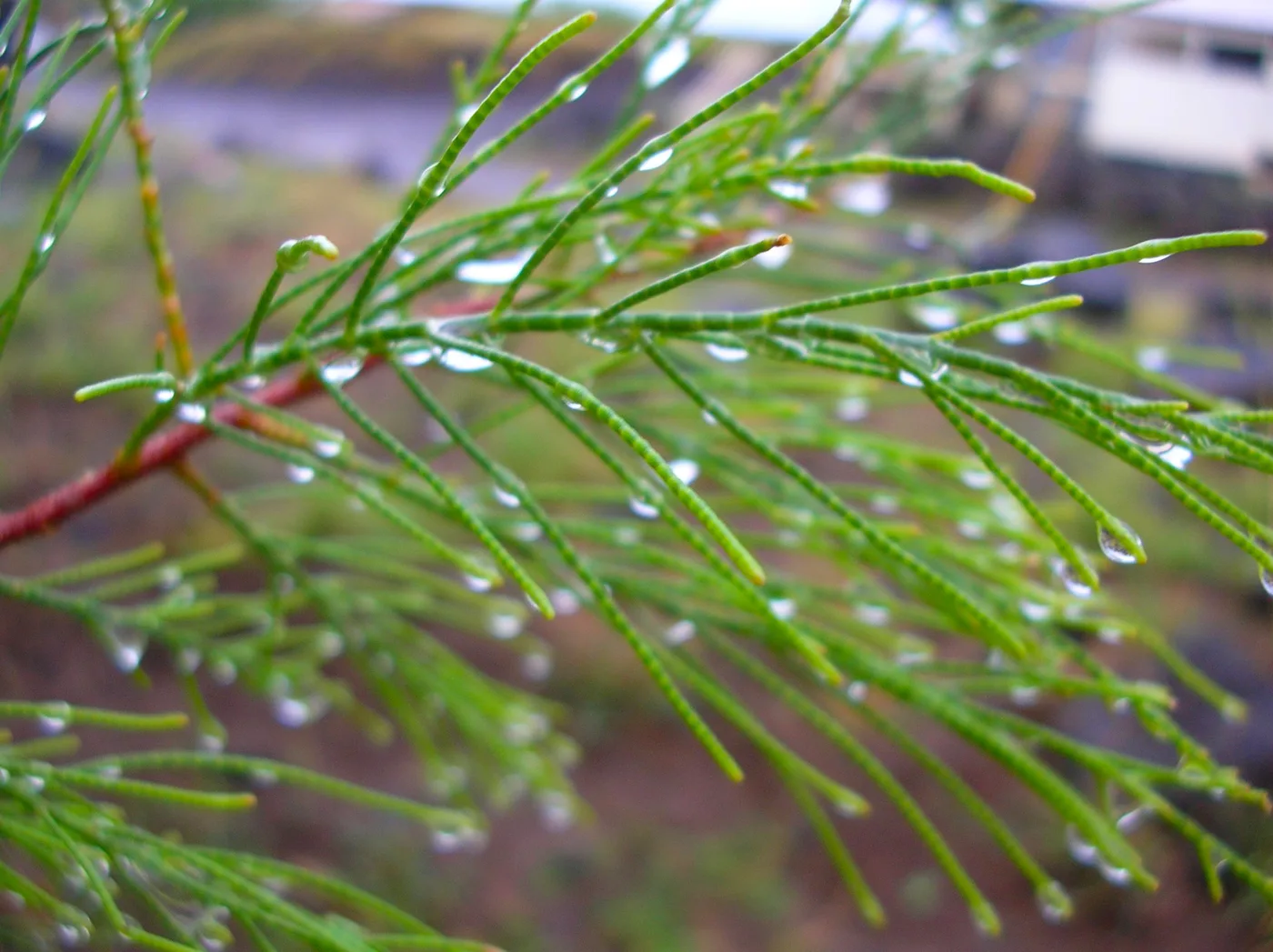
There are two main species of tamarisk referred to in the Bible, the Leafless Tamarisk Tamarix aphylla and the much more common Nile Tamarisk Tamarix nilotica. Both species are found throughout the plains and in the wadis (dry stream beds) of the Aravah and the Negev, where they tap water that has soaked into the ground after flash floods. Tamarisks can grow in salty soil, earning them the name “salt cedar” in some places. A third species grows only in the Jordan Valley. None of them has proper leaves but rather fleshy twigs, which are eaten by goats and sheep. Despite a similarity in name, tamarinds (Tamarindus indica) are not related to tamarisks.
In the account of the burial of Saul we have a mismatch between 1SA 31:13, which says he was buried uner an ’eshel (“tamarisk” in RSV), and 1CH 10:12, which says he was buried under an ’elah (“oak” in RSV). So what was it? Maybe neither!
At some point in the development of Hebrew, the word ’eshel became a general term for trees. However, the words ’allon (“oak”) and ’elah (“terebinth”) also generalized in post-biblical Hebrew to ’ilan, meaning “tree,” so it is possible that at some point in the editing of 1 Chronicles, ’elah as a generic word replaced the earlier ’eshel, which itself could have already been generic at that point. That is, both words could have been regional, stylistic, or in-vogue variations of the general word for “tree.”
Description
Special significance
Translation
Tamarisks are found plentifully in Asia (forty species) and Europe (fourteen species), with a few also in Africa in the Mediterranean basin. The English versions are virtually unanimous in translating ’eshel as “tamarisk.” CEV uses “tamarisk” with a footnote: “A tall shade tree that has deep roots and needs little water.” The options for translating “tamarisk” are:
1. Transliterate from a major language, for example, tamarisiki, tamaris, esheli (Hebrew), or eteli /atali (Arabic).
2. Consider the function of the tree, which in Genesis was almost certainly connected to Abraham’s worship of God, and translate as “holy tree” perhaps with a footnote giving the Hebrew and/or English, especially if you have used “holy tree” in GEN 12:6 for “oak.”
3. Simply use “tree” with a footnote stating that the Hebrew specifies ’eshel, that is, tamarisk.