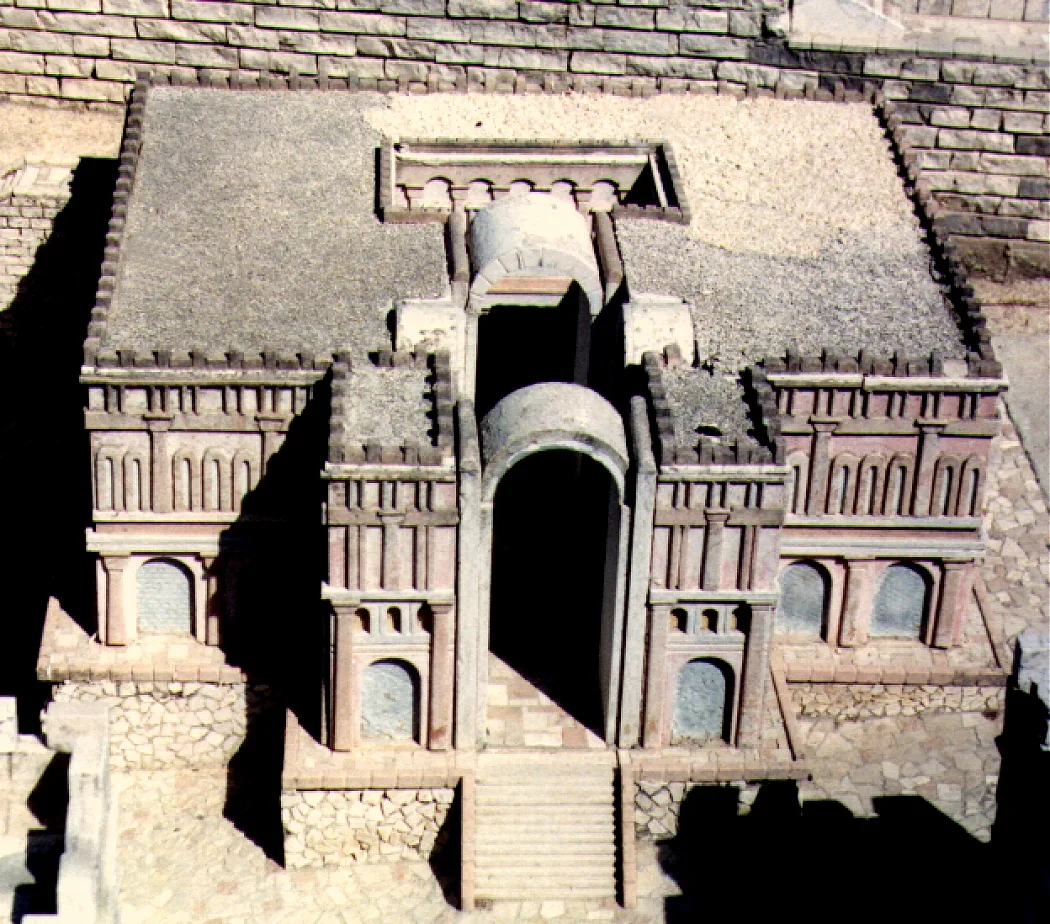
Description and usage
The palace was the dwelling of a king or ruler. Such a dwelling was usually larger and more elaborate than the dwelling of an average person. Its structure and building materials varied widely.
Translation
“Palace” may be rendered “home of a king” or “home of a ruler.”
The Hebrew word ’armon sometimes indicates the fortified part of a king’s residence or other fortified dwellings; see 1KI 16:18. In such cases it will be better to render it as “citadel” or “stronghold.” See also Fortress, stronghold, castle, citadel, fort.
PSA 45:9: “Ivory palaces” (RSV; see also 1KI 22:39) are not palaces built completely of ivory, but palaces decorated with ivory, either on the building itself or on its furniture (see 1KI 10:18; AMO 3:15; AMO 6:4).
PSA 144:12: The Hebrew word heykal can also mean “temple.” It is almost always clear which meaning is intended, either from the context or from some modifier such as “of the LORD” or “of the king.” However, the meaning in this verse is in doubt; some translations have “palace” (RSV, GNT) while others have “temple” (NAB, NCV).
There are differences of opinion concerning what building in Jerusalem is indicated by the Greek word praitōrion in the Gospels. It may have been either the palace of Herod in the western part of the city or the fortress Antonia northwest of the Temple area. The praitōrion in Caesarea (ACT 23:35) was the palace built by Herod the Great. In the Gospels it is satisfactory to translate praitōrion as “palace where the governor lived” or “large dwelling where the ruler lived.” In some languages the term for “palace” may suggest a military fortification, and this would be quite appropriate for these New Testament passages.