Discussion
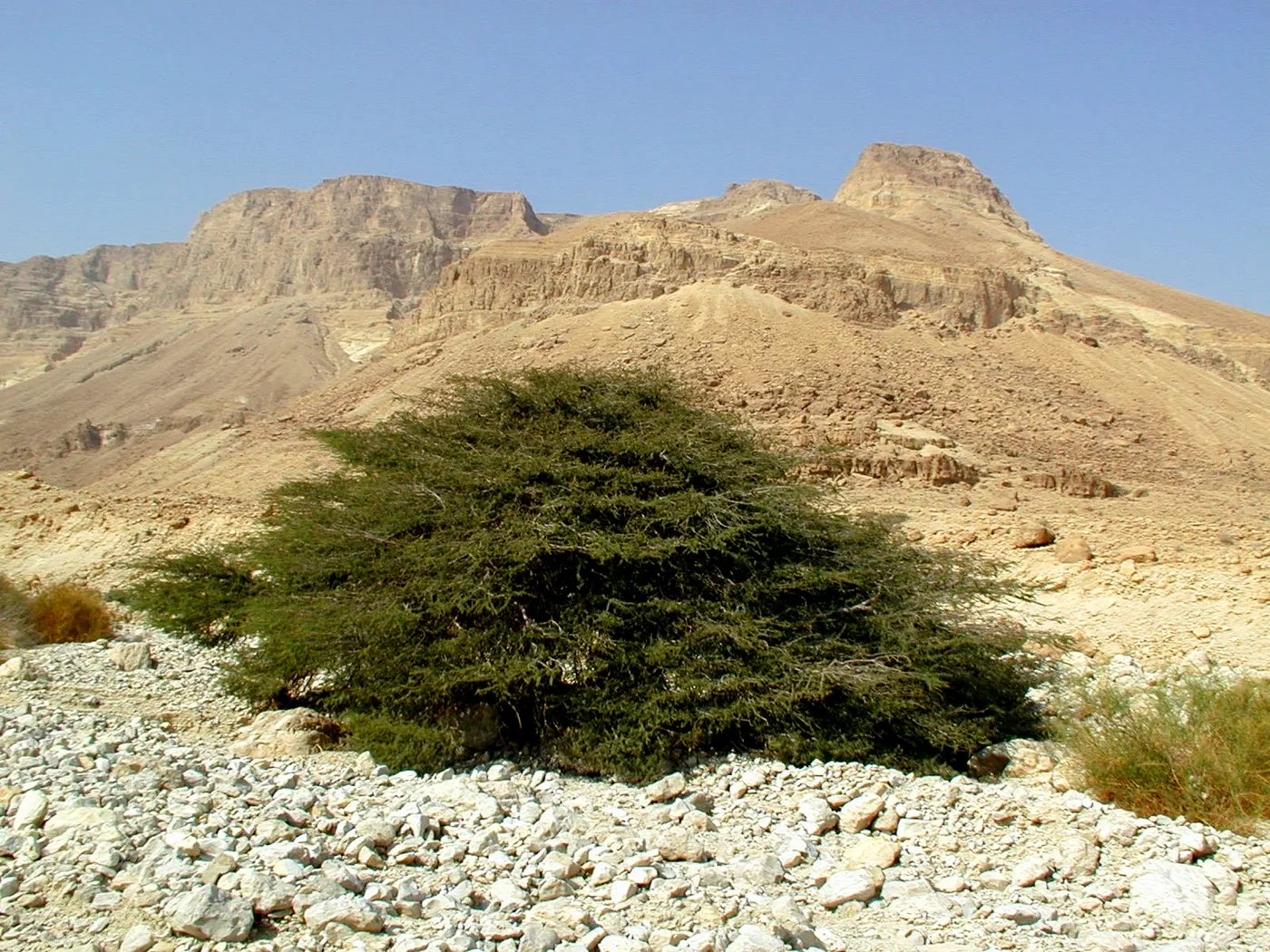
The plural form of shittah (shittim) is used sometimes as a place name (NUM 25:1; NUM 33:49; JOS 2:1; JOS 3:1; HOS 5:2; JOL 4:18; MIC 6:5), which is evidence of the wide distribution of this tree in Sinai and southern Palestine. The acacia referred to in the Bible was of two kinds, the Umbrella Thorn Acacia Acacia tortilis and the Common Acacia Acacia raddiana.
The Acacia tortilis is found in the hot Arabah Valley, whereas the Acacia raddiana tends to be found in cooler conditions throughout Sinai. A third variety (Acacia albida) is found in lowland Israel, the Sharon Plain, and lower Galilee. The common acacia was the only tree available to the Israelites for construction of the Tabernacle. Hareuveni discusses the problem of getting enough acacia trees in the wilderness for all the Tabernacle furniture including the 15 meter (50 foot) pole that ran the length of the side wall. He assures us that although most acacias are smaller, there are some that reached 15 meters in height. But would there be a piece straight enough even in a 15 meter acacia to use as a side pole? I doubt it. Then again, they could have joined short pieces to make a long one. Indeed, a collapsable pole would have made transport easier. According to Herodotus, boats on the Nile were made of acacia wood. (See also the discussion in The Works of Their Hands [WTH ] Tabernacle construction - Band, ring, rod, especially Bar, pole.
Description
Translation
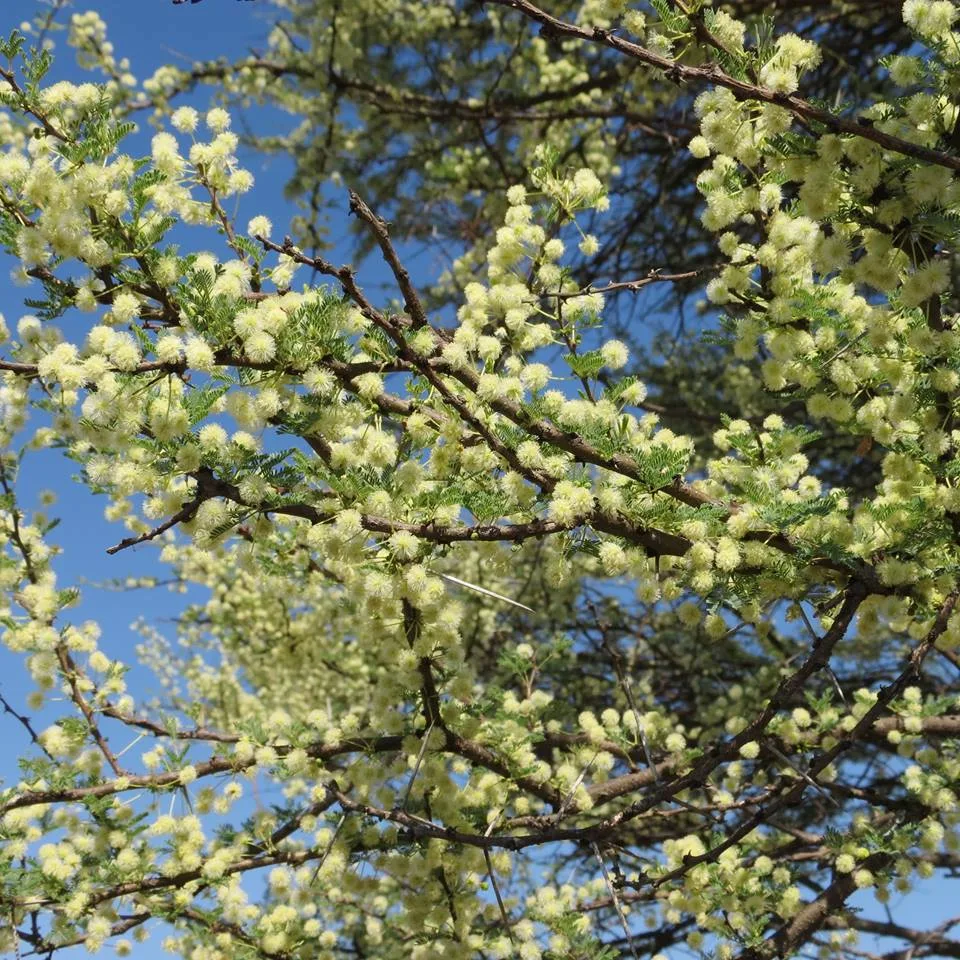
Since the acacia is widespread in dry areas of Africa, Arabia, India and Australia, translators in those areas should be able to use a local word. Palgrave lists forty-three species in southern Africa alone. Hausa (Nigeria, Chad, Niger) has at least twelve words referring to acacias. In such languages a local species should be used, especially one that is used for building. Elsewhere, if none of these is available, the translator can transliterate from Hebrew (shittah) or from a major language, for example, sunt or talh (Arabic), akasiya (English/French/Spanish via Latin). West African translators need to beware of confusing “acacia” and “cassia,” a common tree with yellow flowers.