Discussion
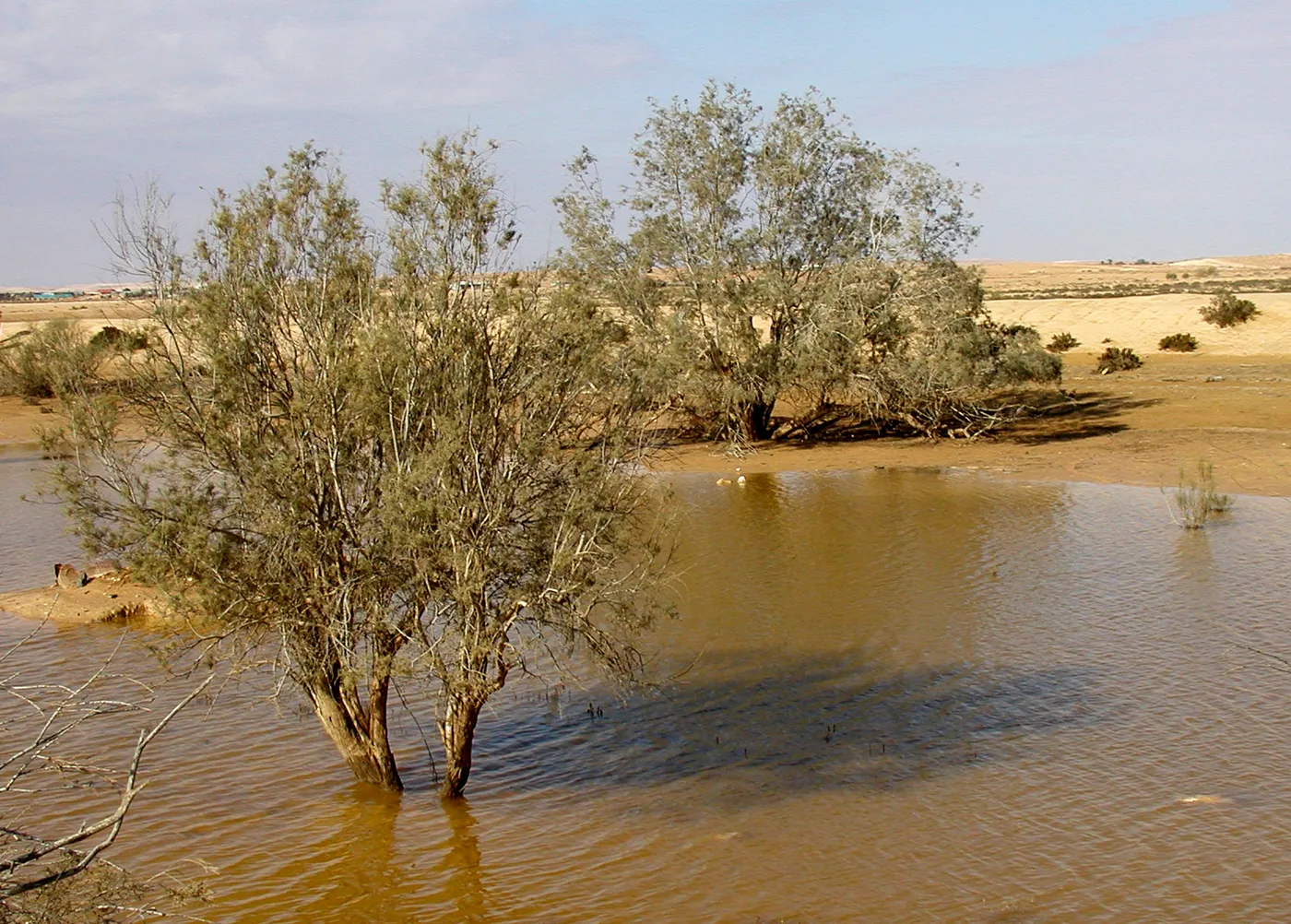
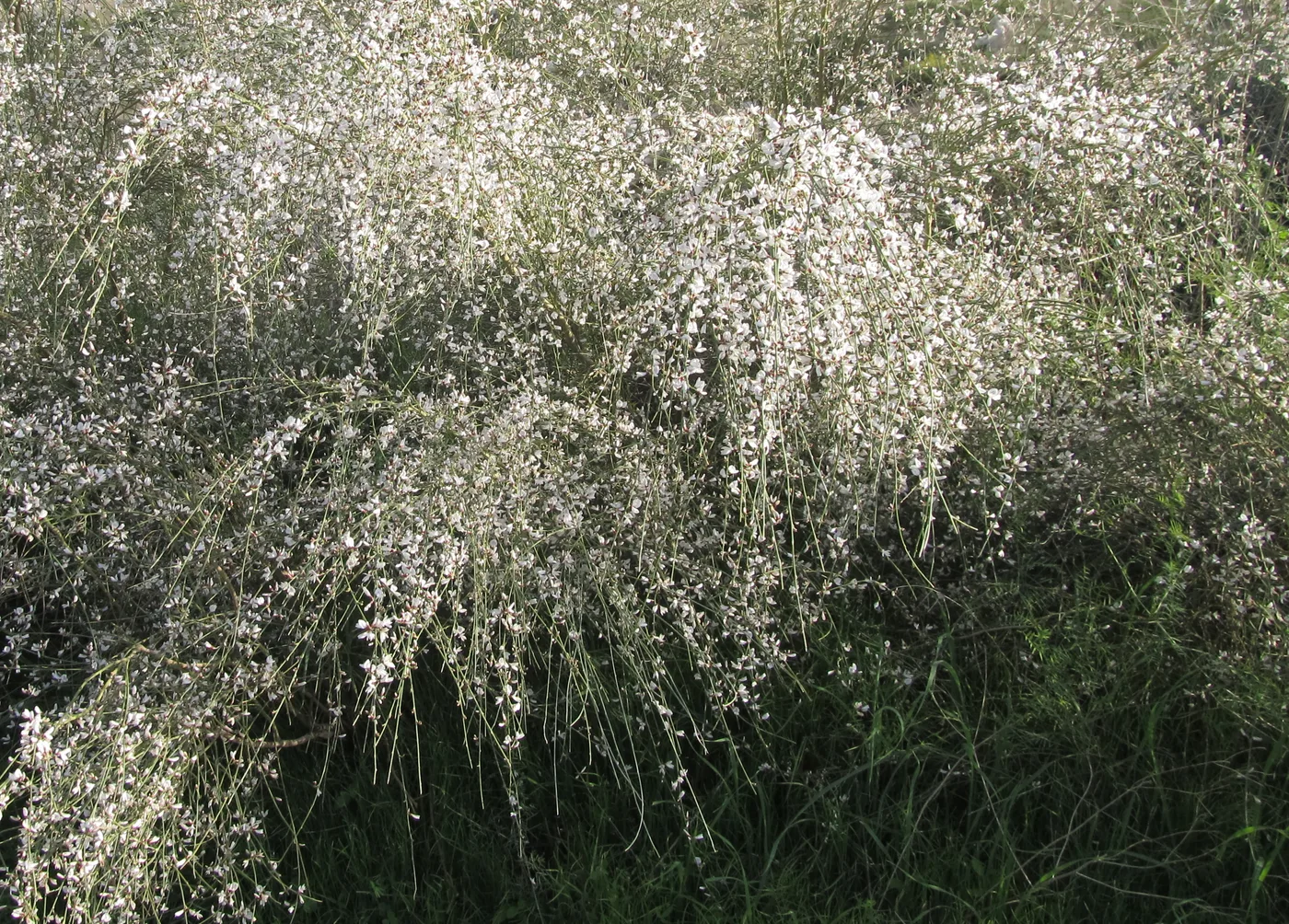
A number of scholars identify rothem as the White Broom Retama raetam, a tough desert shrub found in the Holy Land and Arabia. Earlier, Moldenke contended that rothem refers to a parasitic plant called dog’s club. In the story of Elijah’s flight from Jezebel, the mention of the broom tree in 1KI 19:4 provides detail to the image of desolation brought to mind by the word “wilderness” earlier in the verse. The references to rothem in PSA 120:4 (“… with glowing coals of the broom tree”) and JOB 30:4 (“… and to warm themselves the roots of the broom”) have led scholars to conclude that it is indeed the broom shrub, since it makes a very hot fire, due to the oil in the stems and leaves. The place name Rithmah (“place of rothem”) referred to in NUM 33:18; NUM 33:19 may also refer to the broom. The white broom is found on hills, rocky places, ravines and sandy places throughout the Holy Land, especially near the Dead Sea, in Gilead, on Mount Carmel, in the Syrian desert, and on the Phoenician coast.
Description
Translation
In 1KI 19:4 the New Jerusalem Bible [NJB ] renders rothem as “furze bush,” also known as “gorse,” in an attempt to use a name known to English gardeners, but neither “gorse” nor “furze” are familiar to botanically ignorant city-dwellers of the twenty-first century. Likewise, the German Ginsterstrauch in the German common language version (GECL) is not well known. Hence, some modern versions use a generic term in 1 Kings, such as “large bush” (Contemporary English Version [CEV ]), “tree” (Good News Bible [GNB ], and “bush” (New Century Version [NCV ]). In areas where plants are still known by species names, translators can select a shrub that grows in dry, barren areas (assuming it is big enough to offer shade), or transliterate from the Hebrew (rothem) or a major language (for example, retem in Arabic). Otherwise, they can use “small tree” or “shrub.”
In PSA 120:4 a local kind of wood that produces a very hot fire could be used, since the text is rhetorical, and needs an image of something very hot.
The reference to broom in JOB 30:4 poses major textual and exegetical problems, which explains the variety of renderings in modern Bibles. RSV reads “they pick mallow and the leaves of bushes, and to warm themselves the roots of the broom.” GNB and the New International Version (NIV) have these poor folk eating the roots of the broom tree. However, reliable sources tell us that the root of the broom tree is poisonous. That is why Moldenke suggested that it must be another plant, namely the parasite Dog’s Club Cynomorium coccineum, which grows up out of the roots of the broom tree. However, there is good evidence that the writer intended to say the roots were “burned” (as in RSV), not “eaten” (as in GNB and NIV). Hanni Kuhn, writing in The Bible Translator, advises three options for translators of the two difficult lines of this verse, two of which we put forward here (the third, following Moldenke’s suggestion of dog’s club, has had less support and we are not promoting it):
1. They pluck saltplant [orache] leaves for food,
the roots of broom they burn for warmth.
Here the letters l-ch-m-m of the final Hebrew word are read as lchumam (“to warm themselves”). This is followed by RSV and Moffatt (Mft), based on a change in the vowels that were added to the Hebrew text. (For “saltplant,” see Orache (saltwort))
2. They pluck saltplant leaves to eat,
and sell/make embers/coals [charcoal] of broom to earn their bread.
In this rendering l-ch-m-m is read as lachmam (“their bread/food”). This second view is supported by Hareuveni (pages 31–32).