Discussion
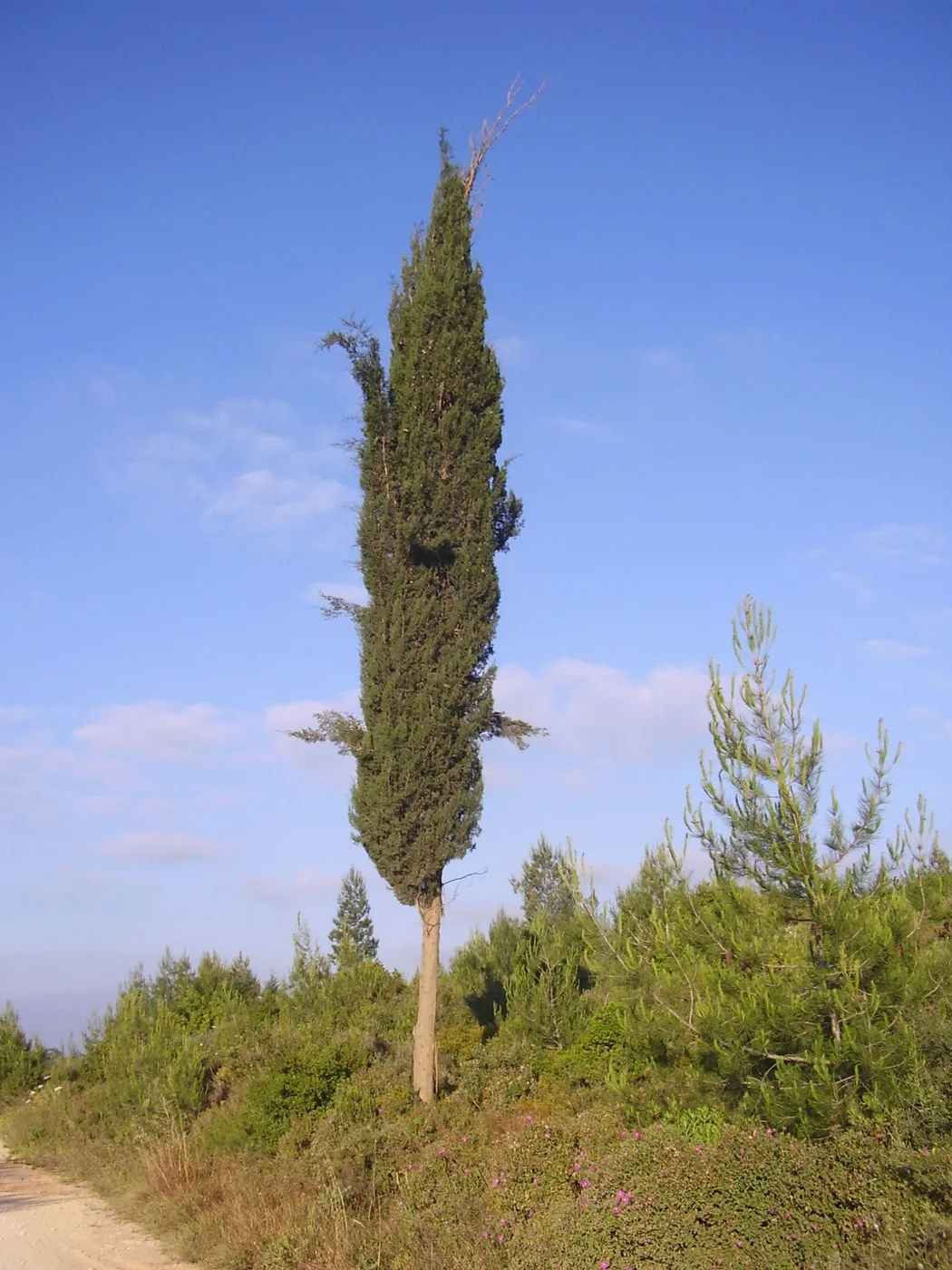
The Hebrew word berosh probably covered cypress, fir, and juniper; we are including here only those instances of berosh that possibly refer specifically to the cypress. The Cypress Cupressus sempervirens, native to Israel, was once common in the mountains of Judea. It also grew abundantly in Lebanon along with cedars, firs, and Grecian junipers. Cypresses also grew in Judea, Gilead and Edom, and do so up to the present day.
A comparison of versions reflects the disagreement among scholars on the identification of the coniferous trees. For example, the Hebrew word berosh in 1KI 5:22 (8) is translated as follows:
“cypress” (RSV, NRSV, NLT, Living Bible [LB ], NJPSV; Brown, Driver and Briggs lexicon [BDB ], Keil and Delitzsch)
“pine” (GNB, CEV, NIV, NCV, REB, Fauna and Flora of the Bible [FFB ])
“juniper” (NJB)
“fir” (New American Bible [NAB ])
Hepper appears to agree with Zohary. Hareuveni identifies berosh as juniper. Thus, if berosh does refer to a single species, current scholarly opinion would support “fir” or “juniper,” but not “cypress” or “pine.” It is quite possible that berosh and its cognates burasu (Akkadian) and brotha (Lebanese Arabic) have been used at different times both as generic terms and as specific terms for one of the conifers.
Regarding the gofer wood that Noah used for his ark (GEN 6:14), little can be known until actual specimens turn up on Mount Ararat. Meanwhile, Moldenke and others thought that the wood used to build the ark may have been cypress, and this is found in Moffatt’s version. But pieces of the ark that were allegedly found by French explorers in the 1970s turned out to be oak dating from the sixth or seventh century A.D. Cypress is very durable. The similarity of the Hebrew word gofer with kofer (“bitumen”) suggests perhaps a resinous tree. Hence, others have ventured “pine” or “cedar.”
Description
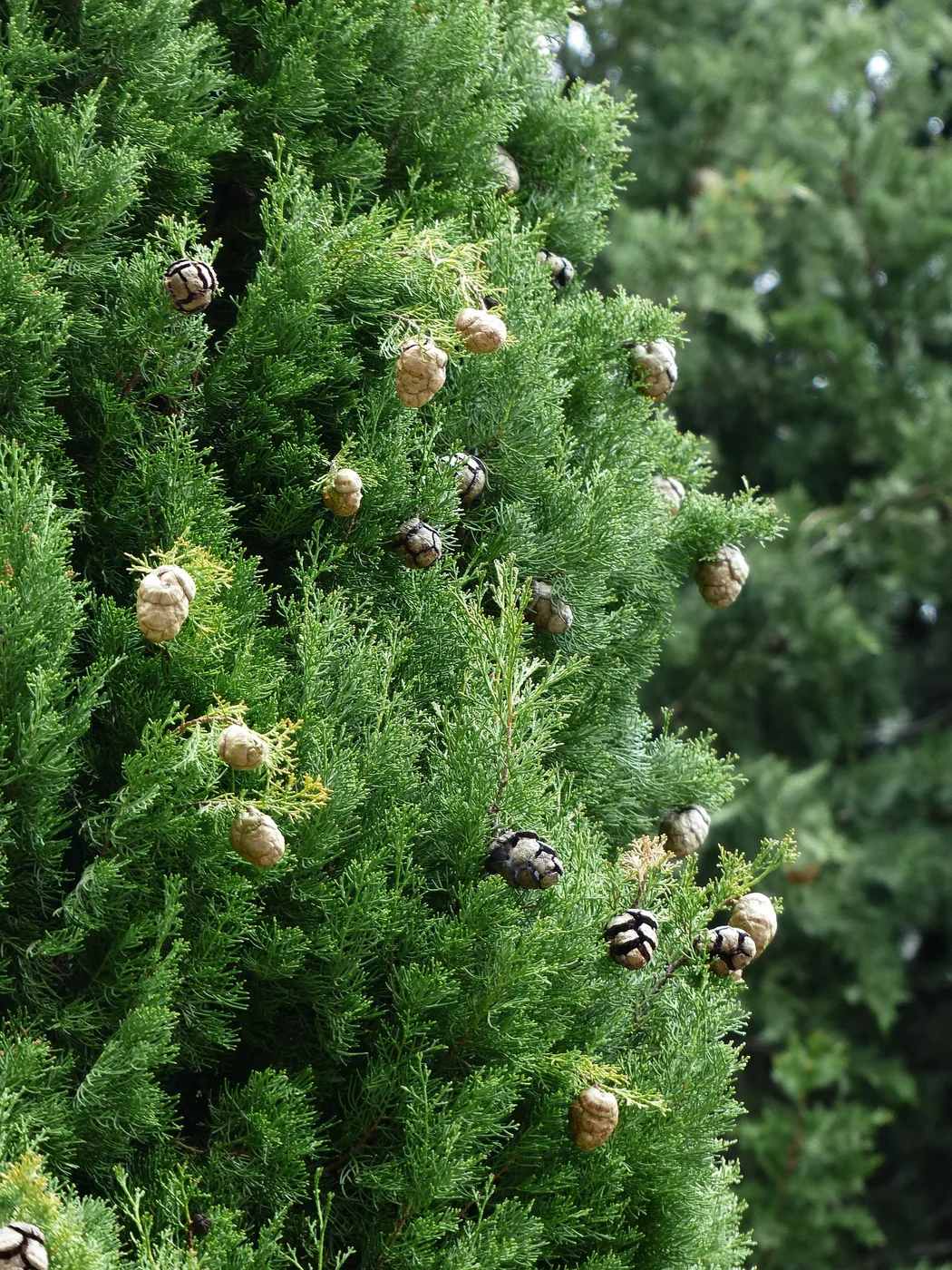
Closely related to the pines, firs and cedars, the cypress may reach 9–15 meters (30–50 feet) high. It has small scale-like leaves and round cones. The tall, narrow specimens that are common today in Israel and other countries are a modern variety (pyramidalis) that has been specially developed.
Special significance
In the following passages berosh seems to suggest something exotic:
SNG 1:17 - “the beams of our house are cedar, our rafters are berothim.”
ISA 60:13 - “the glory of Lebanon shall come to you, the berosh, the plane, and the pine, to beautify … my sanctuary … .”
Whether berosh was generic or specific, a number of poetical passages use it to represent something special without specifying the particular quality in focus; for example, the third line of HOS 14:9 (8) says “I am like a berosh.” In this passage GNB takes the function of the tree to be protection, whereas NLT brings out the ever-green aspect of the tree. In other passages the shape and smell of the tree may be important.
Isaiah uses berosh to represent a mountain tree that will grace the desert in the coming age:
ISA 41:19 - “I will put in the wilderness the cedar, the acacia … I will set in the desert the berosh… .”
ISA 55:13 - “Instead of the thorn shall come up the berosh. … ”
According to Hepper, the Egyptians used cypress wood for coffins.
Translation
If a generic word for evergreen conifers exists in the receptor language, then that could be used as a cover term for all the cases of berosh. If not, a phrase such as “strong and beautiful tree/wood” can be used in many places, or a transliteration from a major language, for example, firi, piro, junipa or yunifer, for the references in 1–2 Kings, 2 Chronicles, and Song of Songs (and kupresi or sipres elsewhere). Where there is no indigenous evergreen tree, it is best not to try to find a substitute. In GEN 6:14 we advocate “strong wood” or a transliteration.
EZK 27:6: There are textual variations here depending on what vowels you insert in the consonantal Hebrew text for b-t-’-sh-r-m and how you divide the words in this phrase. It may be read bat-’ashurim or bite’ashurim). KJV takes the first option and interprets ’ashurim as refering to the people of Ashur (Assyria). Most scholars and versions now take it to refer to some kind of wood (“boxwood” in NEB and NJPSV; “cypress” in NIV; “pine” in RSV, GNB, and NLT). The context here is rhetorical, but it gets its dramatic force from the mass of detailed information about the geography, history, and trading practices of the time, so we like to have specific words for berosh, ’erez (verse 5), ’allon, and te’ashur (verse 6). The translation (or transliteration) of te’ashur here will depend on what the translator has done with the other terms. We suggest transliterating from Hebrew (together with a classifier “wood” or “tree”) by saying “… berosh wood from Senir … erez wood from Lebanon … allon wood from Bashan … te’ashur wood from the coast of Cyprus.” Transliterations from a major language are also possible.
EZK 31:3: The second word of the Hebrew in this verse (’ashur) is emended by some scholars to read te’ashur (compare ISA 41:19; ISA 60:13) and taken as a reference to the cypress. The third Hebrew word (’erez) refers to the cedar. The consensus of scholars now takes ’ashur as referring to Assyria rather than to a tree. Only Traduction œcuménique de la Bible (TOB) renders it as “cypress.”
NAM 2:4 (3): Literally, the last line of this verse says “the beroshim tremble.” The versions are divided into two camps on the exegesis of this line:
1. NIV, NLT, and God’s Word (GW) accept the Hebrew text as it is and take beroshim to refer to arrows or spears made from the wood of berosh, and “tremble” refers to these weapons being waved above the heads of the warriors.
2. RSV, GNB, CEV, NCV, REB, NAB, JB, and NJB emend the consonants of beroshim to read “horses.” In this case, “tremble” is taken to mean “prance” (RSV, GNB, CEV), “be impatient for action” (NJB), or “advance” (REB).
A Handbook on The Books of Nahum, Habakkuk, and Zephaniah considers both interpretations as equally likely. Translators are urged to follow a concensus of major versions in their area and footnote the alternative.
2SA 6:5: Two positions are evident for the Hebrew phrase that is literally “with all the wood of beroshim ”:
1. RSV, NRSV, GNB, NIV, NLT, REB, NAB, JB, and NJB follow one manuscript of the Dead Sea Scrolls, the Septuagint, and the parallel passage (1CH 13:8), which say “with all their might, with songs.”
2. KJV, NCV, NJPSV, TOB, the International Children’s Bible (ICB), the New American Standard Bible (NASB), the French common language version (FRCL), La Sainte Bible: Nouvelle Version Segond révisée (NVSR), and La Sainte Bible: La Bible du Semeur (SEM) follow the Masoretic Text (MT) berosh and take beroshim to refer to instruments made of “fir” (KJV, NASB), “cypress” (NJPSV, NVSR, SEM, TOB), or “pine” (ICB, FRCL), just as it may refer to spears or arrows in NAM 2:3. This seems to be supported by HOTTP, which gives a C rating to the MT. The alternative interpretation is included in footnotes in NIV (“pine”), GNB (“fir”), NLT (“cypress”), and REB (“beating of batons”).
Given a choice between following the MT and following the Septuagint, we recommend following the MT, but suggest taking beroshim as “precious wood.” The translation then would say “musical instruments of precious wood.”