Reference:”
Discussion
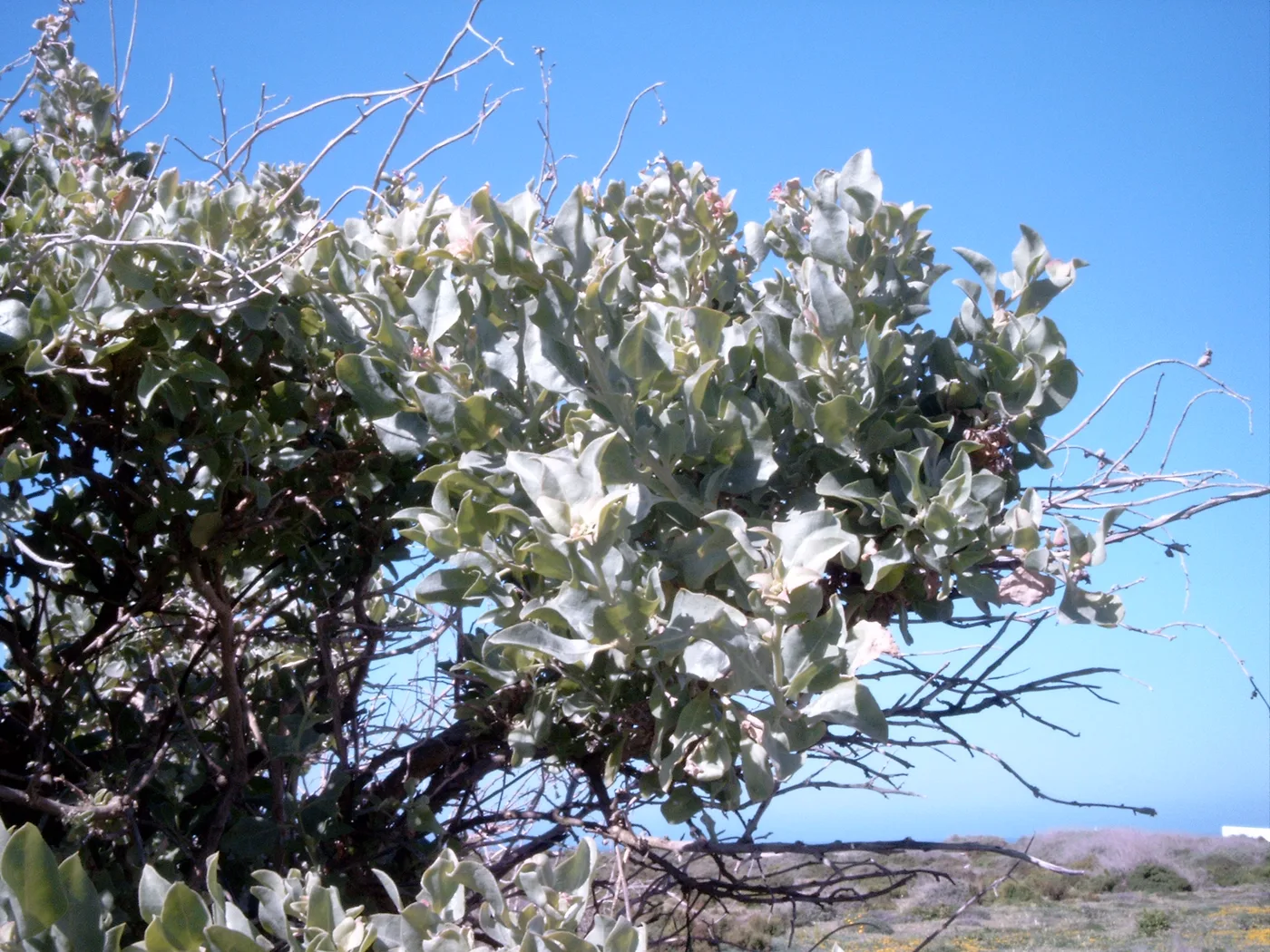
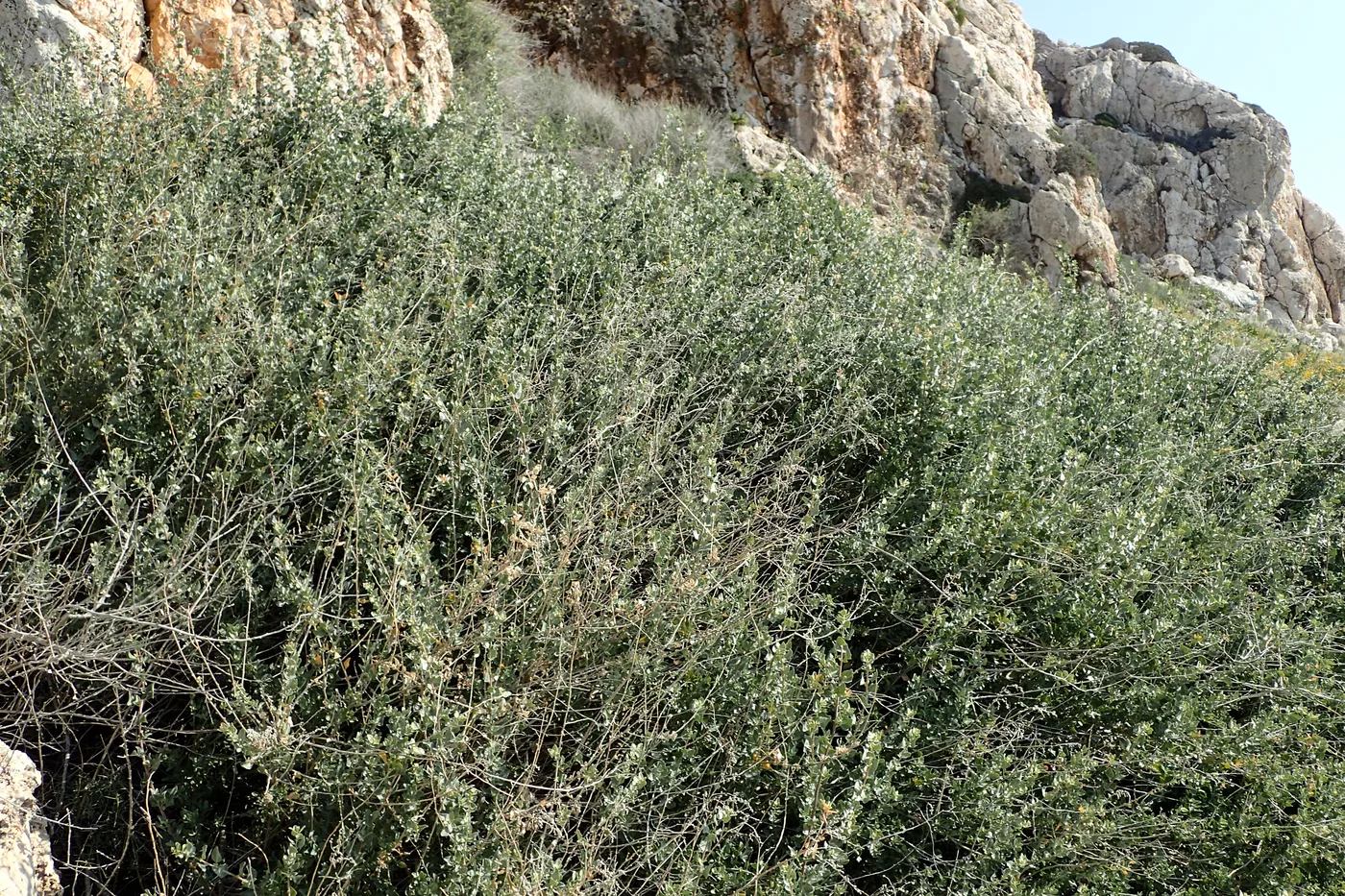
JOB 30:4 describes an unfortunate group of people who in their hunger pluck malluach and the leaves of bushes to eat. Although a few botanists render malluach as “mallow” (so RSV), Zohary, following Moldenke and others, holds that malluach refers to the Shrubby Orache Atriplex halimus, also called saltbush. The Septuagint uses the Greek word halimōn (coming from halmē “salted”), which refers to a species of saltwort or orache. Orache is abundant especially in salty areas in the desert and on the shores of the Mediterranean Sea and the Dead Sea. If we follow the Septuagint, orache or saltwort is also appropriate in JOB 24:24 (see Mallow).
Description
Translation
Given the uncertainty of the identification of the Hebrew word malluach, translators may be excused for taking a generic route here and translating “coarse leaves” (NLT), “tasteless shrubs” (CEV), “desert plants,” (NCV), or “plants of the desert” (GNB). NIV says “salt herbs,” which makes reference to the salt-tolerant nature of the orache reflected in the Septuagint and in the alternative name “saltwort.” However, it is equally appropriate to supply a species name here, and if the translator is so inclined, a transliteration of “orache” can be made from a major language (for example, English orash, French arroche), or a word like “saltbush” can be coined. “Mallow” should be not be used, since it refers to a different plant found in JOB 6:6 (see Mallow).