Discussion
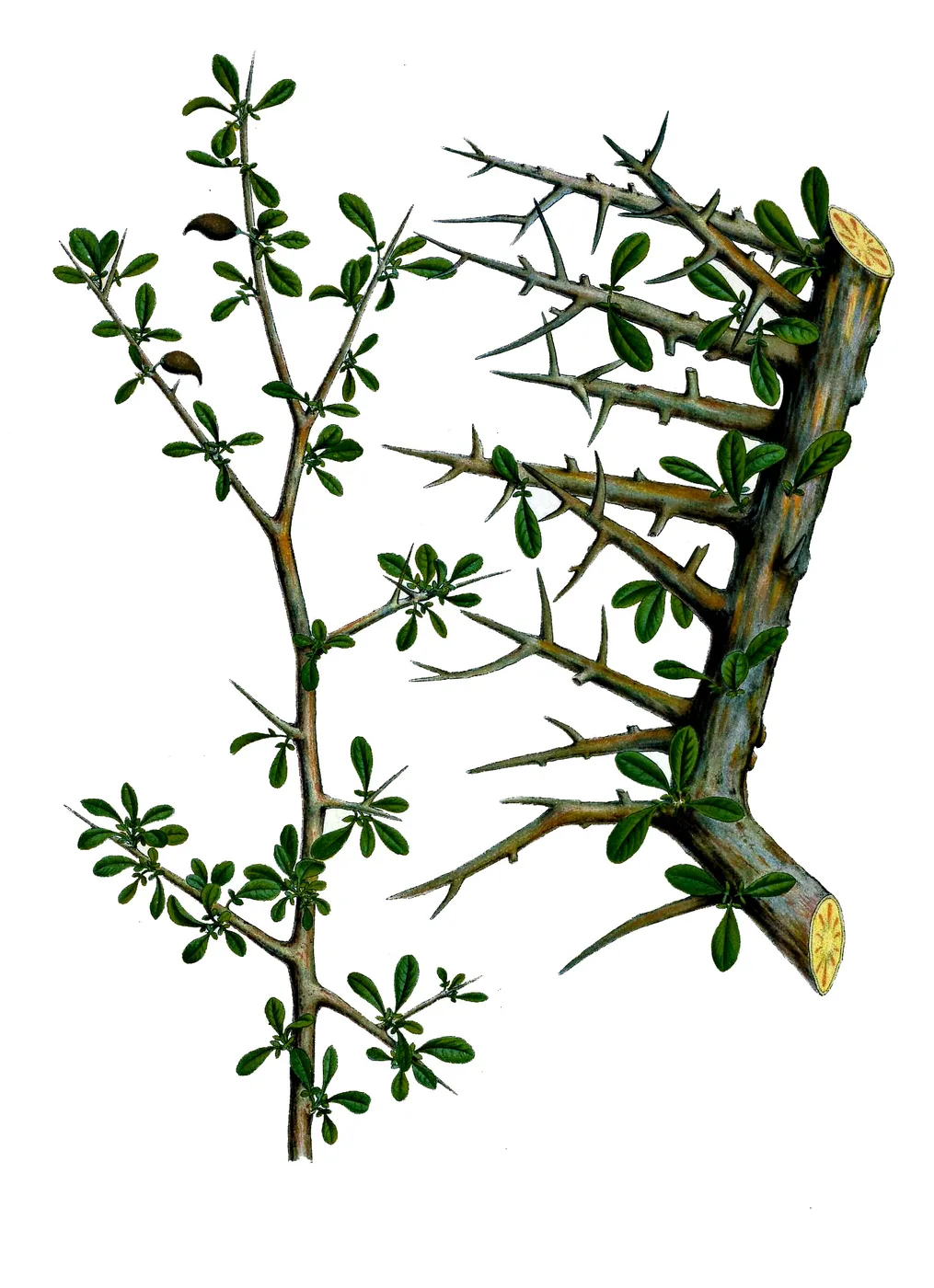
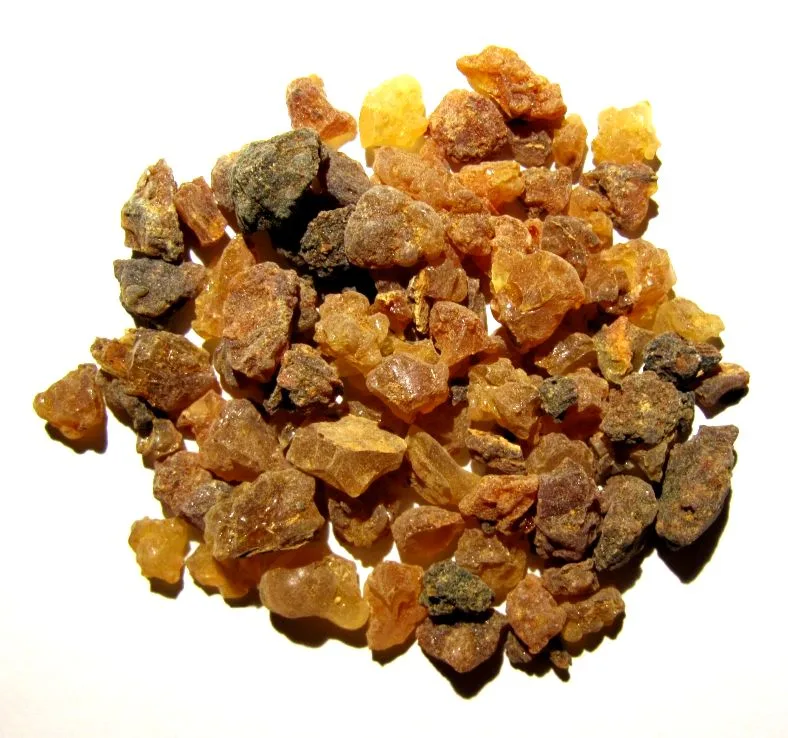
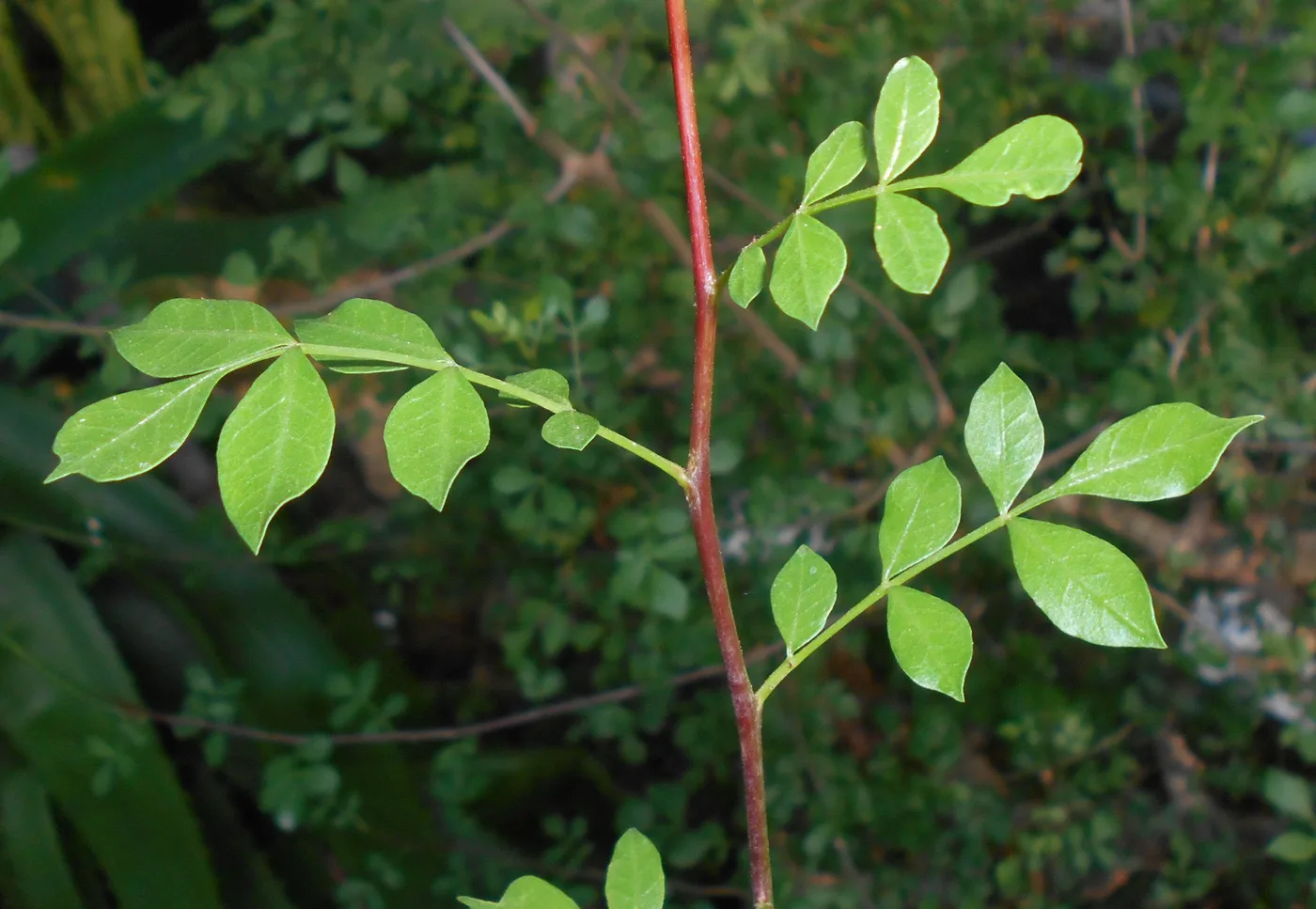
Myrrh is probably the most precious spice in the Bible. It was worth more than its weight in gold. Our experts agree that the Hebrew word mor refers to the resin of one of the Commiphora genus, either myrrha, abyssinica or schimperi, all of which grew in what is now Yemen, Ethiopia, Somalia, and Madagascar. Other kinds of myrrh may have come from India (Commiphora erythraea, Commiphora opobalsamum). A more difficult question is the meaning of the word deror in EXO 30:23. In the other places where it occurs it means “freedom” or “liberty.” This is the basis for the word “liquid” in some versions, but there is no certainty that “free” means “liquid.” The fact that myrrh was sometimes mixed with wine may suggest that deror means “liquid” here, but on the other hand, the weight of the myrrh is given in dry measure rather than liquid measure, which argues against it (Durham, page 407).
The Hebrew word lot in GEN 37:25; GEN 43:11 is translated “myrrh” in RSV, but it should be rendered “ladanum,” according to the latest scholarship (see Rock rose (ladanum)).
RSV also renders the Hebrew word nesheq as “myrrh” (similarly REB “perfumes”) in 1KI 10:25; 2CH 9:24, but most other English versions translate it “weapons” or “armor.”
Description
Special significance
Translation
Varieties of myrrh grow in the Horn of Africa and Madagascar, so people from those areas should have no difficulty finding words for it. As to whether the myrrh in EXO 30:23 was liquid or solid, there seems to be no consensus, and the translator may be forgiven for simply ignoring the Hebrew word deror (as CEV has done). A variety of models are available for rendering mor deror as follows: “sticks of myrrh” (REB), “free-flowing myrrh” (NAB), “solidified myrrh” (NJPSV), “powdered myrrh” (GW, Durham), “fresh myrrh” (NJB), “liquid myrrh” (GNB, NIV, NCV), and “pure myrrh” (NLT, LB). Possible transliterations are Hebrew mor, Arabic mar, French mireh, and Spanish/Portuguese mirra. A transliteration from English or French should be pronounceable (for example, mura), not like one early Nigerian translations that carried the unpronounceable “myrrh” over unchanged.