Fennel (galbanum)

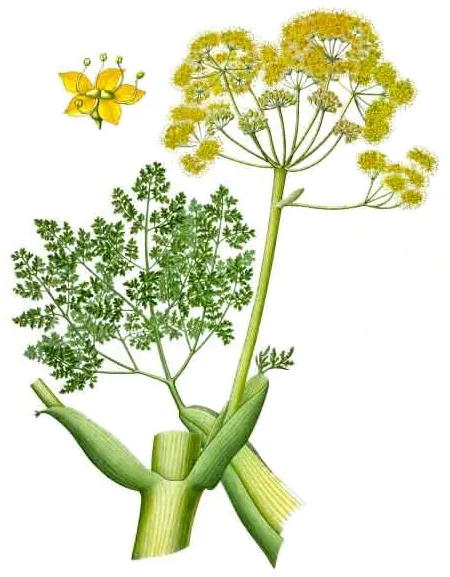
Fennel plant - botanical illustration
Fennel plant - botanical illustration (Franz Eugen Köhler, Köhler's Medizinal-Pflanzen (Wikimedia Commons))

Discussion

Although its identity in the Bible is uncertain, galbanum is probably a gum resin from a plant called Fennel Ferula galbaniflua, which grows in India, Iran and Afghanistan, and especially in the high mountains of Iran. The fennel is related to the parsley family. Today most commercial galbanum comes from Lebanon and Iran.

Description
Fennel flower
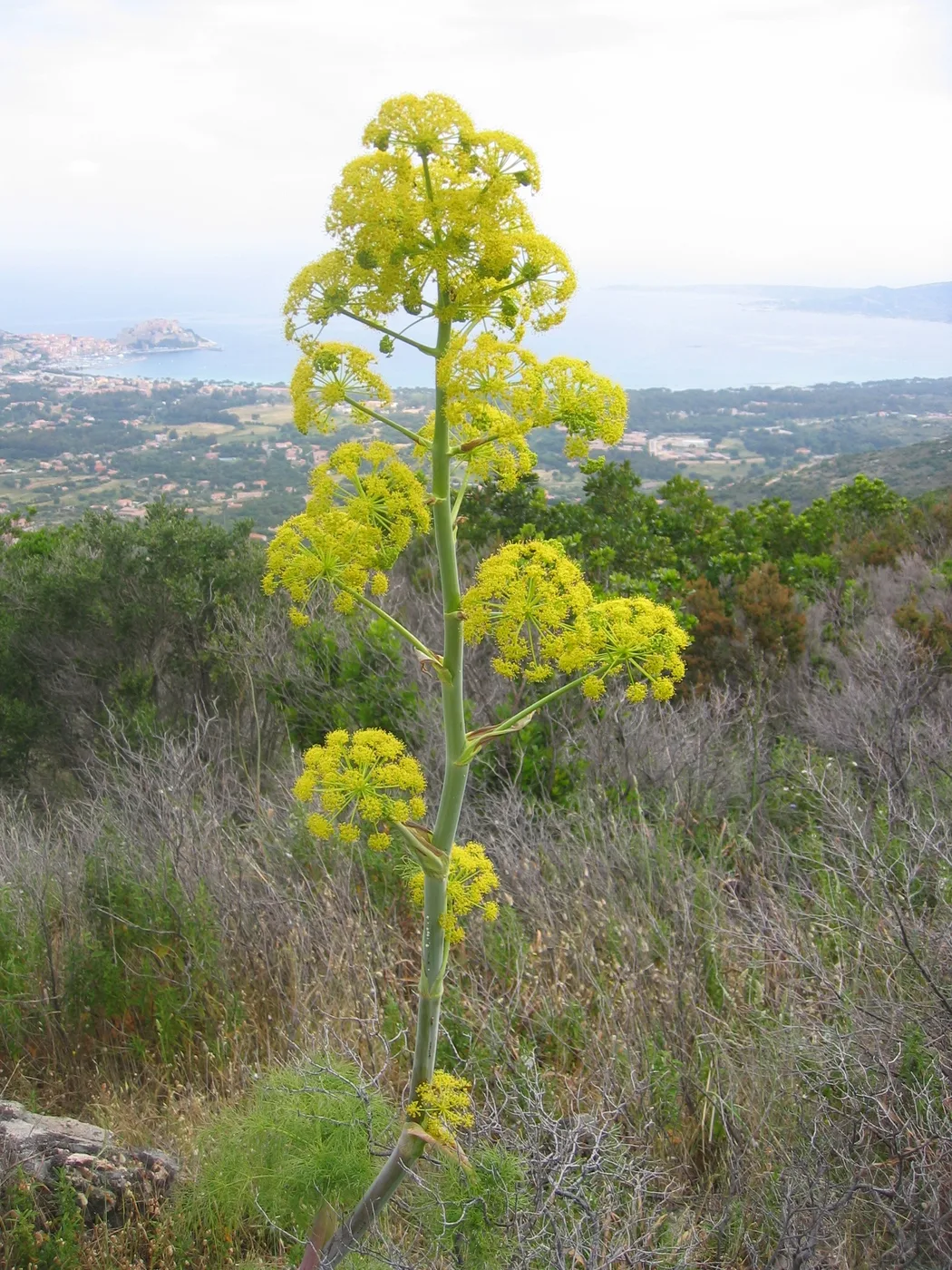
Fennel flower (Tigerente (Wikimedia Commons))
The fennel plant can grow to 1.5 meters (5 feet) in height. It has fine, shiny leaflets, a thick smooth stem, and a flower head like an umbrella. The seeds are shiny and very small. The plant has a milky juice that comes out by itself from the joints or oozes out from the stem when it is cut. It forms aromatic greenish or yellowish beads when it dries. The taste is bitter and the smell is strong. A kind of fennel grows in Galilee (Ferula communis), but it does not yield the galbanum resin. Another kind, known from Roman coins from Carthage, grew in North Africa under the name silphion (probably Ferula tingitana).

Special significance

According to EXO 30:34, galbanum resin was part of the incense prescribed by Moses for burning in the Tablernacle. In Assyria it was used as a fumigant. It could have been the “gum” mentioned in GEN 37:25. The Roman writer Pliny considered it a powerful remedy.

Translation

Since fennel is not well known, most translators will need to transliterate from a major language. Some possibilities are:

1. transliteration from Hebrew: helibena, elbenahi, lebena;

2. transliteration from Latin via English: galbanum;

3. substitution of a local type of gum, adding chelbenah or galbanum as a tag or in a footnote.

4. transliteration of the name of the plant with a classifier: gum of ferula (French), feneli (English), hinojo /ferula (Spanish).

Scripture References (2)

Genesis

Exodus