Discussion
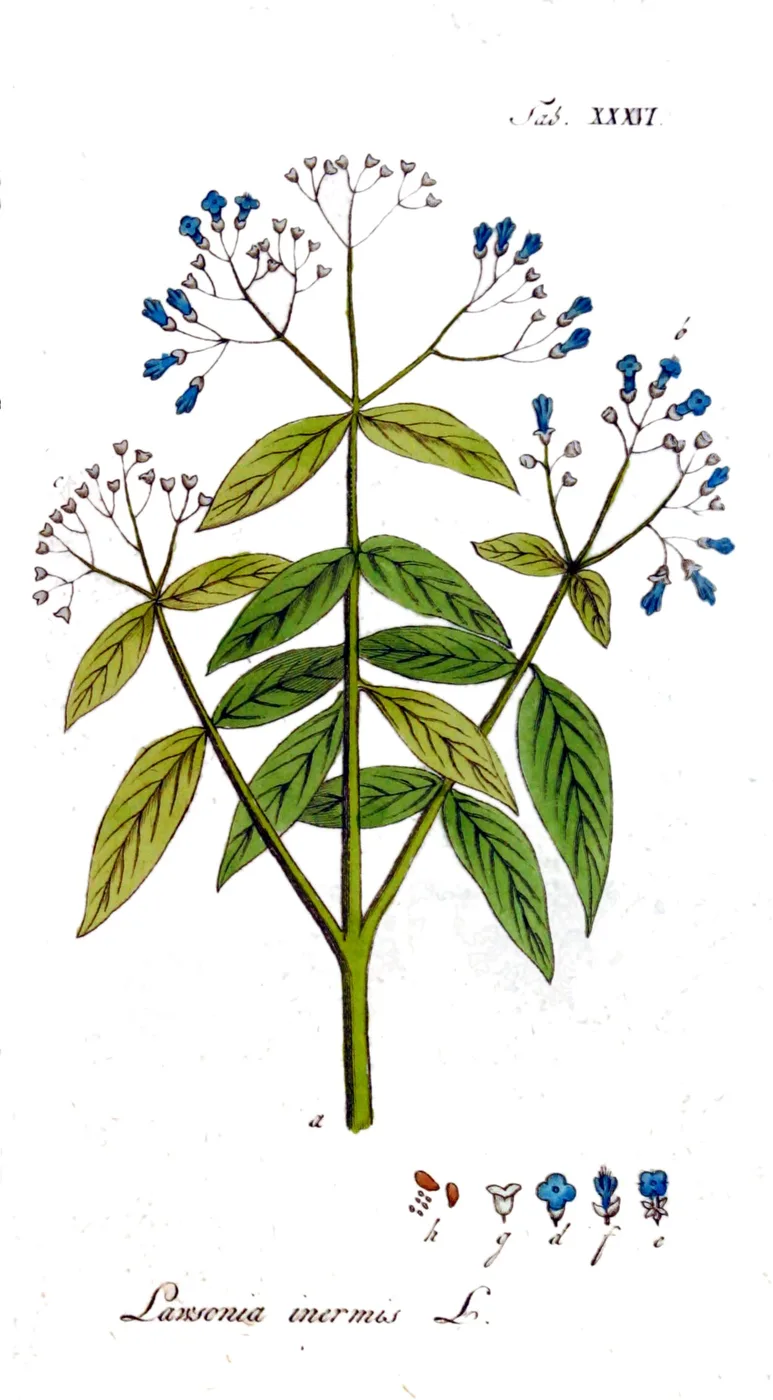
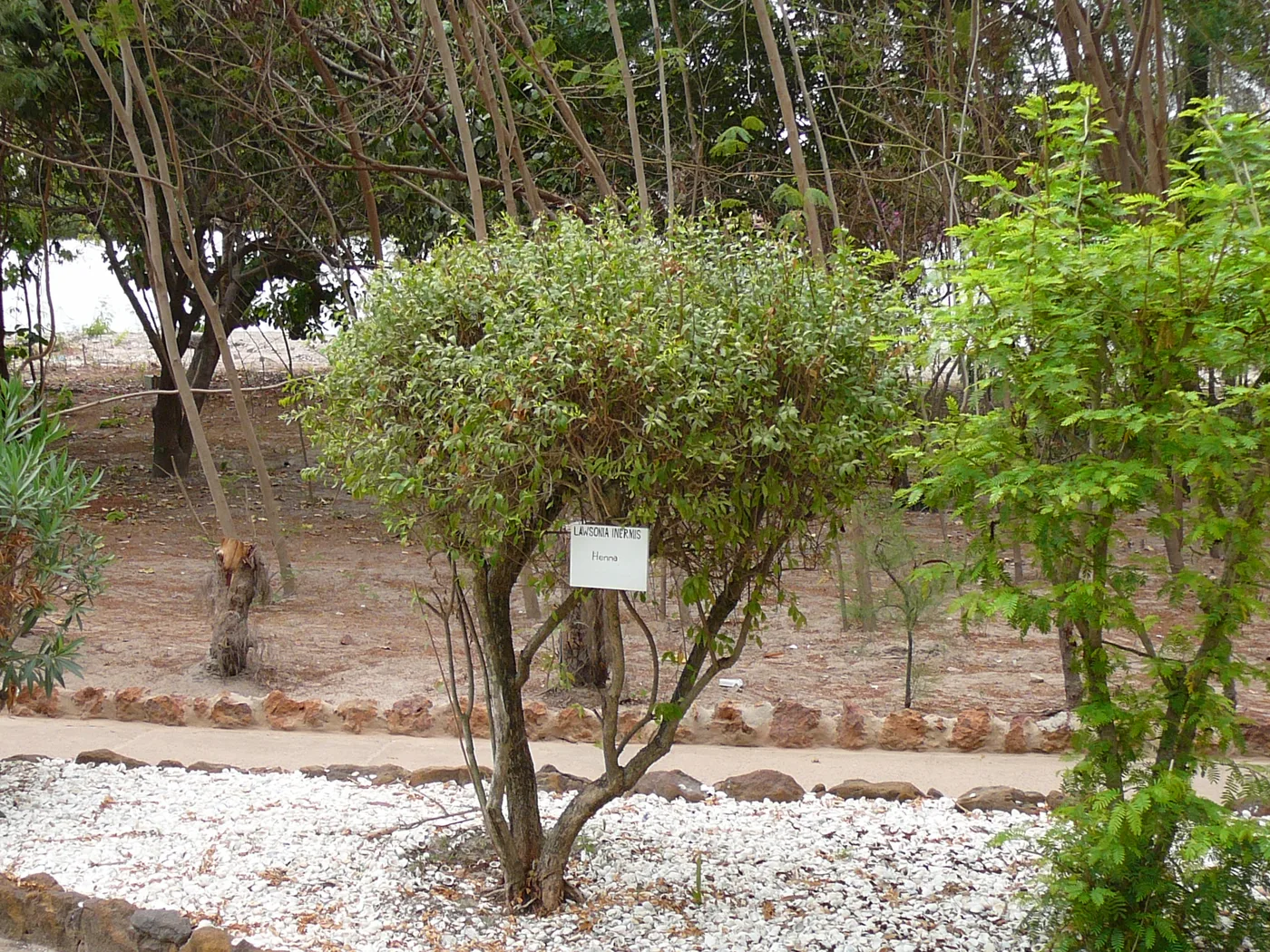
Henna Lawsonia inermis grew wild in the oases by the Dead Sea in Old Testament times. It is also known as Egyptian privet and is common in the hot, drier parts of Africa, southern Asia, and northern Australia. Although henna was, and is, primarily used because of its coloring properties derived from the dried leaves, in SNG 1:14 the writer mentions its flowers, which are indeed pretty and fragrant. They are in a “cluster” (’eshkol in Hebrew), which could be taken as a woven object parallel to the little bag of myrrh in verse 13 or as a garland, or simply as a clump of flowers in the cultivated terraces above En Gedi. The reference to henna in SNG 4:13 is strange since it is in the plural form in Hebrew (kefarim), parallel to the yet stranger Hebrew word neradim (from nerd; see Spikenard (nard)). Neither of these plants has significant fruit, so the verse can be taken as a glorious concoction of romantic images of spices and flowers.
Description
Special significance
In SNG 1:14 the bride compares her beloved to the fragrant and beautiful flowers of the henna shrubs growing among or near the vines on the terraces above En Gedi Spring. In SNG 4:13 the groom likens his beloved to a garden or park where all kinds of fragrant and beautiful plants grow, some of them exotic.
Translation
The context is clearly metaphorical in both references to henna, so there is the possibility of substituting locally known equivalents. In places where henna is known only as an agent for coloring the hair, skin or fingernails, it may be important to substitute, or to create a note stating that the smell and beauty of the flowers are in focus. In SNG 4:13 most translations ignore the plural, perhaps assuming that it is influenced by the word “fruits” earlier. Alternatively, a transliteration can be used based on a major language (for example, French henné; Spanish alcana, alheña; Portuguese hena, alfenero; Arabic hinna). The recent resurgence in skin decoration (“mehndi”) using henna may make it easier to find a known word. “Camphire” in KJV is perhaps a cultural substitute.