Discussion
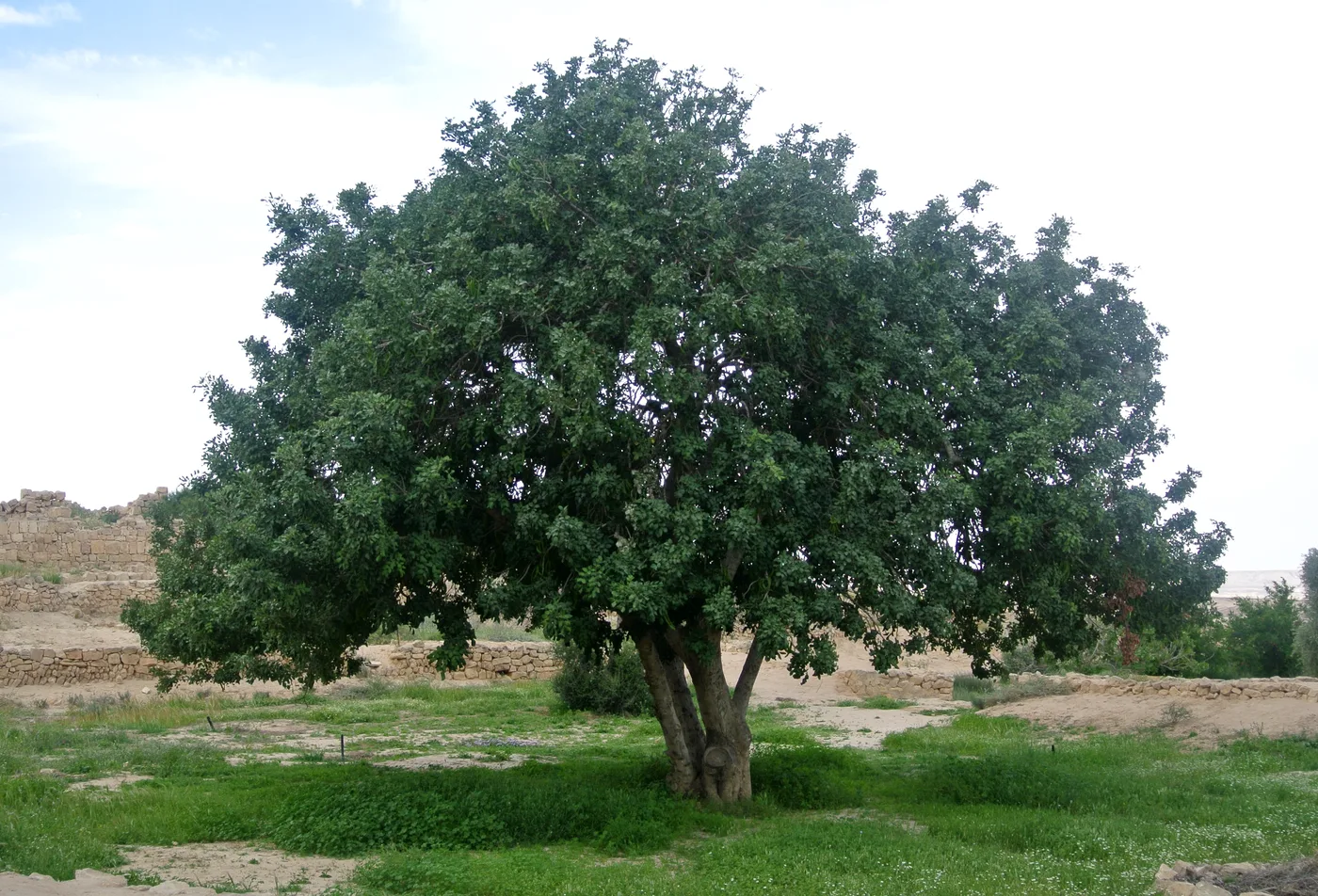
The Carob Ceratonia siliqua is a very common tree found throughout the Mediterranean area and also in Arabia, Somalia, and Oman. It is native to Israel, where it was called charuv, according to Jewish religious writings of the first few centuries after Christ. Arabs call it kharrub.
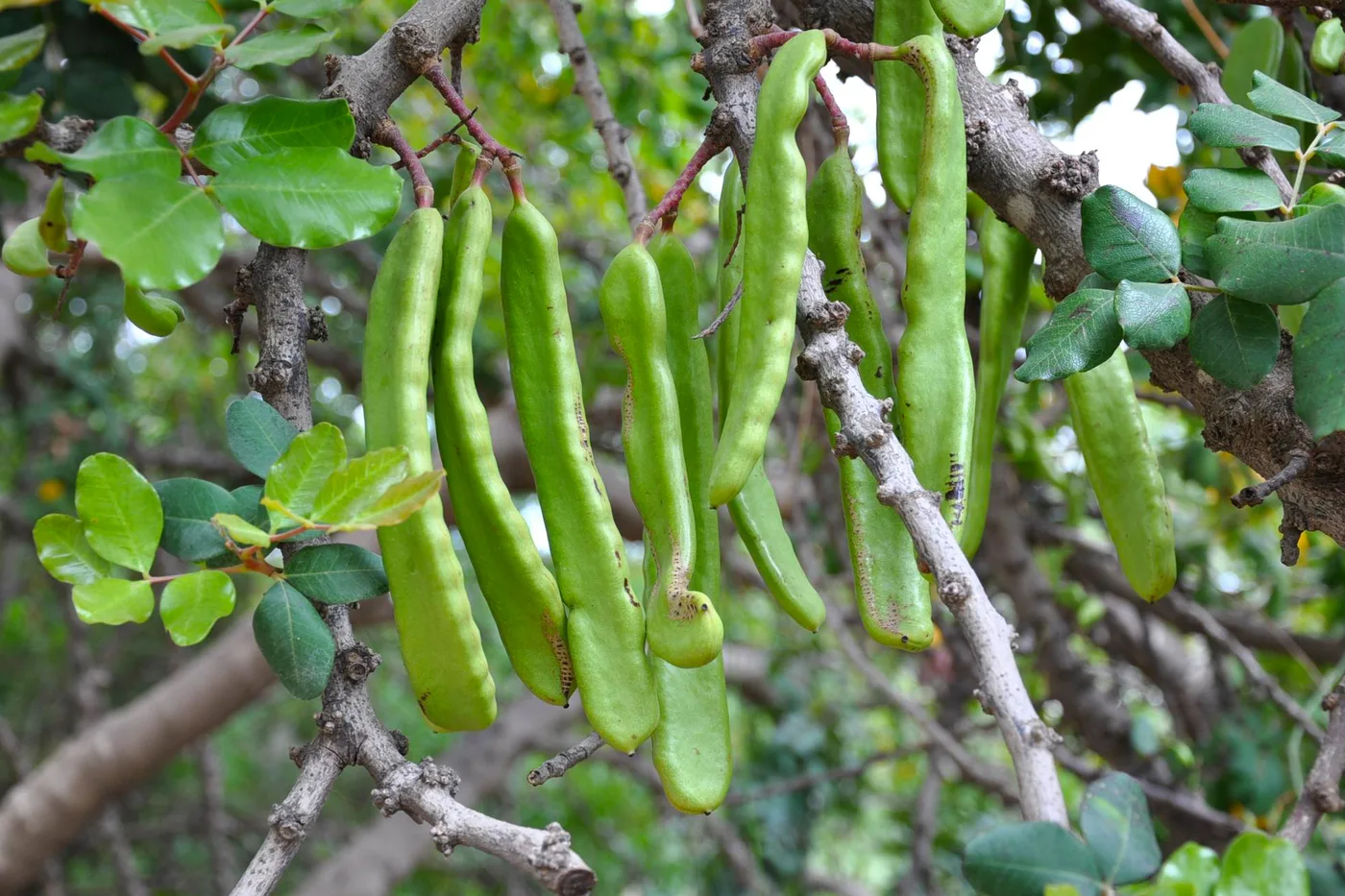
In Bible times, as now, carob trees were found in the coastal plain and in the foothills (Shephelah) and on the eastern slopes of Galilee and Samaria. The carob seed pods are filled with a sweet moist pulp that was popular with poor people. The pods were also used to feed animals. That is probably the basis for Jesus’ statement that the prodigal boy in the parable looked hungrily at the carob keration (“pods”) that he had to feed to the pigs (LUK 15:16).
Description
The carob tree is an evergreen with dark green leaves and many low leafy branches that hide a short trunk. The crown of the tree is round and may reach as high as 12 meters (40 feet). As is the case of the acacia, the date palm and the fig, the carob tree is a lonely representative of a large tropical family (in this case the pea sub-family Caesalpinioideae) that found its way into parts of Israel many millennia ago. The trees in this family are legumes, that is, they put nitrogen into the soil by way of little nodules on the roots. As the tree ages, the trunk becomes twisted. In contrast to many other trees of the Bible lands, this one bears flowers in autumn, and the seed pods form the following summer. The mature pod is dark brown and about 15–25 centimeters (6–10 inches) in length and 2.5–3.5 centimeters (1–1.5 inches) broad.
Special significance
Translation
Since the Greek word for carob does not actually occur in LUK 15:16, and keration could possibly refer to some other sort of pods, we cannot actually name a species here. If translators have a word for the edible seed pods of trees, they should use it. Otherwise they will have to use something like “fruit of wild trees.” In study notes translators may wish to refer to major language terms, for example, French caroube, Spanish algarrobo, Portuguese alfarroba, and Arabic kharrub.