Discussion
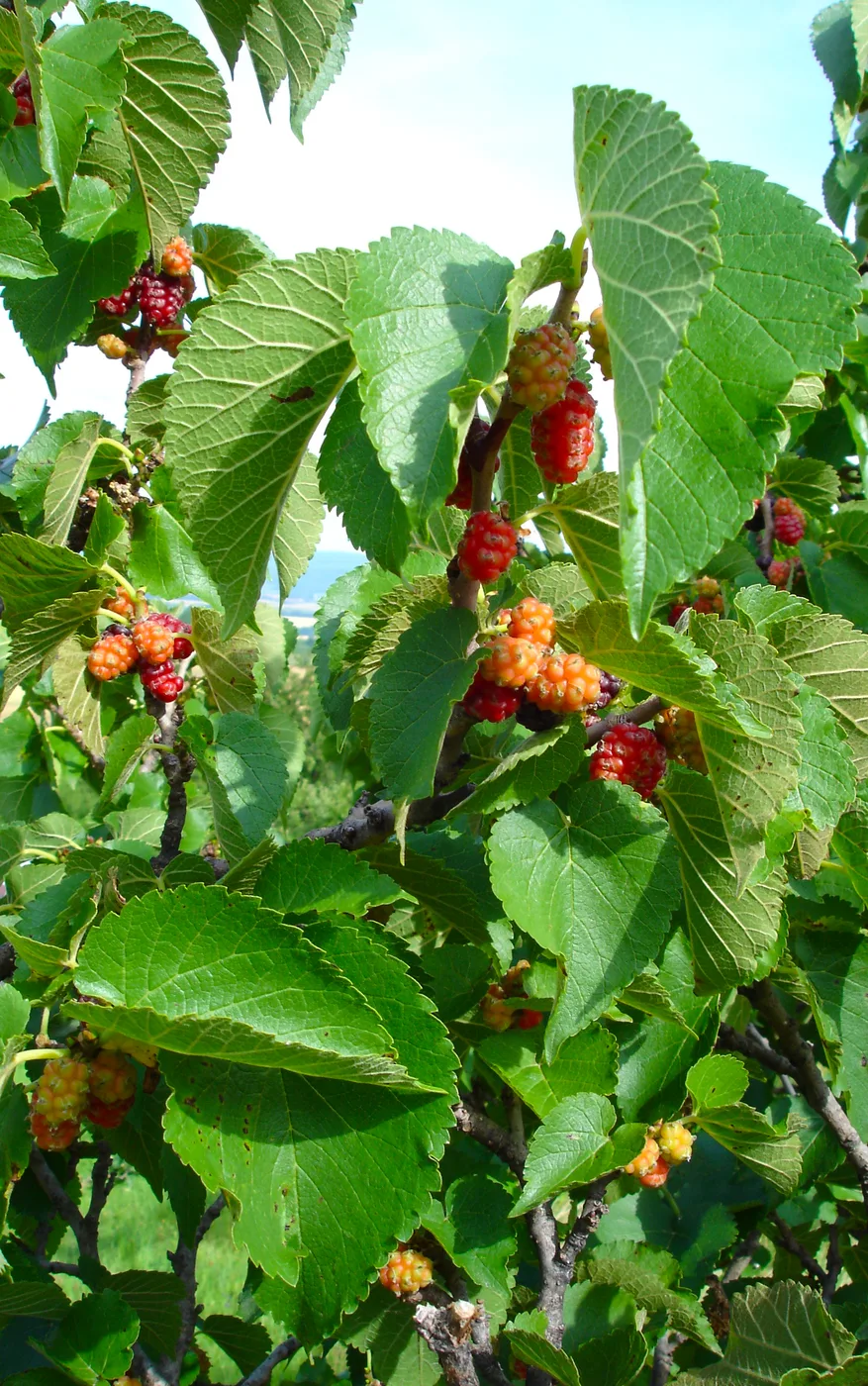
The references to mulberry in the Scriptures are all controversial. However, Zohary, on the basis of cognate words in Sumerian (messikanu, sukannu) confidently associates the Hebrew word mesukan in ISA 40:20 with the mulberry tree, as did Thompson before him. Further, they take the Greek word sucaminos in LUK 17:6 as also cognate with Sumerian sukannu. Like the apple, the pomegranate, the fig and the pistachio, the Black Mulberry Morus nigra may have been introduced into the Holy Land from one of the neighboring countries like Persia (now Iran).
Description
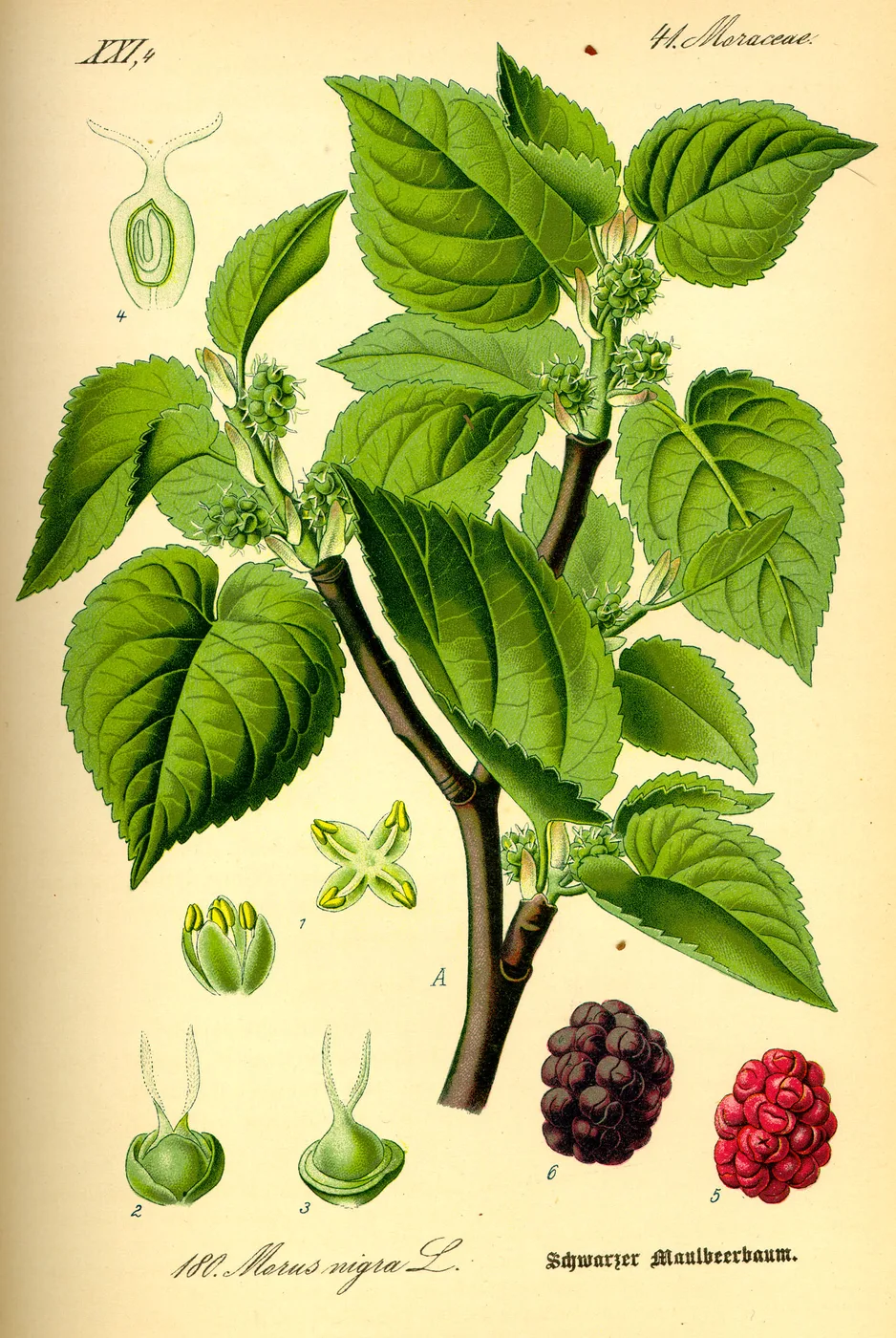
The black mulberry tree is similar in size and shape to the sycomore fig (see Vine). In fact, the translators of the Septuagint introduced considerable confusion by translating the Hebrew word shiqmah as sucaminos (1KI 10:27; 1CH 27:28; 2CH 1:15; 2CH 9:27; PSA 78:47; ISA 9:9; AMO 7:14). The confusion has been perpetuated in languages like German that refer to the sycomore fig as the “mulberry fig.”
Special significance
The New Testament reference to the mulberry in LUK 17:6 occurs in Jesus’ parable about faith. “If you had faith like a mustard seed,” he said, “you could say to this mulberry tree (sucaminos), ‘Get up and throw yourself into the sea,’ and it would do so.”
1MA 6:34 tells us that soldiers showed the bright red juice of the mulberry to their elephants in order to provoke them to fight.
In China the main use of the mulberry tree (a white subspecies) is to feed the leaves to a certain type of caterpillar that produces silk threads. These threads are woven into cloth. There is evidence that in the early centuries of the Christian era the Mediterranean island of Cos and the Phoenician city of Sidon had industries that used a local type of silk moth, which fed on black mulberry leaves. Hepper (page 169) surmises that the silk referred to in EZK 16:10; EZK 16:13 may have come from the precursors of these local industries.
Translation
There are at least eighteen subspecies of mulberry in the world, distributed from China to North America. In the Middle East area two have been cultivated, the black mulberry and the white mulberry. The black mulberry grows well in what is now Iran, and it may have been introduced into Canaan from there.
In areas where the mulberry tree is found, the local name should be used in LUK 17:6. Where it is not found (for example, most of Africa), transliteration from a major language is advised, for example, muluberi or sikamayin. (French mûrier, Spanish mora, Portuguese amoreira, Arabic tut). KJV uses “mulberry” in 2SA 5:23; 2SA 5:24 and 1CH 14:14; 1CH 14:15, where we advocate “poplar” (see Poplar).