Discussion
The almond is one of a group of fruit-bearing trees (Prunus) that also includes plums, cherries, peaches, and apricots. There are fifteen species of wild almond in Iran, two wild species in Israel, and one cultivated one (Prunus dulcis, also called Amygdalus communis). They are plentiful now in the hills of Israel, and probably were so in Bible times, even in the hot, dry Negev.
Description
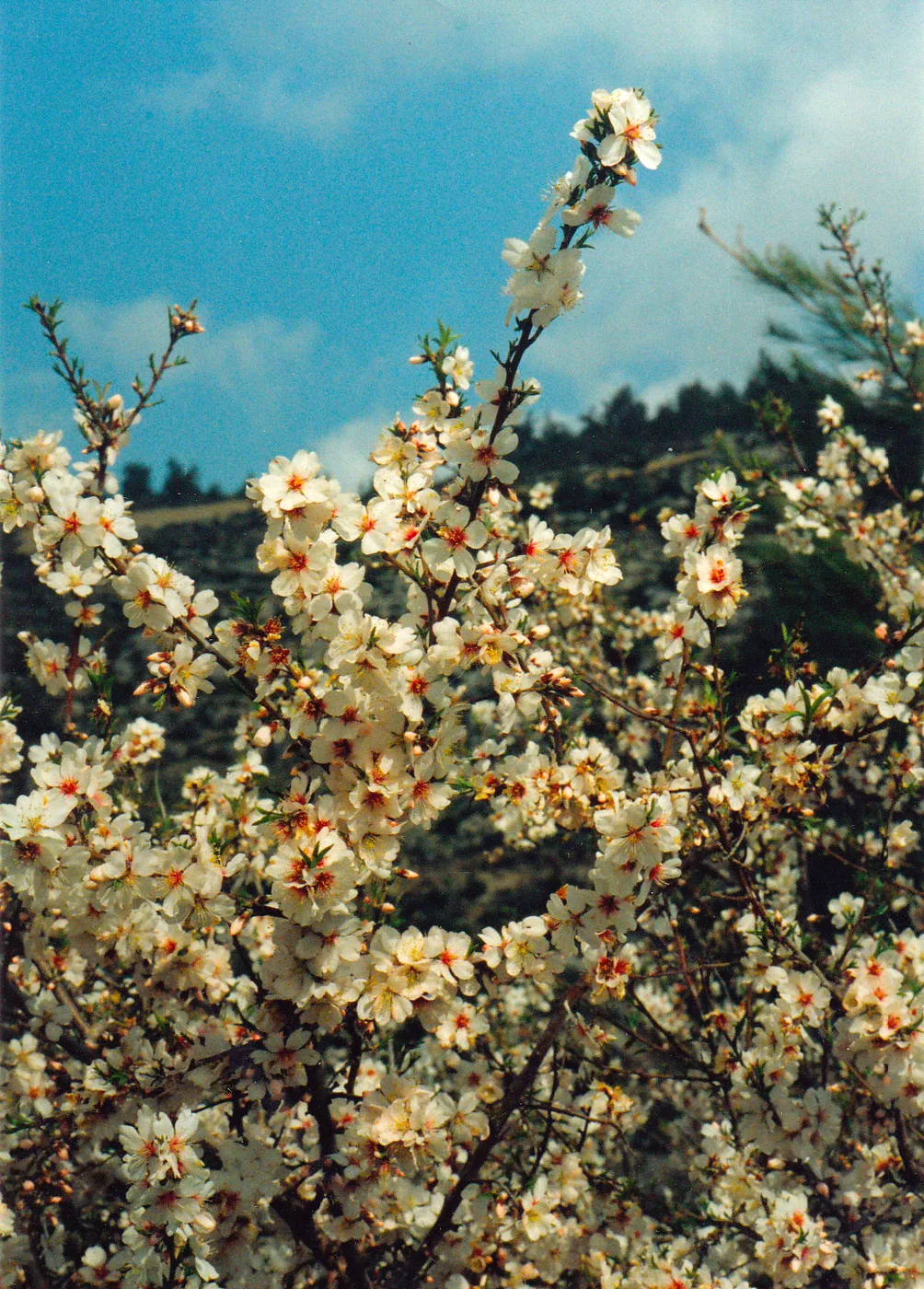
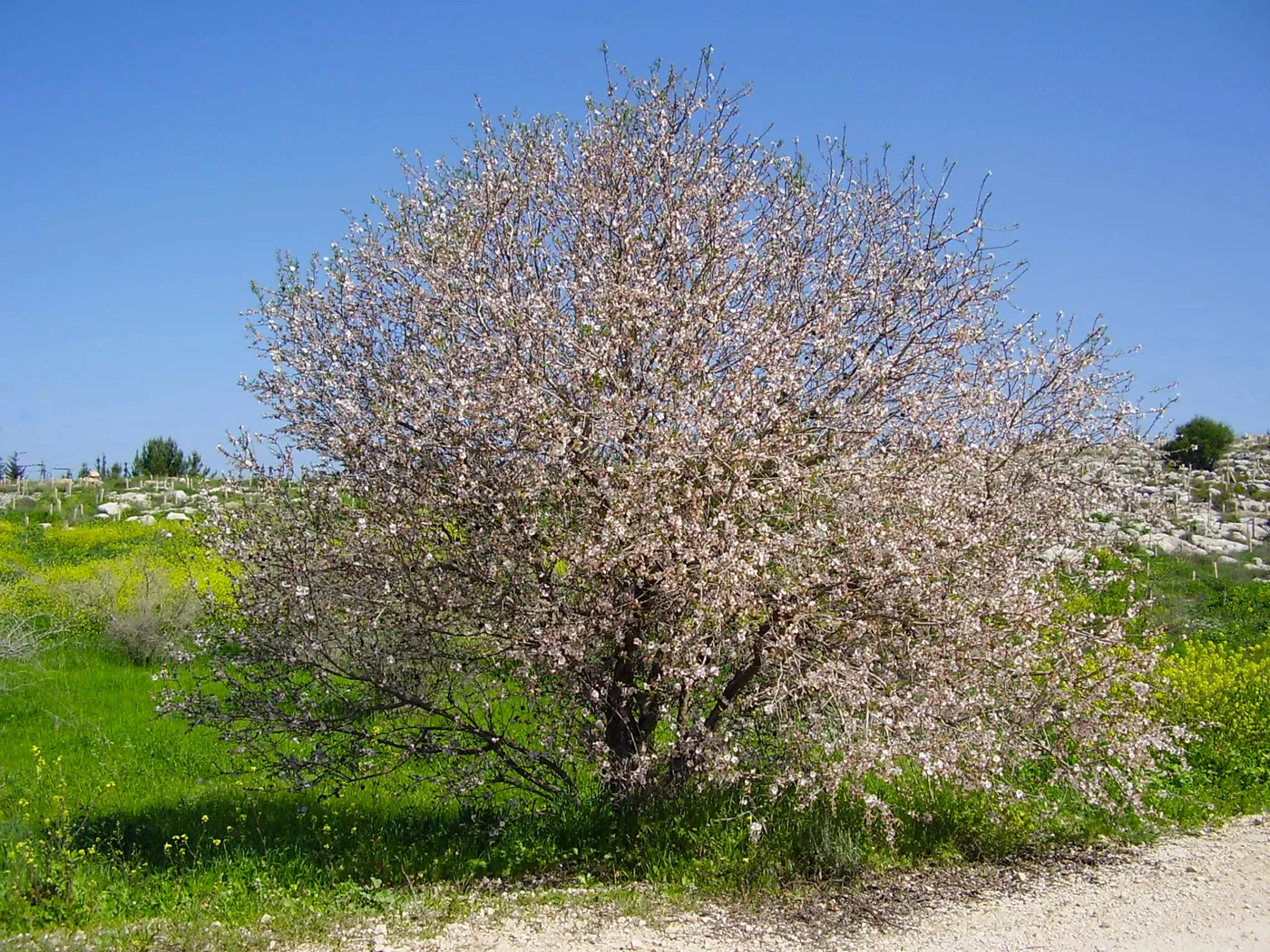
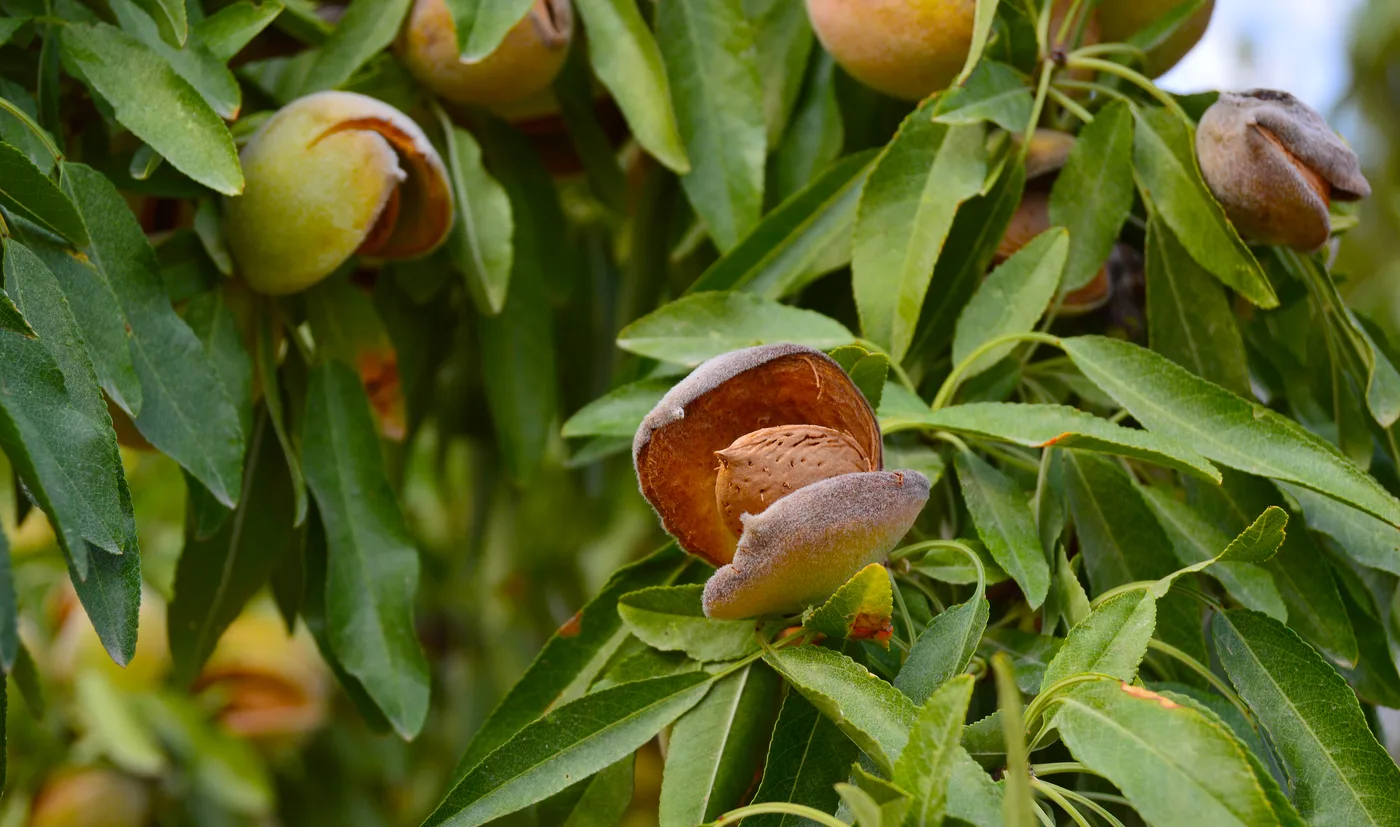
The almond tree grows to around 4 meters (13 feet) tall. It loses its leaves in winter and then, before the new leaves appear in spring, a profusion of white or pink flowers appears. The flowers are quite flat, with oval petals. The fuzzy fruit, about the size of a date palm fruit, comes about ten weeks later. The seed (“nut” in English) is fifty percent oil, and can be eaten raw but is usually roasted.
Special significance
Three passages make reference to physical features of the almond tree. In EXO 25:33; EXO 25:33; EXO 25:34; EXO 37:19; EXO 37:19; EXO 37:20 we find the Hebrew word meshuqad (“almond-like”) referring to the shape of the almond blossom. The flat almond flower made a reasonable model for the lamp holders at the top of the branches of the lampstand in the Tabernacle.
In JER 1:11 the author makes use of the similarity of the Hebrew name shaqed (“almond”) to the word shoqed (“watching” or “wakeful”) to emphasize that Yahweh is “watching” over Israel. Some commentators add to this that since the almond is the first of the trees to blossom in the spring—even before the leaves emerge—it was “waking up early,” and God, likewise, is an “early help” in time of trouble.
Places named “Luz” in GEN 28:19; GEN 35:6; GEN 48:3; JOS 16:2; JOS 18:13; JOS 18:13; JDG 1:23; JDG 1:26 indicate the value of almonds to the people of the land and the possibility that almond trees grew in the desert hills of Sinai, although they are not found there today.
Translation
In most translations the words shaqed and luz will need to be translated contextually, as follows:
GEN 43:11: Jacob gifts to Pharaoh were “a little balm and a little honey, gum, myrrh, pistachio nuts, and almonds.” Most translators will have to use the phrase “almond fruit” or “almond seeds” here.
EXO 25:33; EXO 25:33; EXO 25:34: The shape of the flower is in focus here (GNB, CEV, NIV, REB, and others have “almond blossoms”). It has five petals that form a roughly cup-like shape.
NUM 17:23: Since Aaron’s rod produced almond fruit in verse 8 (23), it is reasonable to assume that the sticks in verse 2 (17) are from almond trees. In some languages it may be useful for cohesion to make this explicit in the text at verse 2.
ECC 12:5: Here the almond tree serves as a metaphor for old age. A transliteration of “almond” from English or some other major language will fall flat in terms of poetic impact. Mft is the only translation that I have seen that attempts to retain the tree and the image by rendering the third clause of this verse as “when his hair is almond white.”
JER 1:11: As mentioned above, here we have a word play on shaqed /shoqed “almond/watching.” Again, a few translations have made valiant attempts to translate the wordplay; for example, Mft renders the last clause of this verse as “The shoot of a wake-tree” and NJB has “I see a branch of the Watchful Tree.”