Reference:”
Discussion
In the story of the siege of Samaria, we read in 2KI 6:25 that “the fourth part of a kab of dove’s dung [was sold] for five shekels of silver.” The Samarians must have been desparate, but even so, they were probably not eating dove’s dung, and three possibilities are given by the experts:
1. The original writer wrote the Hebrew word chartsonim (“wild onion”) and the text was copied wrongly to read chareyonim (“dove’s dung”). NJB and NAB take this position.
2. Dove’s dung was the name of a common plant (footnotes in GNB and NLT). Possible candidates for the plant called “dove’s dung” are:
a. locust bean, or carob (NIV, REB, NJPSV footnote);
b. the bulb of a flower (Linnaeus, Josephus).
3. Real dove’s dung was processed and made into a salt substitute (footnote in GECL [1982]).
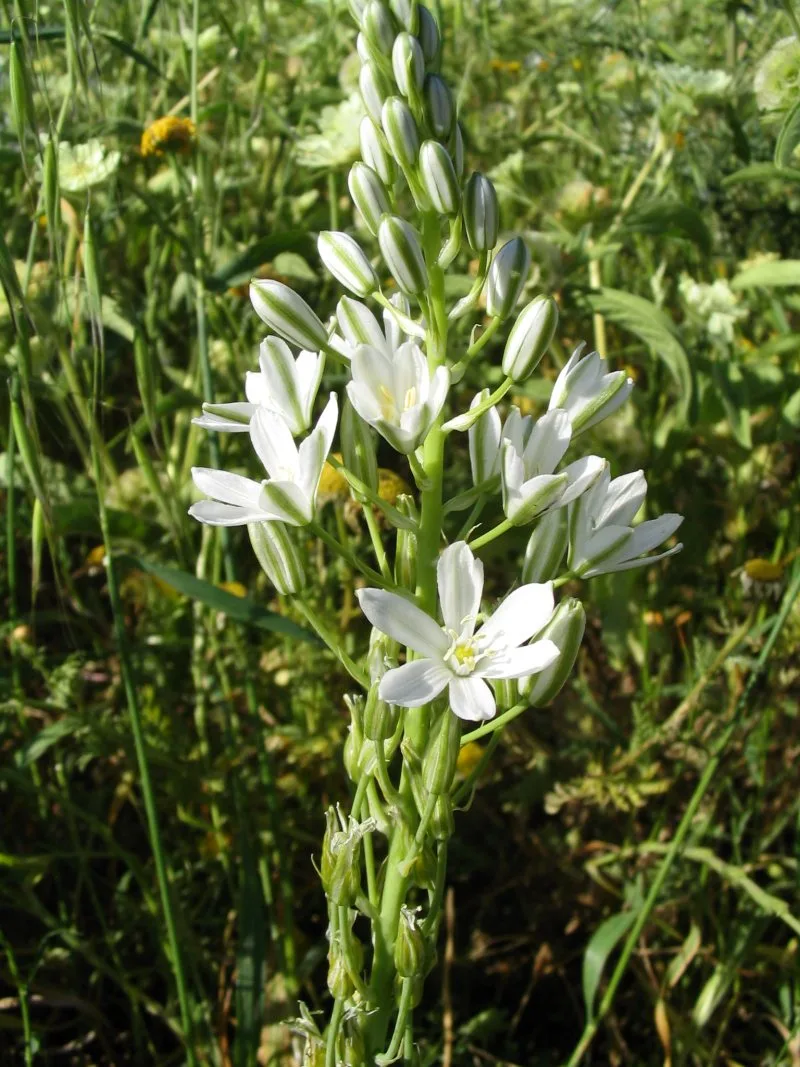
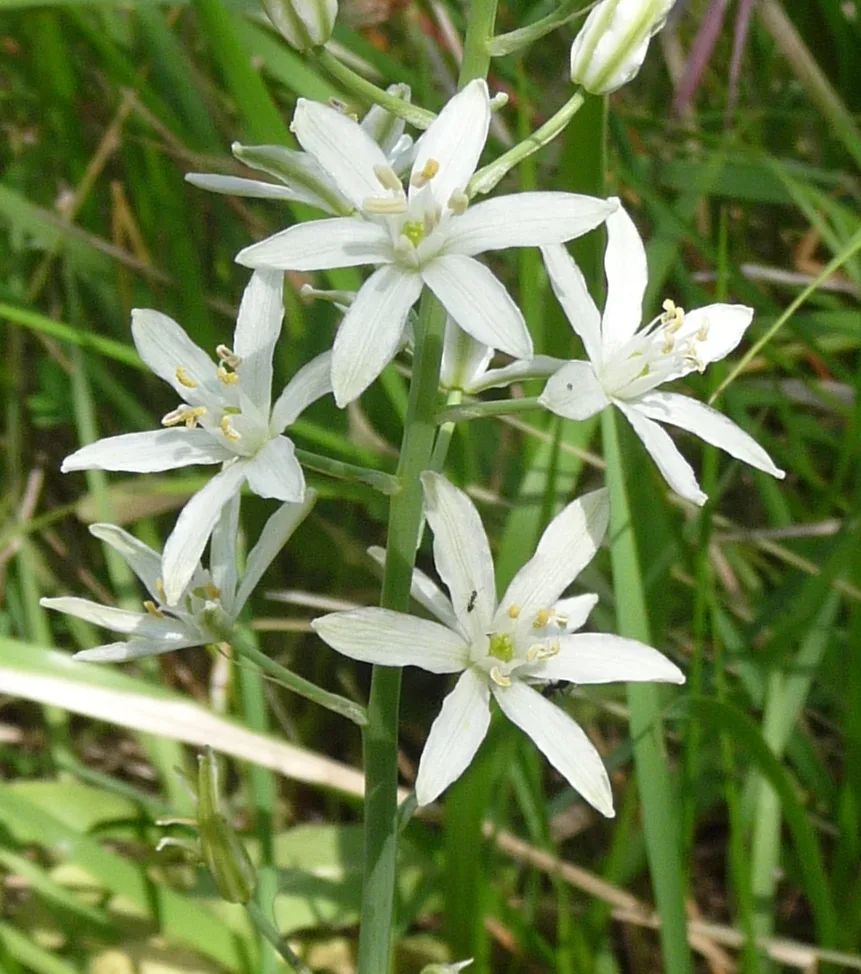
Hepper doubts that dove’s dung would refer to the carob or locust bean. He finds option 2b more likely, saying that chareyonim refers to the bulbs of the Star of Bethlehem Ornithogalum narbonense, which, according to historians, were sold during the siege of Samaria at about two ounces of silver for a cup. The name Linnaeus gave to the Star of Bethlehem plant is “ornitho-galum.” This name literally means bird-milk, suggesting that the botanist was perhaps aware of the connection to a name like “bird dung.” Only one of the many species of the genus Ornithogalum is edible; all the others are poisonous. Having lived in Nigeria where the leaf of a plant called “bird dung” is a popular soup ingredient (called kashin tsuntsu in Hausa), I am prepared to believe option 2. Anderson, Zohary, and Hareuveni do not mention “dove’s dung,” perhaps on the assumption that it is not a plant.
Description
Special significance
Whatever “dove’s dung” may be in 2KI 6:25, it was intended to illustrate the desperate condition of the inhabitants of Samaria during the siege, when even something barely edible was sold at an exorbitant price.
Translation
For “dove’s dung” the name of some marginally edible market item, or a phrase such as “wild onions” would be appropriate in JOB 6:6. The use of a commonly used measurement and coin instead of “kab” and “shekel” will help get the point across. The parallelism of “dove’s dung” with “donkey’s head” will also help, as long as the value of the silver is expressed meaningfully. If the translator substitutes a local object for “dove’s dung,” it should be a very low-value commodity. The Septuagint translated “dove’s dung” literally. Those who wish to follow a literal rendering, as in RSV and NLT, should have a footnote stating that “dove’s dung” could be a plant. Possibilities for transliteration are French ornithogale, aspergette; Portuguese ornitogalos; and Spanish ornitogala.