Reference:”
Discussion
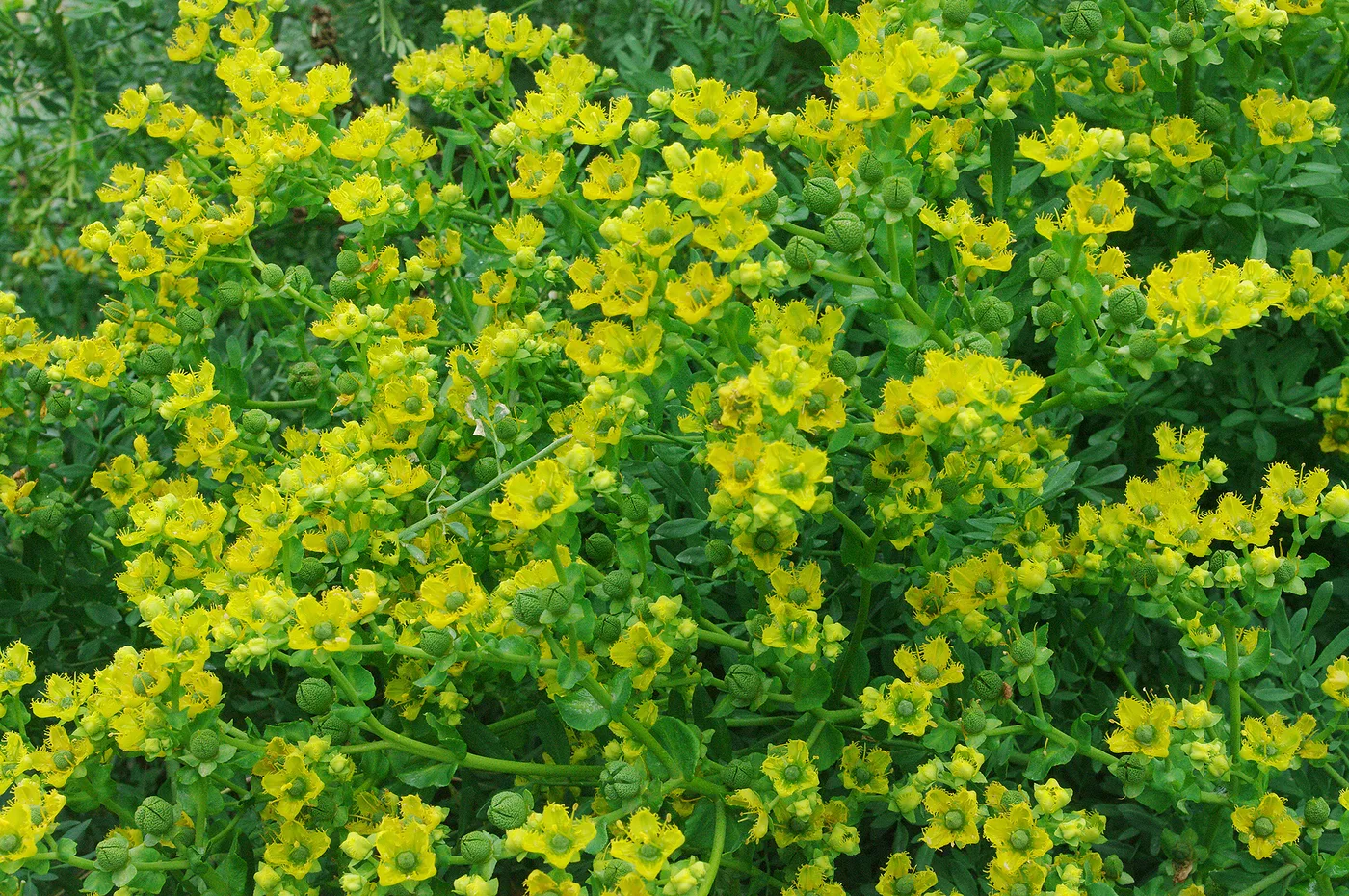
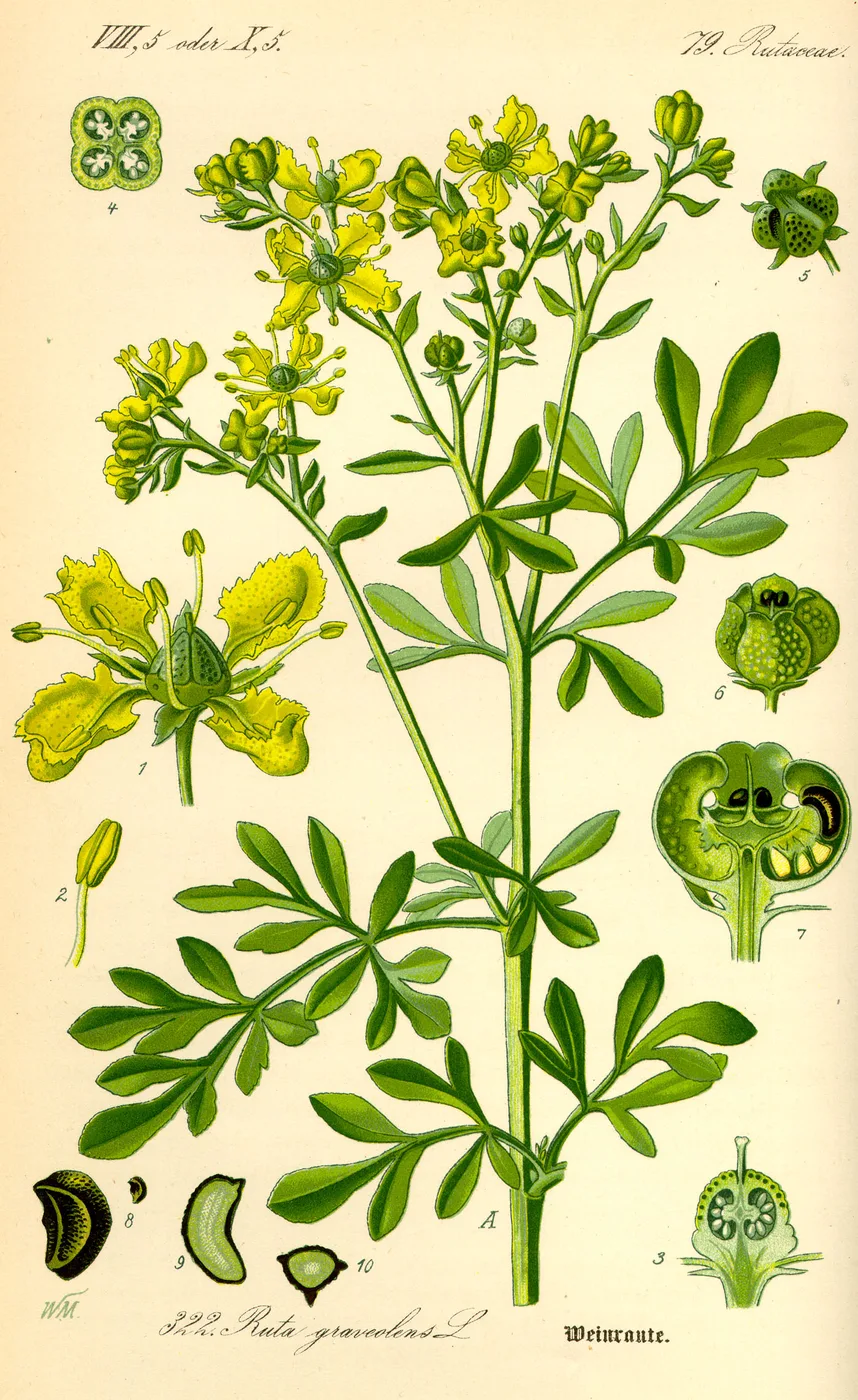
In the Holy Land at the time of Jesus there was only one wild species of rue common, the Mountain Rue Ruta chalepensis, and it is likely the one referred to by Jesus in his rebuke of the Pharisees in LUK 11:42. The very similar cultivated rue Ruta graveolens was introduced from southern Europe later. Rue is common throughout the Middle East, from Syria to Sinai up to the present. Because of its strong smell it is used in cooking and in medicine up to the present. It was used by the Greeks, Romans, and Jews against snakebite and the stings of bees, wasps and scorpions, not to mention its effectiveness against insanity, epilepsy, and even “the evil eye.” In post-biblical Jewish literature rue is called pigam, which is cognate with the Greek pēganon and the Arabic fegan.
Description
Special significance
The ancient Jewish Talmud states that cultivated plants should be tithed. It is possible that the disagreement between Jesus and the Pharisees arose because by New Testament times the people were cultivating rue, dill, and similar plants that had not been cultivated before, and the Pharisees then applied the laws of the Talmud to these little plants, thus complicating the lives of the common people, while at the same time they ignored issues of justice and compassion.
Translation
Depending on what translators do with “mint” in LUK 11:42, they may find a cultural substitute for “rue” or a generic phrase for “mint and rue and every herb.” Since the context is not rhetorical and the plant genus is limited to the Middle East, a transliteration of “rue” will be appropriate. Transliterations can be made from the Greek pēganon or from a major language. (The English word rue comes from Old English ruwe, which comes from Latin ruta and Greek rhyte.)