Discussion
Responding to the unhelpful and unkind words of his so-called friends, Job asks the following in JOB 6:6: “Can that which is tasteless be eaten without salt? Is there any taste in the slime of the purslane [challamuth in Hebrew]?” The main ideas of these two parallel lines are: a) tasteless things need salt, and b) the slime of challamuth is tasteless.
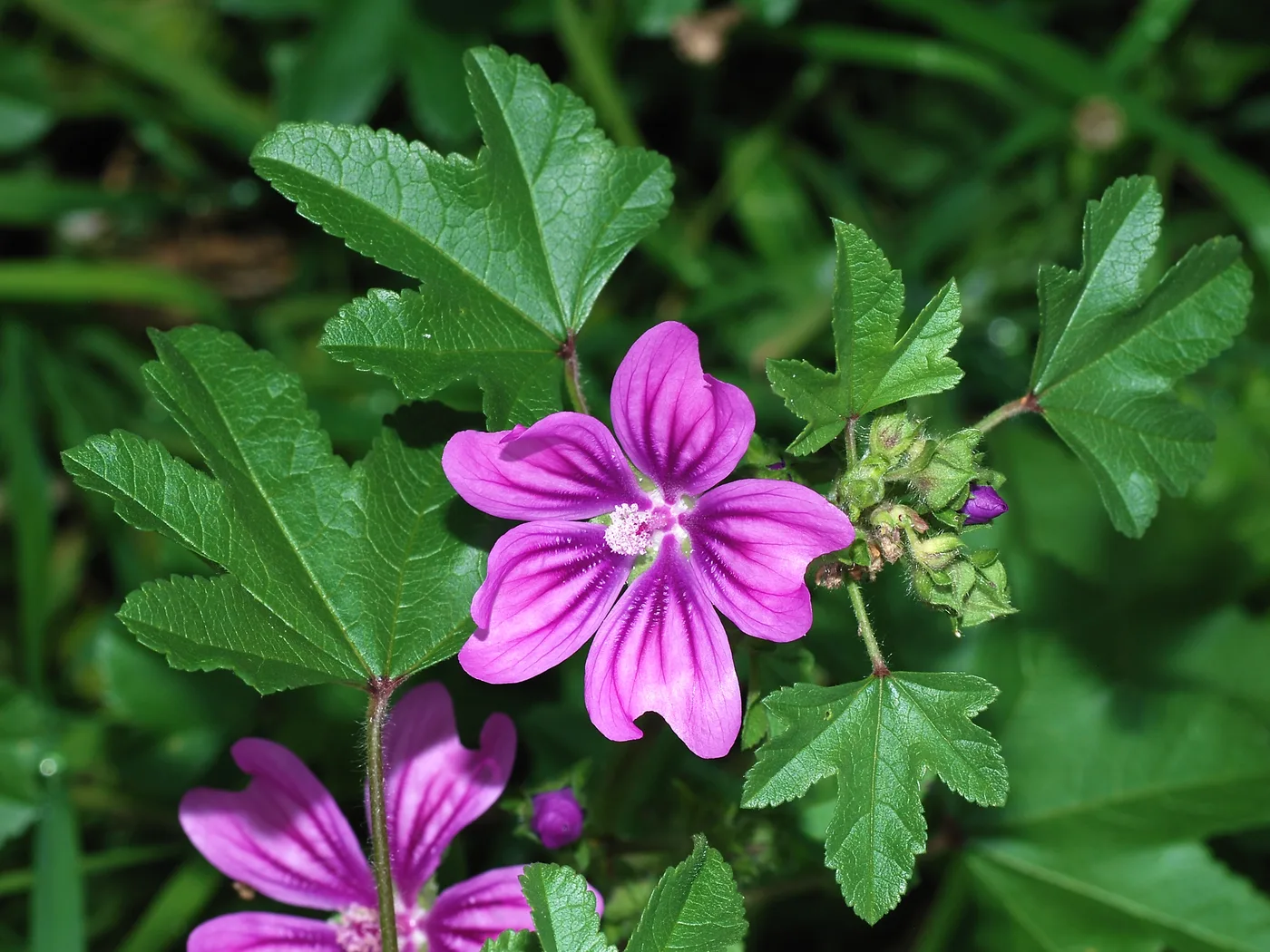
There is much debate whether or not the Hebrew word challamuth refers to a plant at all here. Some versions render it as “white of an egg” (GNB, NLT, GW) or “egg white” (NIV), and one commentator suggests it could refer to “whitewash,” “plaster,” or even “one who has died.” However, on the basis of Arabic cognate word lachamut and the Mishnaic tradition, Zohary holds that challamuth may refer to one or more plants from the Malvaceae family, namely Mallow Malva sylvestris, Mallow Malva nicaeensis, or Hollyhock Alcea setosa. REB has “mallow.” Some species in this family are in fact eaten by goats and are used by Bedouins in cooking.
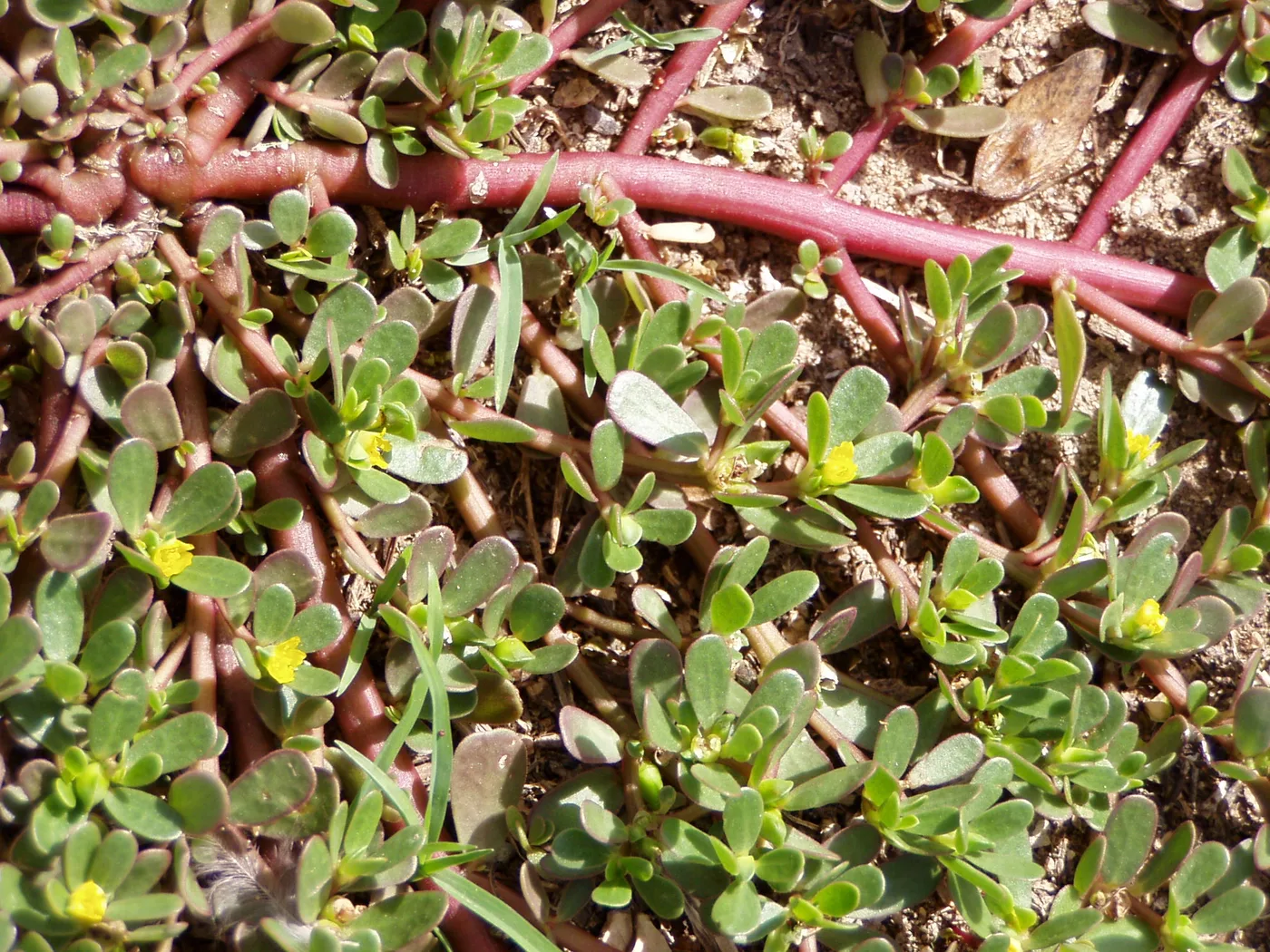
However, Hepper identifies challamuth as the Common Purslane Portulaca oleracea, another plant used in salad and as medicine. Moldenke does not find a plant at all in JOB 6:6.
Description
Special significance
If the word challamuth refers to a plant, it is one that represents something tasteless and slimy in JOB 6:6. Job describes the words of his companions as tasteless and unhelpful like the slimy challamuth. Not surprisingly, Bildad responds in kind in JOB 8:1, saying that Job’s own words are “a great wind.”
Translation
JOB 6:6: Given the wide range of opinion among the experts, the translator’s simplest option for rendering challamuth is to follow a major version used in the area. Since the context is rhetorical, translators striving for poetic impact may look for a cultural equivalent—a plant that is known to be tasteless, or something else unpleasant like a raw egg white.
An important question here is this: Is challamuth something totally inedible, or is it something that is edible if you put salt on it? In Africa, where okra and roselle are well known (and slimy), such a plant could be used. However, translators should be careful since both okra and rosella are eaten frequently in soup and are considered delicious! A Handbook on The Book of Job gives about equal weight to “purslane,” “mallow,” “milkweed,” and “egg white,” and finally commends “egg white” as in GNB. However, if translators wish to take challamuth as a plant, we offer the following basic models based on two alternative assumptions:
1. If the Hebrew words tafel (“that which is tasteless”) and rir challamuth (“slime of the purslane”) refer to totally inedible substances, two possible renderings of JOB 6:6 are:
“No one could swallow what I have been given to eat. It is like plaster, like the sap of milkweed [or, euphorbia cactus / mallow].”
“No one can eat whitewash [or, plaster/sand/straw/cotton]. There is no taste in milkweed sap [or, euphorbia sap].”
2. If these Hebrew words refer to edible but tasteless substances, two possible models are:
“No one could swallow what I have been given to eat. It is like pap [or, raw cassava or some local very plain food without much taste] without salt, like the sap of mallow [or, the juice of some tasteless but edible plant].”
“No one can eat pap [or, raw cassava or some local flat-tasting food such as rice] without salt. There is no taste in the sap of mallow [or, the juice of some tasteless but edible plant.]”
Any of these renderings prepare the reader for Job’s next line: “My appetite refuses to touch them.”
JOB 24:24: According to HOTTP, the Hebrew word kakol rendered “like the mallow” can either mean “like all” or “like the umbel.” (An umbel is a flower cluster that has a common axis.) If it is true that the Hebrew verb following kakol actually means “to close up,” then “umbel” is odd because umbellate flowers, to my knowledge, do not “close up.” So, if translators follow HOTTP here, the meaning “like all” is recommended. NIV follows this sense by rendering the second line of this verse as “they are brought low and gathered up like all others” (similarly LB, NAB, Wolfers).
The Septuagint translates kol as the plant called “saltwort,” according to Pope. If one normally follows the Septuagint, “saltwort” is preferable to “mallow.” If a transliteration from English is necessary, “saltwort” (NJB) or “saltplant” is more technically correct than “mallow” (RSV, NJPSV). See Orache (saltwort).
GNB and CEV render kol as “weeds” to avoid the issue of the identity of the plant, but of course this rendering loses some color in its generality.